
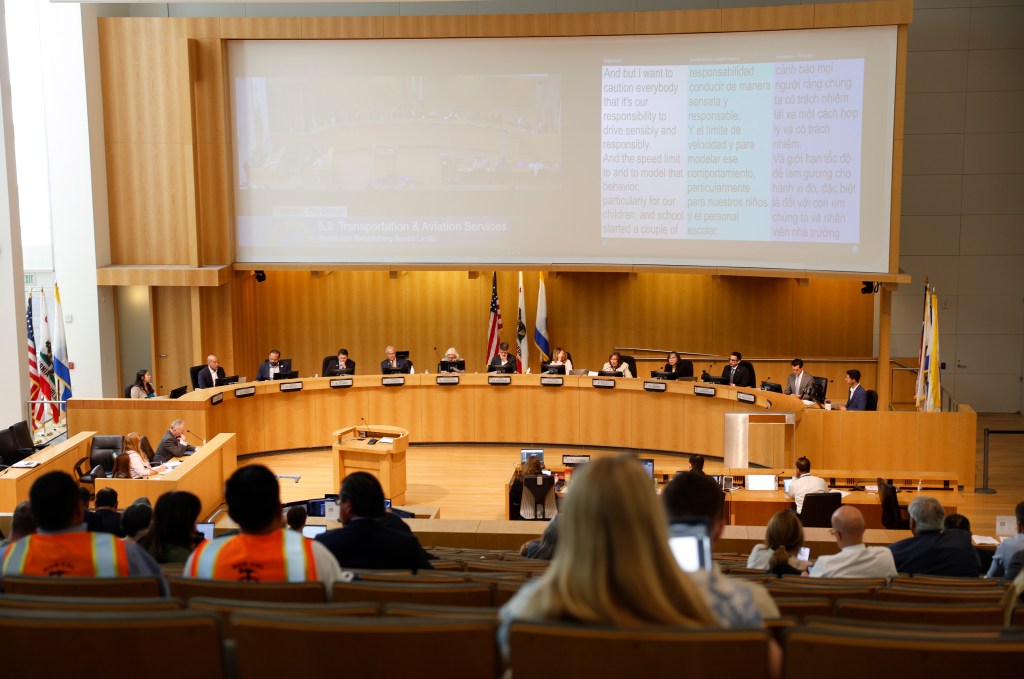
To help city contractors keep up with the Bay Area’s high cost of living, San Jose will now tie their pay directly to the rate of inflation — a move that increases wages for some of the city’s lowest paid contract workers.
The San Jose City Council has unanimously approved the change for janitors, security staff and other city contract workers whose pay stagnated while Bay Area prices climbed 2.5% in the year ending February 2026 — 5.2% higher than two years ago, according to federal data.
Workers currently earning the city’s living wage of $26.73 per hour are expected to see increases of roughly $0.70 to $1.00 per hour effective July 1, with no backpay. City staff said the budget impact would be minimal, as most contractors are already paid above the new floor.
San Jose, which various surveys consistently rank among the least affordable cities in the nation, had been calculating its living wage using its own formula rather than the Consumer Price Index — the federal Bureau of Labor Statistics measure that tracks everyday goods and services including housing, food, transportation, medical care and clothing.
Prior to the pandemic, the city relied on a consultant’s living wage calculation using the federal poverty rate for a family of three, adjusted upward to account for San Jose’s higher cost of living. During the COVID-19 pandemic, that consultant changed its methodology, producing numbers city staff said they could no longer explain or verify. The disconnect became clear last year, when the formula failed to produce any wage adjustment despite rising prices.
The formula was “really not understandable and unclear to all of us,” said Matt Loesch, the city’s public works director, describing the old formula. “We wanted to make it clear and make it transparent. So we studied a little bit of what’s going on in other jurisdictions.”
San Jose reviewed 21 jurisdictions — including Oakland and San Francisco — all of which use the Consumer Price Index. The council voted to adopt the Bay Area CPI standard, the same index San Jose’s Mineta International Airport has used since 2010.
The city said it will no longer its old formula and just apply the standard price index to future adjustments.
Despite the council adopting the airport’s formula, workers at Mineta Airport earn significantly less, said an attendee at the meeting. Any pay increases for airport workers would be a separate discussion, officials said.
The resolution drew support from labor advocates who said the old system had left workers behind.
Vanessa Tapia of the South Bay Labor Council said the city’s living wage had failed to keep pace, with the cost of living rising more than 20% while wages climbed only about 15%.
“That gap has real consequences for workers providing vital city services who are already struggling to afford basic needs,” Tapia said. “In July 2025, the city set the cost of living adjustment to zero — a zero increase in the middle of an affordability crisis is just absolutely unacceptable.”
The council’s support was unanimous and no one spoke against the measure. Councilmember Peter Ortiz, who represents East San Jose, said the new approach would give workers and employers a predictable standard.
“At its core, this conversation is about creating a more consistent and understandable approach to adjusting our living wage year over year,” Ortiz said. “When we rely on clear, transparent metrics such as CPI, we give workers, employers and the public a predictable system that accurately reflects the cost of living in our region.”
Councilmember Bien Doan echoed that sentiment.
“Contract workers deserve a fair, livable wage,” Doan said. “There should be no debate about that. They do essential work to keep our city running every single day.”