
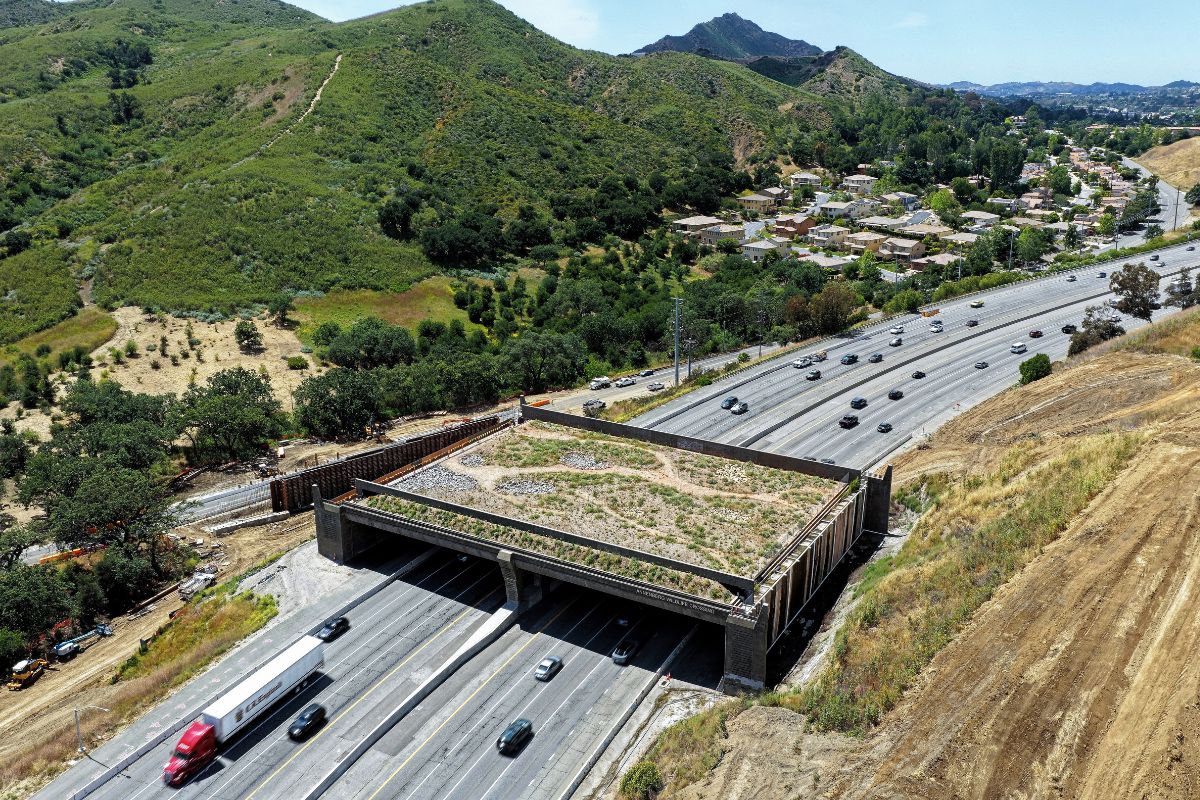
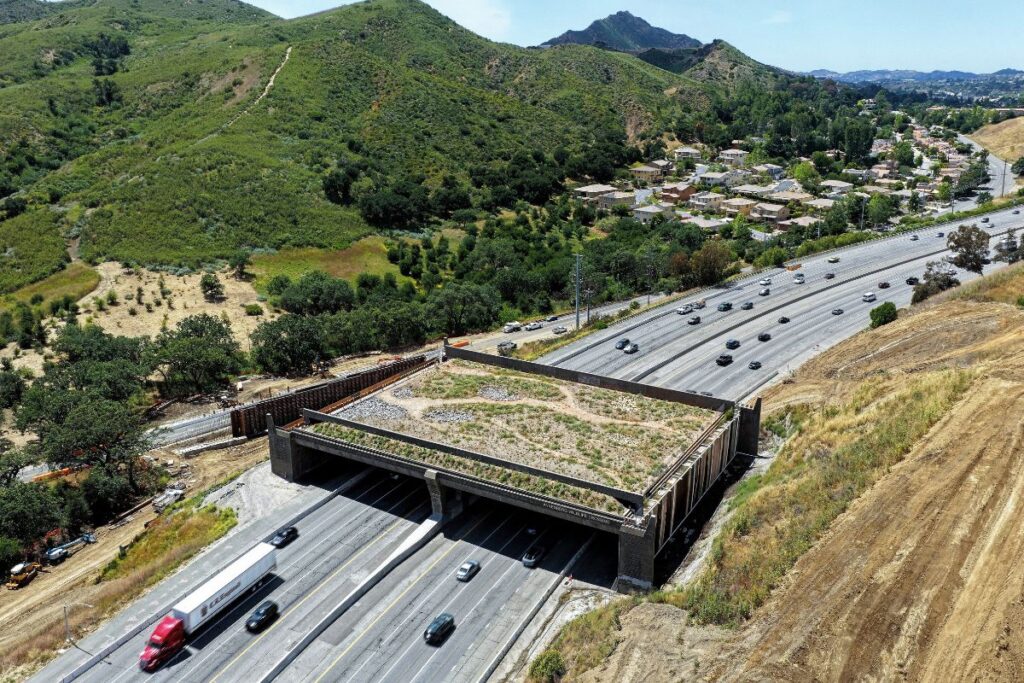
Wallis Annenberg Wildlife Crossing on April 22. | Credit: Mario Tama via Getty Images.

–
Staff Writer
·
April 24, 2026
Los Angeles is a car-first city built around winding roads and endless highways. While they keep the city moving, they also fragment natural habitats and disrupt local wildlife and plant life. That’s why, in the early 2020s, a solution was introduced to help protect native species: the Wallis Annenberg Wildlife Crossing.
As of April 2026, the project is finally hitting its final construction phase, with crews completing major structural work and beginning the last stage of habitat installation over Agoura Road, following the placement of soil and thousands of native plants.
With these advancements, the project is now on track for completion by the end of the year, with officials confirming a new official opening set for December 2026.
Spanning the 101 Freeway (where more than 300,000 vehicles pass daily), the crossing measures 210 feet in length and 174 feet in width, making it officially the largest wildlife crossing in the world.
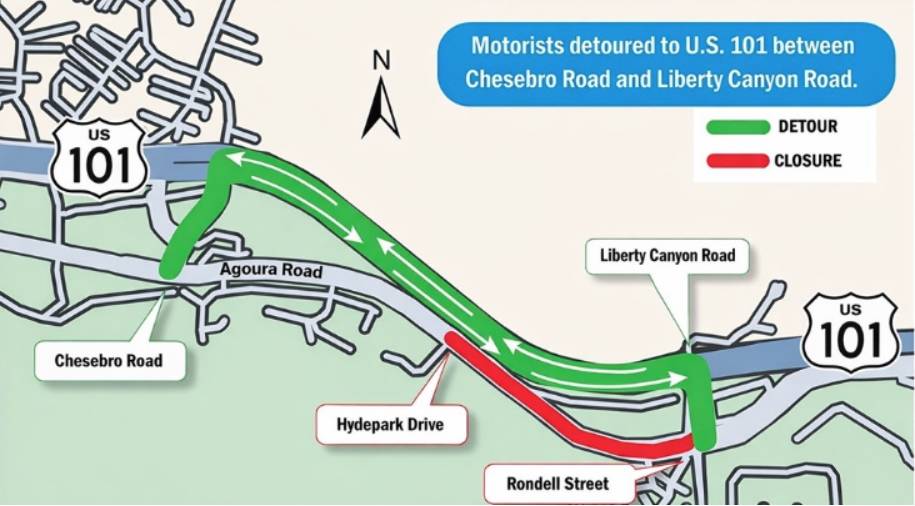 Via Caltrans.
As the crossing moves into its final construction stretch, Agoura Road will continue to face weekday full closures through July 1, 2026, affecting the segment between Rondell Street and Hydepark Drive, Monday through Friday from 7 AM to 5 PM.
Detours are in place between Chesebro Road and Liberty Canyon Road, and a free shuttle service operates every 30 minutes for pedestrians and cyclists navigating around the construction zone.
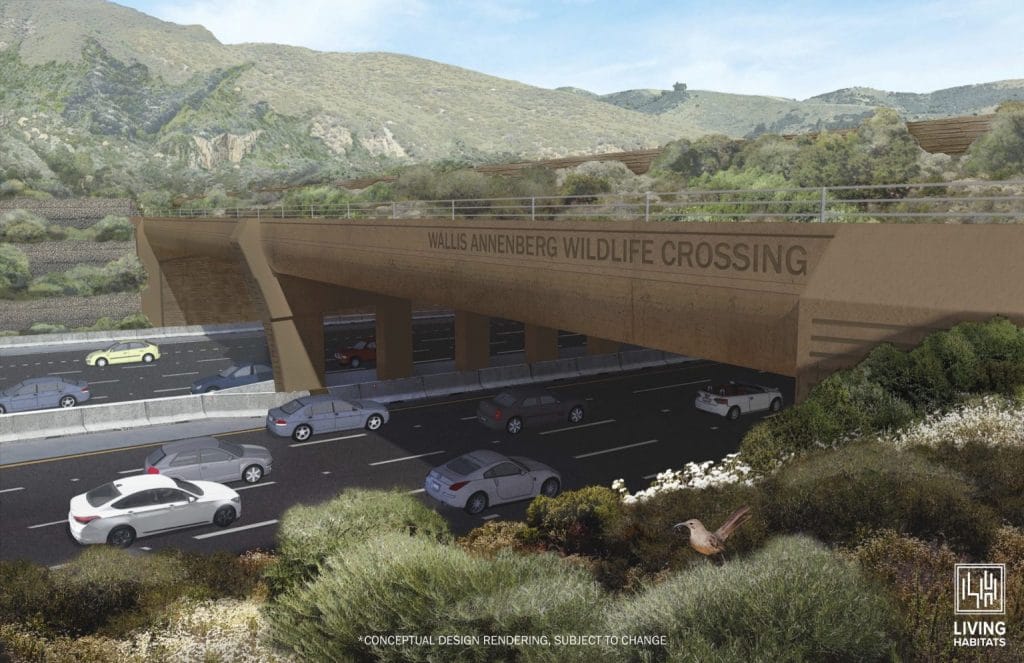 Credit: Rendering Living Habitats via National Wildlife Federation
The Wallis Annenberg Wildlife Crossing can already be explored through free, docent-led tours. These guided visits offer a behind-the-scenes look at how the bridge is being built, how native habitat is being restored, and how it will reconnect wildlife.
Tours are typically around 50 minutes long and require a reservation, as space is limited and demand is high. While access to the structure itself is restricted, participants can view the site up close and learn directly from guides about the engineering and ecological design behind the crossing.