
Men are perpetually perplexing. Why is it they can never faithfully commit to what they want? It’s hardly a modern problem — even people in the 1800s knew it. Look no further for proof than the first not so romantic romantic ballet ever written: “La Sylphide.”
On the evening of April 10, the San Francisco Ballet opened August Bournonville’s “La Sylphide” at the War Memorial Opera Center. The ballet is known for being the first to incorporate dancers en pointe, originally holding its world premiere at the Royal Danish Ballet in 1836. A first time watcher will notice the grand theatricality of the ballet and generous incorporation of pantomiming — traits which are characteristic of ballet’s roots in theater.
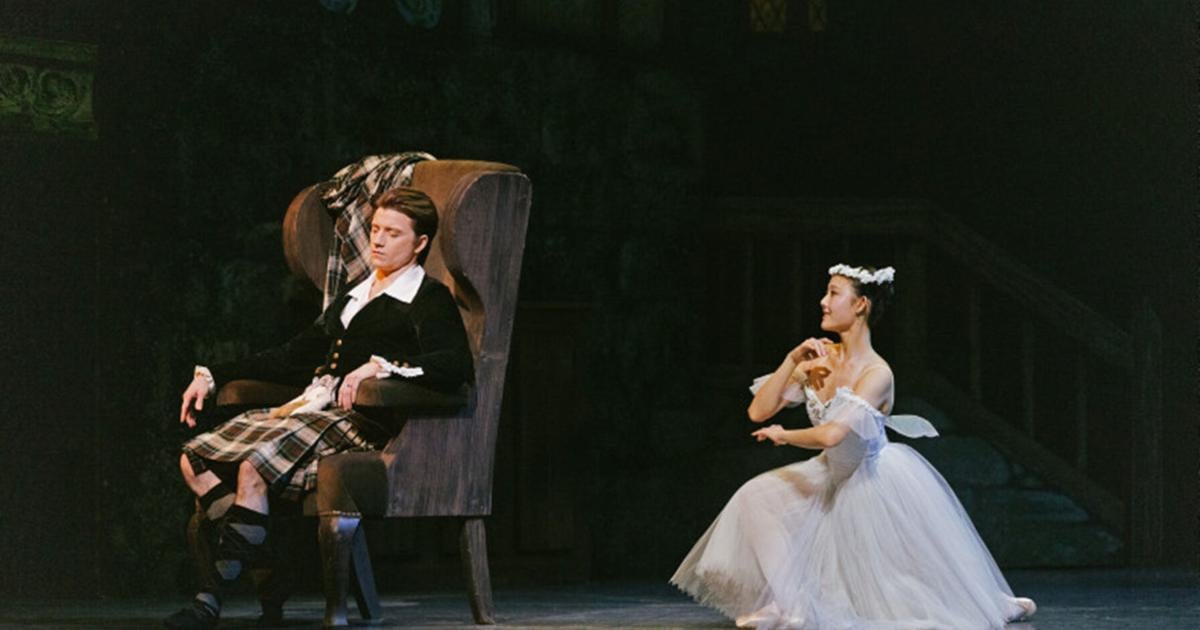
As the curtain rises, we meet James (guest artist Alban Lendorf), a young Scottish farmer about to be married to his bride Effy (Carmela Mayo). Despite his engagement, he is immediately taken by the sweetly mischievous Sylph who lightheartedly dances around him as he sleeps.
As The Sylph, principal dancer Wona Park is captivating. Her flowing arms are a beautiful illustration of Bournonville’s airy signature style that emphasizes gentle port de bras, complex but quick footwork and effortlessly bouncy jumps. Park is especially distinct in her ability to bring strength to such a delicate role: her lines are light but confident. It’s clear her skilled technique, with strong penches, meticulously winged feet, and sky-high jumps, serves as a solid backbone for her to fall back on. She brings to life a lively and ethereal Sylph.
Composer Herman Løvenskiold’s score characterizes the Sylph through an airy melodious flute, while James’s is a less romantic melody. The triangle is given a little moment to shine, emphasizing the whimsical aspect of her character.
What is a sylph, you ask? Winged creatures from Romantic folklore are known for their elusiveness and beauty. In “La Sylphide,” the Sylph cannot be touched — she is literally unable to survive human possession.
“La Sylphide” also finds ways to captivate the audience and make the audience have a hearty laugh. In the first scene as the Sylph flees the stage, she literally floats through a glowing chimney, giving rise to a delighted audience. Later she will float across the entire stage through seamlessly executed stage technology. The opening scene of Act 2 brings us a glimpse of Madge (Nathaniel Remez) and her fellow witches brewing something up in a giant glowing cauldron in the middle of a foggy forest. They dance around the cauldron in matching bursting comical jumping movements raising their arms up and down, bringing forth bursts of laughter from the full house.
A continuous comical presence comes from James’ best friend Gürn, played by Fernando Carratalá Coloma. Coloma brings a commanding presence to the opera house’s stage, as well as a charmingly charismatic one as he repeatedly tries to explain why James is absent from his own wedding (chasing after a magical fairy figure), though no one will believe him. Through strong and graceful solos, his character makes James pale in comparison, and have the audience grateful that he eventually ends up with Effy.
SF Ballet is unique in its ability to incorporate school cohorts onto the stage with the company. The group dances, of which there are plenty in this Scottish celebration, are impressive in their execution of the choreography in addition to maintainment of formations. The faces onstage range from kids in the SF Ballet school to principal character dancers.
Despite the manner in which the rest of the sylphs warn James to stay back from The Sylph, at the climax of the ballet, tricked by the witch, James grabs the Sylph, disturbingly embracing her as she attempts to wriggle out of his grip. It is almost difficult to watch, and the reality of his actions settle in as the Sylph begins to die. It is striking to watch Park’s entire demeanor and body language change from airy, mischievous and lighthearted to struck with agony. She drags her body as she dies, and her face takes on a grueling expression that makes your heart hurt.
SF Ballet’s “La Sylphide” is a short and sweetly frustrating production. Whether or not you consider it a tragedy or just another classic story of man’s inability to keep their hands to themselves is up to you.