
Pyramid Lake, seen here in February, is a Los Angeles County reservoir that is part of the State Water Project system.
Anadolu/Anadolu via Getty Images
As California heads into its dry season, its major reservoirs are in good shape, with statewide storage on Friday estimated to be 20% above normal for this time of year.
Robust rainfall in April has given a slight boost in places — especially welcome after an unusually dry March.
The state’s overall water outlook remains complicated, however. The Sierra snowpack, which effectively functions as a frozen reservoir, is far below normal. The Colorado River system, which is critical for Southern California’s water supply, is also struggling amid a deepening drought and below-average snowfall in the Rocky Mountains.
Article continues below this ad
“Reservoir levels have remained mostly above average since 2023, when California saw one of the largest snowpacks on record,” said Michael Anderson, state climatologist with California’s Department of Water Resources, by email.
The largest reservoir in California, Shasta Lake, was at 91% of total capacity through Thursday, which is 9% above its historical average. The reservoir is part of the federally managed Central Valley Project, which primarily supplies water for agriculture.
Lake Oroville, the state’s second-largest reservoir, was at 96% of total capacity through Thursday, which is 23% above the historical average. The reservoir is a key part of California’s State Water Project, a state-run system that supplies farms and cities across the state.
Article continues below this ad
San Francisco Chronicle Logo
Make us a Preferred Source to get more of our news when you search.
Add Preferred Source
Hetch Hetchy Reservoir, which provides water to San Francisco, was at 98% of total capacity through Thursday, or 57% above normal. Total system storage for the East Bay Municipal Utility District was 91% full through Thursday, or 11% above average.
Hetch Hetchy in Yosemite National Park, seen here in June 2023, is much fuller than normal right now.
The Washington Post/The Washington Post via Getty Im
Conditions are grimmer elsewhere in the West. Major reservoirs in the Colorado River system have dangerously low water levels.
Lake Mead, located in Nevada and Arizona, was 32% full as of Wednesday. That’s just over half of the long-term average for this time of year. The reservoir, which is formed by Hoover Dam, is the largest in the country.
Article continues below this ad
Upstream on the Colorado River, Lake Powell, located in Utah and Arizona and the second-largest reservoir in the country, was 23% full as of Wednesday, or 40% of the historical average for the date.
The U.S. Bureau of Reclamation projected that, without major intervention, Lake Powell’s water levels could drop so low this summer that the Glen Canyon Dam wouldn’t be able to produce hydroelectric power.
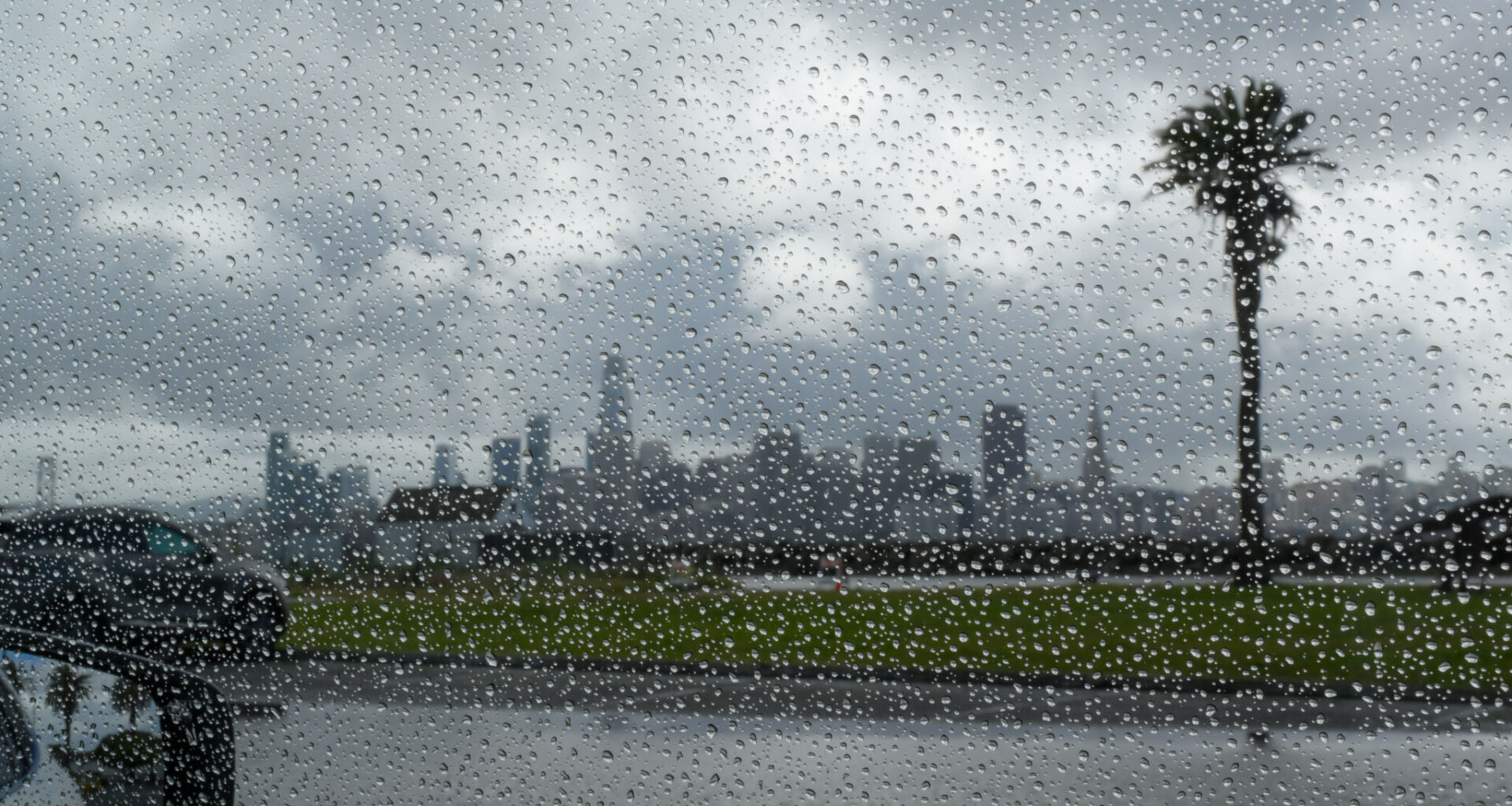
Clouds over San Francisco as seen from Treasure Island during heavy rain on April 12.
Anadolu/Anadolu via Getty Images
A man walks on a sidewalk at Treasure Island during rainy weather on April 12.
Anadolu/Anadolu via Getty Images
Bridalveil Falls as seen from Northside Drive in Yosemite National Park on April 2. The park’s waterfalls are peaking earlier than usual this year due to low snowpack and rapid melt-off.
Brontë Wittpenn/S.F. Chronicle
The O’Shaughnessy Dam on the Tuolumne River forms the Hetch Hetchy Reservoir in Yosemite National Park, as seen in September 2022.
Tracy Barbutes/Special to The Chronicle
Hetch Hetchy reservoir, which supplies water to San Francisco, is seen here in July 2016.
Michael Macor/The Chronicle
While snowmelt typically replenishes reservoirs during warmer months, far less relief is expected this year, including in California, after the warm winter thwarted normal snowfall.
Article continues below this ad
The California snowpack was 21% of normal as of Friday.
Reservoir levels may fall more sharply than usual in the summer, as the low snowpack fails to replenish them. “This could gradually increase pressure on reservoirs and groundwater basins until precipitation returns in the fall,” Anderson said.
Less snowmelt also means that landscapes will be less moist as temperatures rise, increasing wildfire risk.