
San Diego Mayor Todd Gloria has proposed eliminating all arts funding that go directly to local arts organizations. That would cut $11.8 million from the city budget for fiscal year 2027. Arts leaders and arts supporters have emailed dozens of letters to the Union-Tribune. We are publishing some of them today.
‘The human impact is profound’
Mayor Gloria’s proposal to decimate the arts budget will radiate well beyond the nearly 200 organizations across the city that receive funding. The incredible economic impact of the arts sector in our region is well documented, but the human impact is profound and sometimes harder to see.
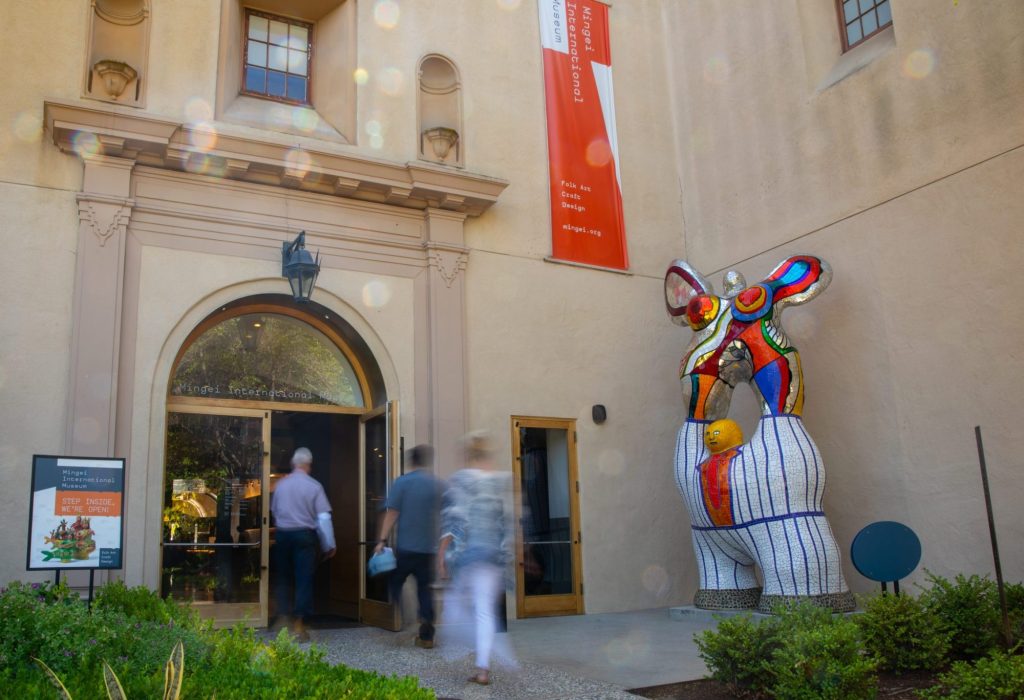
For example, at Mingei International Museum, our staff connects directly with schools, teachers, caregivers and kids nearly every day. Since 2022, Mingei educators have partnered with Freese Elementary, following the same students from kindergarten through fourth grade, bringing the “art of the people” directly into the classroom. By weaving craft and design into their learning, we aren’t just teaching art; we are fostering a deep sense of cultural pride and belonging that will stay with these students for life.
We often say that the most beautiful moments occur when a child realizes that art is a language their family already speaks. What our city leaders must understand is that art is a language we all speak, and an essential part of our humanity, shared identity, and our quality of life as San Diegans. Arts and culture nonprofits already make miracles happen with too few resources. Cutting deeper won’t just strain our organizations; it will diminish access and connection for our entire community.
Jessica Hanson York, Executive Director & CEO
Mingei International Museum
‘Devastating blow to an economic engine’
The recently proposed cuts are a devastating blow to an economic engine that supports and uplifts the entire region. As Executive Director of Trinity Theatre, which received $60,000 last fiscal year, we used that funding to ensure access, support the economy and uplift the city’s very own Creative City Cultural Plan.
This funding, which makes up about 5% of our annual budget, allowed us to fulfill promises to the community we mutually serve. We brought free storytime programs into public libraries (also facing cuts), which served over 1,500 visitors. We sustained our Living Room Readers, a weekly program where seniors, veterans and adults find connection and purpose through storytelling. We expanded our fourth annual New Works Festival that drew 1,011 playwright submissions, elevating San Diego as a home for new voices. These are just some of the examples of how public investment in the arts has elevated access, connection and opportunity.
If the City Council approves the mayor’s proposed budget, these are the types of programs that disappear.
Worth noting, these programs promote tourism, which is where funding for arts and culture comes from. If we divest, Tourism Occupancy Tax (TOT) revenues will decline. When the loss of these programs and services prove to actually increase the deficit, where will your next cuts be? I’d assume we’d have to look at safety, physical infrastructure and city staff — things none of us want to see impacted.
We implore the mayor and City Council to do better than proposed.
Sean Boyd, Executive Director
Trinity Theatre
‘San Diego deserves better’
It’s profoundly disheartening and short-sighted to see leaders statewide continue to treat arts and culture programs as optional or expendable, placing them first on the chopping block in an attempt to balance budgets often on the backs of California’s dedicated arts workers. This is not just a fiscal concern; it’s an attack on our state’s identity and its essential creative workforce.
California is rightly looked upon as an international leader and a global epicenter for the creative economy— a vital industry that drives innovation, tourism and community well-being. Yet, our current state funding for the arts hardly reflects this essential status. Today, we regrettably rank 35th in the nation per capita on spending for arts and culture. This meager investment is a stark contrast to the sector’s output: Our state produces an astounding one in four creative jobs nationally. The math simply does not add up, and we are failing to support a sector that gives so much back to our economy and our communities.
We must do better. Investing in arts and culture is not a luxury; it is an investment in jobs, education and the quality of life that makes California attractive and unique. Therefore, we urgently urge the Mayor and the entire City Council to take a moment to reflect on the truly vibrant, diverse and world-class arts and culture community that defines San Diego.
We implore them to recognize all the intrinsic and tangible benefits this community provides — from economic stimulus and job creation to invaluable educational and social services. We demand that they restore this critical funding in the final budget proposal. Cutting the arts cuts the heart out of our cities, and San Diego deserves better.
Julie Baker, CEO
California for the Arts
Cuts will impact city’s neediest students
The proposed city budget cuts threaten to dismantle San Diego’s creative foundation.
At ArtReach, we see daily that art is not a luxury; it’s a fundamental human right. Our organization was born from the 2007 budget cuts that decimated school arts programs, and it is devastating to see history potentially repeat itself. We work in Title I schools across the city because we believe access to creative practice should never depend on a ZIP code.
We’ve empowered over 86,000 youth to find the artist within and express themselves, without judgment. Our programs allow youth voices to be heard, helping students build the confidence to take ownership of their unique ideas. Whether through collaborative murals or classroom lessons, hands-on artmaking is where social-emotional growth happens and community connection begins.
By “pausing” this funding, the city is effectively telling our youth that their voices and their creative development are non-essential. We shouldn’t be balancing the budget by stripping away the tools that help our youth process their world. I urge the City Council to restore this funding and commit to a San Diego where every student has the chance to thrive.
Becca Dwyer, Marketing Coordinator
ArtReach San Diego
Theater and the arts are essential
To the mayor and City Council of San Diego, while I live and work just outside the city limits, it is a privilege to be part of this extraordinary region. San Diego County’s cultural vitality is one of its defining strengths, and its arts community is central to that identity.
At a time when arts funding is already under significant pressure at the federal level, the proposed cuts in the 2027 city budget are especially concerning. The arts are not peripheral — they are an essential public good that contributes to economic activity, education, tourism and the overall quality of life for residents and visitors alike. Reducing support now risks undermining a sector that is already operating with limited resources.
As Artistic Director of North Coast Repertory Theatre, I see firsthand how interconnected our regional arts ecosystem is. While our organization would not be directly impacted by these specific cuts, many of our colleagues, collaborators and partner organizations within the city would be. The effects of these reductions will be felt broadly — impacting artists, administrators, small businesses and the diverse communities they serve.
Cuts of this nature do more than reduce programming; they weaken the cultural fabric of the region. In challenging economic times, the arts are not a luxury to be trimmed, but a stabilizing and unifying force that deserves sustained — and ideally increased — investment.
I respectfully urge you to reconsider these proposed reductions and to reaffirm San Diego’s commitment to a vibrant and accessible arts community. Thank you for your time and consideration.
David Ellenstein, Artistic Director
North Coast Repertory Theatre
‘A diminished future for our city’
The proposed cuts to arts and culture funding represent lost jobs and opportunities, silenced voices and a diminished future for our city.
For organizations like San Diego Opera, these cuts would have devastating consequences. Education programs that provide free arts instruction to thousands of youth across the city — many of them low-income and historically underserved — would be drastically reduced or eliminated.
I urge city leaders to reconsider these cuts and protect access to the arts.
Donna Clarice Perkins
Coronado
Arts education can open doors
I’m glad to share how San Diego Junior Theatre strengthens our community in ways that go far beyond the stage. My older child, whose first language isn’t English, attended several summers of Junior Theatre camps. The programs didn’t just teach performance but accelerated language development through immersion and creative expression.
Theater education is widely recognized for building literacy, confidence and social skills, especially for multilingual learners. In our case, the results were clear: Our child progressed enough to exit the San Diego Unified English learner program and is now thriving as a leader in reading, writing and the arts.
What made the difference was the environment. Junior Theatre fosters inclusion, belonging and a sense of voice. Students are learning to communicate and connect in a fun and encouraging way — the best way to learn!
Programs like this are essential in a diverse city like San Diego, where arts education can bridge language gaps and open doors. We’re grateful for the impact it’s had on our family and community, and we want everyone who needs it to have the chance to experience it.
Iris Hrabe-Ritzert
Clairemont
‘They will silence stories’
Arts funding is not an extra — it is essential to communities like Barrio Logan.
Through our work with All For Logan, I see every day how art holds our community together. It’s in the murals that tell our stories, the small businesses that stay open because of foot traffic from cultural events, and the young artists who finally see themselves reflected in spaces that once excluded them.
On Logan Avenue, art is not separate from daily life — it is how we gather, how we heal, and how we preserve who we are in the face of displacement. Events like Día de Muertos are not just celebrations; they are acts of memory, resistance and belonging. Cuts to arts funding will not just impact organizations — they will impact working families, artists and small businesses that depend on this ecosystem.
They will silence stories that deserve to be seen and heard. If San Diego truly values equity and community, then it must invest in the very people and cultural spaces that give this city its soul.
Marisa Aguayo, Executive Director
All For Logan
‘San Diego’s soul depends on it’
Before the internet, before books, before writing, there was art. Cave paintings etched into rock over 40,000 years ago tell us that even then, in a world where survival was uncertain and every day was a fight for food, water and shelter, human beings still felt compelled to create. They had every reason not to. And yet they did. Because while the body demands to be fed and housed, it is the desire to create, it is art, that feeds the human soul.
That being said, do you think it wise to take the soul from San Diego?
When I hear the voices of children — small, uncertain, still learning — suddenly lock into harmony and something in my chest catches without warning … that is art.
When I see calloused hands, worn from years of practice, carefully plucking guitar strings to my favorite song, and the strings of my heart are tugged in turn … that is art.
When I see a painting whose deep, rich colors capture a feeling that words struggle to describe, and suddenly an emptiness I never knew existed has been filled … that is art.
I could go on and on, because art can be found in the experiences of our day-to-day lives. Perhaps these small moments are overlooked because we live in a society that demands we move quickly from one task to the next, always toward something more pressing. I imagine it was a similar urgency that drove the decision to withdraw this funding. But when the weight of these relentless tasks bogs down our minds and our hearts, we have always known where to turn.
Forty thousand years of human history tells us so. We turn to art.
We may be spoiled. Art has always been the heartbeat of San Diego, and perhaps its constant presence has made us forget to protect it. Those moments that catch us off guard: the children locking into harmony, the calloused hands plucking strings, the painting that fills an emptiness we never knew we had, they do not happen by accident. They are the result of funded programs, working artists and accessible spaces that require investment to survive.
I understand that times are unpredictable, and I know my words alone may not be enough to shift the scales of this decision. But I warn you, though I write these words alone, the feelings that moved me to write them are shared by many. If this funding is withdrawn, we will feel the weight of its absence. I implore you: amend this decision. San Diego’s soul depends on it.
Dominique Lozano, Arts Education Coordinator
California Center for the Arts, Escondido Foundation
‘These programs are essential’
As the director of an Expressive Arts program rooted in social-emotional learning (SEL), I have seen firsthand how creativity can transform lives. We have witnessed students’ lives transformed through the arts, finding belonging, confidence and resilience in the face of many challenges. Through partnerships with schools and community organizations, we offer workshops that support emotional well-being, communication and connection.
At a time when young people are facing rising anxiety, isolation and social pressures, these programs are essential. Eliminating arts funding would significantly reduce opportunities for organizations to bring in programs like ours, cutting off access to vital tools for growth and resilience.
The arts create spaces where students feel seen and heard in ways traditional approaches often cannot. These cuts would impact not only educators and artists but the well-being of our entire community. If we value our youth, we must continue to invest in the arts.
Elizabeth Tobias, Chair, K-12 Learning and Innovation
Expressive Arts Foundation
The arts ‘are a public good’
As a lifelong San Diegan and a music educator of more than 20 years, I have spent my career watching what the arts make possible for this city. I have also watched, with growing frustration, how easily those same programs can be dismantled.
This year, I made the difficult decision to leave my position in Chula Vista Elementary School District. It was not because I stopped believing in the work, but because I could no longer ignore what I was seeing: the slow, systematic unraveling of award-winning music and arts programs that educators and communities had spent the past decade building.
When arts programs disappear from schools, the impact is immediate. Students lose a place where they feel connected and engagement drops. For many young people, the arts are not enrichment. They are the reason they show up at all.
I chose to continue serving in a different way, moving into nonprofit work with the San Diego Youth Symphony and Guitars in the Classroom. These organizations have long stepped in where public systems fall short, ensuring access to music and arts education for students across the region. Guitars in the Classroom goes even further, reaching students in Home Hospital programs, youth-at-risk settings and public libraries. Now, those organizations are facing devastating cuts as part of the city’s proposed elimination of arts funding.
This is not happening in isolation. It is part of a broader pattern. As school districts reduce arts programming, the city is now proposing to do the same, removing a critical layer of support that has helped sustain San Diego’s cultural ecosystem. And that ecosystem extends far beyond the classroom. San Diego’s arts scene is one of the most dynamic in the country.
Our theaters, symphony, opera, museums and cultural festivals draw visitors from around the world. They generate tourism revenue, support local jobs and contribute to the identity of the region. The arts are not a luxury for a small segment of the population. They are a public good that benefits residents, visitors and taxpayers alike.
Which raises a difficult but necessary question: If the city’s revenues have continued to grow, why are the arts on the chopping block? San Diego residents understand that many of the city’s primary revenue streams scale with economic growth. Property taxes increase with assessed value, sales taxes rise with consumer spending, and tourism and occupancy taxes track with demand. As the cost of living increases, so does the city’s intake.
So where is that money going? When we are told that the city can no longer afford to invest in the arts, it is fair to ask whether this is truly about scarcity or about priorities. Concerns about mismanagement and disproportionate spending in other areas, including infrastructure, deserve serious scrutiny before we accept the dismantling of an entire cultural sector as inevitable. Because that is what this proposal represents: not a temporary reduction, but the removal of foundational support that allows arts organizations to function. City funding is not just a supplement. It is seed money that enables nonprofits to secure private philanthropy, expand programming and remain accessible to the public. Without it, many organizations will shrink or disappear altogether, and the consequences will not be easily reversed. Cultural infrastructure, once lost, takes years if not decades to rebuild.
We often talk about the essentials of city government: public safety, transportation, housing. Those are critical. But a city is more than its basic services. It is defined by the quality of life it offers, the opportunities it creates and the ways it brings people together. The arts are central to that. If San Diego continues down this path, we are not just cutting programs. We are reshaping the character of the city itself, narrowing access to creativity, and limiting what future generations will experience.
This is not a decision without consequences. It is a choice about what kind of city San Diego wants to be,and it is a choice that should be reconsidered.
Crystal Pridmore, teaching artist, music and movement educator
Guitars in the Classroom
‘The shining light of who we are as a people’
Mayor Todd Gloria recently proposed a devastating 85% reduction in arts and culture funding.
The arts are not a luxury. Arts and culture are the fabric and the shining light of who we are as a people, both in Southern California and worldwide.
Without adequate and sustained funding, many local arts groups, educational programs, neighborhood festivals and community events will simply cease to exist.
The arts and culture sector is a primary economic driver of San Diego, supporting thousands of jobs and generating billions of dollars in annual economic activity for our community.
Cutting support for the arts and culture means fewer educational programs for our youth, diminished tourism and a weakened cultural identity for San Diego.
We urge San Diego leadership to keep funding the arts and culture programs that keep our community vibrant, healthy, creative and prosperous.
Griff Peters
San Diego
Arts and culture are not expendable
I have been a social worker in San Diego for nearly 50 years and have seen firsthand how the arts strengthen individuals and communities. My connection to community theater began when my children participated in the Kroc Kids program, where they found lasting friendships, built confidence and developed skills that supported them both academically and socially.
Today, they help lead Trinity Theatre Company. Trinity provides accessible arts programming for all ages, with many programs supported by past funding from the Commission for Arts and Culture. Our free StoryTime program promotes early literacy through engaging performances at libraries and community spaces. Living Room Readers offers a welcoming, low-pressure environment for participants, especially seniors, to connect, combat isolation and engage with new works.
Our teen leadership program equips youth with practical skills, civic awareness and a sense of belonging. Finally, we provide scholarships to ensure access to tuition based programs for those with financial needs. For many participants, these programs are not extras, they are lifelines.
Cuts to arts funding will not solve broader community challenges; they will deepen them. If we lose arts funding, we risk losing spaces that build connection, confidence and community. I hope that San Diegans stay informed, speak up and let their elected officials know that arts and culture are not expendable, they are essential to the health and vitality of our city.
Kathy Parks, Director of Development
Trinity Theatre Company