
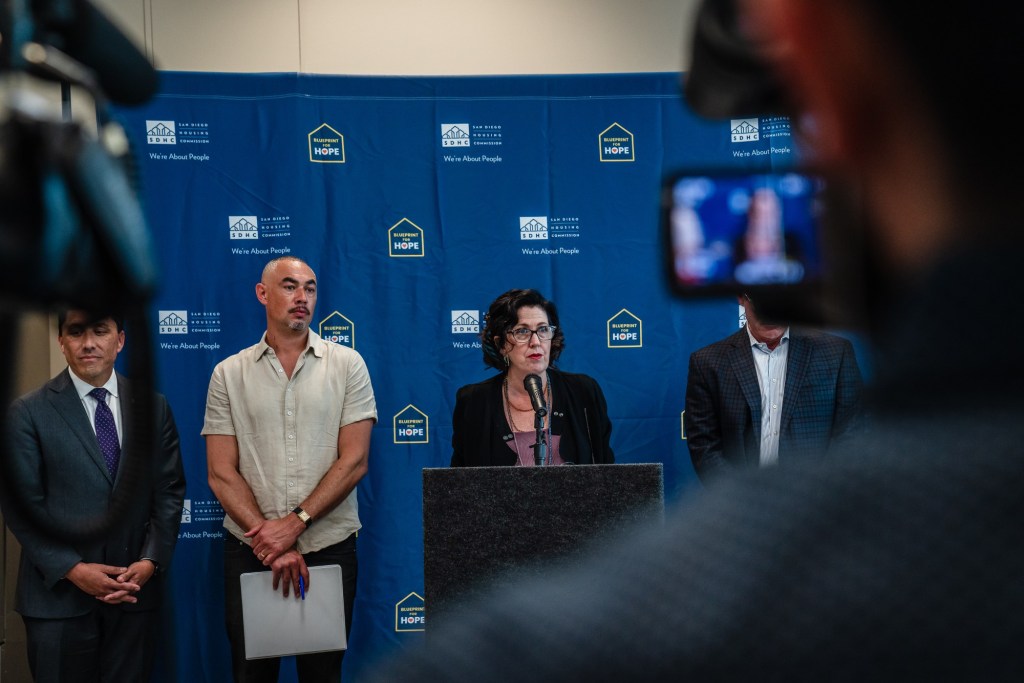
The city’s reduction of rental assistance for low-income residents has flown somewhat under the radar amid recent protests over proposed cuts to the arts, libraries, recreation centers and youth programs.
Part of the reason may be that San Diego housing officials got an early and public start on dealing with their own growing budget shortfall and expected cuts in city, state and federal funding.
The San Diego Housing Commission this month released its budget for the coming fiscal year that prioritized preserving housing subsidies through vouchers and other programs. Despite that effort, more than 14,000 low-income households receiving rental assistance may be affected.
The rent increases will vary depending on such factors as household income and how many able-bodied people in a home can work. In some cases, people who have been required to spend 24 percent of their income toward rent will need to contribute 40 percent.
The commissioners, voting unanimously in December, chose to spread the pain, rather than go with another option: taking away all rental aid from some 1,700 households of about 6,000 people, including children.
That’s not to say the decisions were easy and lacked a sense of foreboding. The federal voucher program, known in government language as Section 8, already had been seriously short of funds, with thousands of people on a yearslong waiting list to receive aid.
Facing that reality and the coming cuts, San Diego and other jurisdictions officially closed off their voucher programs to new applicants not long ago.
Meanwhile, the cost of living is on the rise and market-rate housing prices continue to be out of reach for a lot of people without subsidies. Many need more rental assistance, not less.
“The depressing thing is the overall service level is moving in the wrong direction,” said commission vice chair Ryan Clumpner, but he added the agency needs to “use these hard times to reimagine how we do things.”
Rental assistance and other programs issuing grants to people struggling to pay rent are widely deemed as cost-efficient ways to keep them from falling into homelessness. The Trump administration is shifting focus from subsidies for permanent housing with supportive services toward less-effective measures like short-term shelters and transitional housing.
But funding for homelessness also is getting squeezed in the president’s budget for fiscal year 2027. The spending plan released earlier this month calls for a $3.8 billion cut in the U.S. Department of Housing and Urban Development’s affordable housing, homelessness and community development programs.
Overall, the White House is proposing a roughly 5 percent cut in HUD’s budget from last year, according to the National Low Income Housing Coalition.
The budget request includes language prohibiting public housing agencies from issuing “any new vouchers or otherwise (assisting) new families” except for vouchers for HUD-Veterans Affairs Supportive Housing and a family unification program, the coalition said.
“Cuts to healthcare and food assistance, combined with the rising cost of gas, groceries, and other necessities, are already putting added strain on households struggling to make ends meet,” said NLIHC’s president and CEO, Renee Willis, in a statement after the budget’s release. “Further eroding the country’s safety net with cuts to housing assistance will leave even more families without the resources they need to live with stability and dignity.”
The coalition noted the new budget does not include the “extreme changes and staggering cuts to rental assistance programs proposed in last year’s budget request,” but that the current proposal would inflict continued hardships on needy residents.
It’s important to note that federal, state and local budget proposals often change as deliberations and negotiations commence. San Diego officials aren’t counting on a sudden jackpot of money to appear, but continue to lobby for more funding.
As of Friday, the San Diego Housing Commission had not yet received its annual HUD funding commitment. The delay required the commission to move ahead with its budget to meet deadlines with a further degree of uncertainty.
The commission’s budget cuts what it calls “housing program expense,” which includes rental assistance, by 2 percent, compared with a 73 percent cut in capital project spending and about a 15 percent cut in staff (58 positions).
A big drop in revenue resulted from the state winding down its Project Homekey grants that enabled local agencies to quickly convert hotels and motels into housing, which started during the COVID pandemic.
There are no performance incentive payments or cost-of-living increase for senior leadership in the current fiscal year, according to a budget overview, and no incentive payments for anyone in the coming fiscal year starting July 1.
Overall, the commission budget is reduced by 10 percent over the current year.
The budget emphasizes that HUD funding is insufficient to meet rental assistance obligations. The commission has been tapping its reserves to fill the gap, but added it “is not able to attain basic minimum reserve levels in Fiscal Year 2027.”
San Diego is attempting to hold the line on keeping a roof overhead for people currently receiving rental assistance, with hopes that in two or three years a new administration will bolster federal funding.
If that doesn’t happen, housing agencies, like other government departments, may be dealing with a permanent shift in the financial burden of the social safety net of health, welfare and housing programs from Washington, D.C., to state and local governments.
Meanwhile, the relatively muted response to the housing assistance cuts may not be forever. The rent increases likely will kick in late this fall.
What they said
NBC San Diego.
“Delays in DACA renewal processing have left some recipients unable to work, they say, and at greater risk of deportation.”