
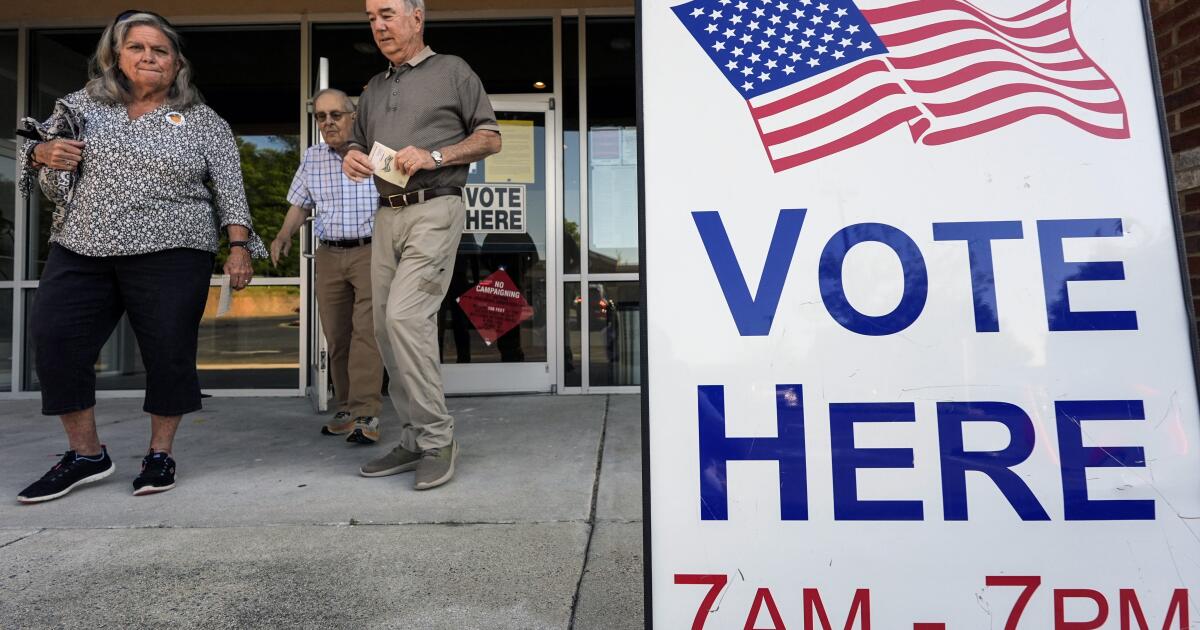
There may come a time in the not-too-distant future when California voters will need to provide some form of identification to cast a ballot in person.
Although voters may have little say in federal efforts to enact stricter citizenship voting requirements, such as the recently stalled SAVE Act, they’ll have their moment this November.
You’re reading the Essential California newsletter
Sign up to start every day with California’s most important stories.
By continuing, you agree to our Terms of Service, which include arbitration and a class action waiver. You agree that we and our third-party vendors may collect and use your information, including through cookies, pixels and similar technologies, for the purposes set forth in our Privacy Policy such as personalizing your experience and ads.
That’s because a ballot measure requiring identification for polling-place voting, and a PIN to vote by mail, qualified for this fall’s election.
My colleagues Dakota Smith and Jenny Jarvie wrote about the drive to enact this law in California, the motivations among supporting lawmakers and the opposition the measure faces.
Let’s jump into their work.
What the measure is calling for
If passed, the California ballot measure would require a voter to present government-issued identification, such as a state driver’s license, every time they vote.
Voters mailing ballots would be required to write a four-digit PIN on their ballots matching one generated when they registered to vote.
The PIN would come from an ID, such as a driver’s license, or could be generated by the county. A vast majority of Californians mail in their election ballots.
Under the measure, election officials must also ensure that registered voters are U.S. citizens by using information from government records, which could include information in the federal Social Security Administration database, and maintain accurate voter registration lists.
The driving force for voting reforms
Republican Assemblyman Carl DeMaio from San Diego has been pushing the measure for several years, while Trump and Republicans are also seeking a similar initiative at the federal level.
DeMaio says the measure is different from the SAVE Act.
The state ballot measure “does not do away with mail-in ballots, because voters of all political backgrounds like the convenience of mail-in ballots,” DeMaio said. “So, we want to keep that convenience.”
What is currently required to vote
Californians are not required to show or provide identification when casting a ballot in person or by mail.
They are required to provide identification when registering to vote and must swear, under penalty of perjury, a felony, that they are eligible to vote and a U.S. citizen.
Why DeMaio says the measure is necessary
He said his ballot measure wasn’t focused primarily on ensuring undocumented people don’t vote.
“That’s one element of concern that we’ve heard from some groups, but it really is making sure that, No. 1, we properly maintain our voter rolls,” he said.
Standing opposed
Jenny Farrell, executive director of the League of Women Voters of California, told The Times that her group was committed to fighting the measure, arguing it would make it harder for people in the state to vote.
She said people might forget to use a PIN on their mail-in ballot, leading to their vote being disqualified. Similar changes in Texas, she said, led to a rise in rejected ballots due to technical errors.
“It doesn’t really weed out illegal voting,” which doesn’t actually exist, she said, “but it does cause more ballots to be incorrectly flagged and ultimately rejected.”
What’s next?
The ballot measure will be up for a vote in the Nov. 3 election and needs a simple majority to pass.
Check out this link for the full article.
Today’s top stories 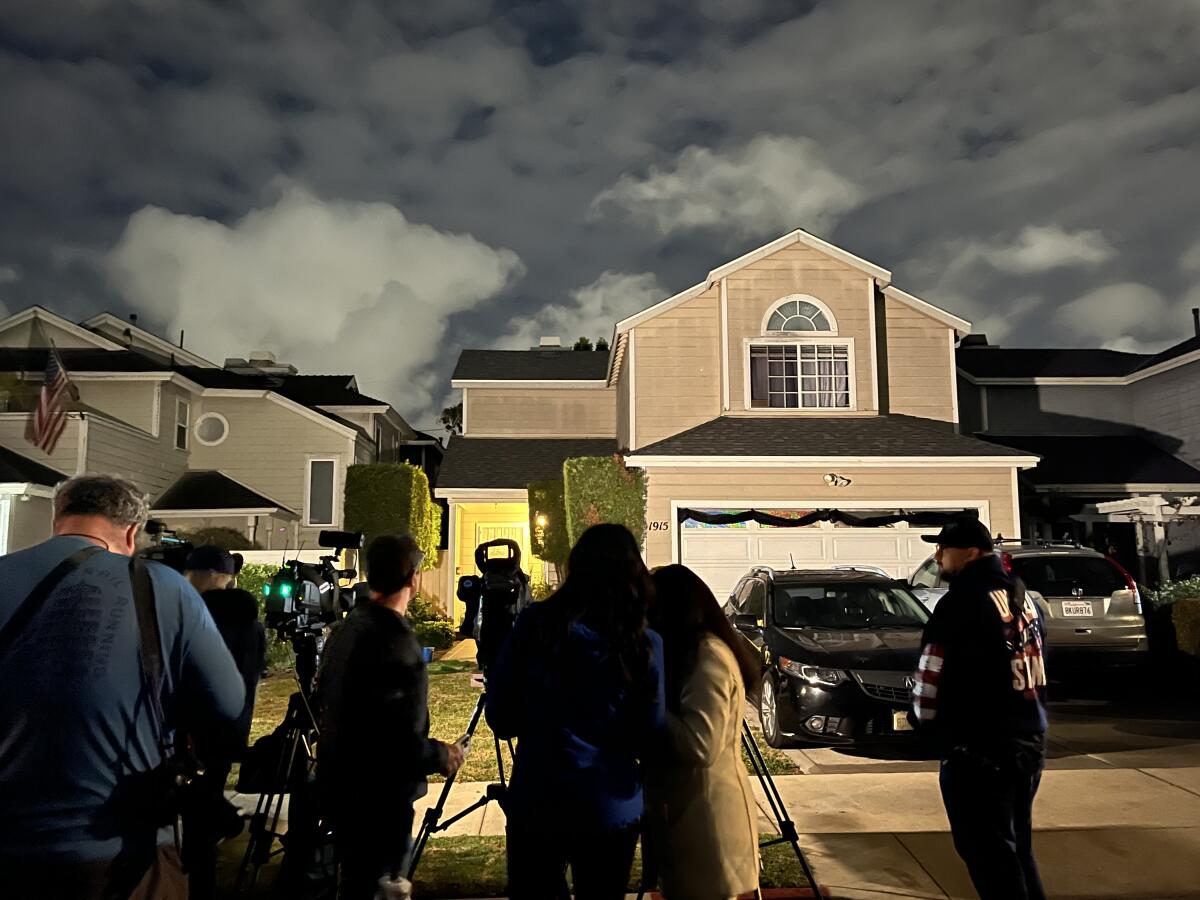
Members of the media gather in front of a Torrance house linked to Cole Tomas Allen, the shooting suspect at the White House correspondents’ dinner.
(Robbin Goddard / Los Angeles Times)
Torrance teacher suspected in D.C. shootingXavier Becerra surges in the governor’s raceBecerra says he is the best candidate in the California governor’s race because of his extensive experience as a government executive.His rivals and critics also have pointed to his leadership record to highlight what they say are glaring failures that should disqualify him from serving as governor.California cities seek to bless polyamorous unionsWest Hollywood is among the cities moving to recognize and protect multi-partner relationships, an effort that backers say addresses housing and healthcare discrimination.Some experts say the changes will face complications in being added to the existing system for divorces, custody disputes and family court battles.What else is going onCommentary and opinionsThis morning’s must-readOther must-readsFor your downtime 
Brynna Beatnix leads her singular Goth Yoga L.A. class.
(Eric Thayer / Los Angeles Times)
Going outStaying inA question for you: What’s your favorite California-themed book?
Danica says, “My favorite California-themed book is ‘East of Eden’ by John Steinbeck, from its biblical allegories to the imagery of the mountains along the 101. Each time I drive home to the Central Coast, it evokes nostalgia and wonder for the ugly and the beautiful.”
Email us at essentialcalifornia@latimes.com, and your response might appear in the newsletter this week.
And finally … your photo of the day 
The crowd vibes to Diplo’s set at Stagecoach.
(Evan Schaben / For The Times)
Today’s great photo is from Times contributor Evan Schaben at the 2026 Stagecoach Music Festival.
Have a great day, from the Essential California team
Jim Rainey, staff reporter
Hugo Martín, assistant editor, Fast Break desk
Kevinisha Walker, multiplatform editor
Andrew J. Campa, weekend writer
Karim Doumar, head of newsletters
How can we make this newsletter more useful? Send comments to essentialcalifornia@latimes.com. Check our top stories, topics and the latest articles on latimes.com.