
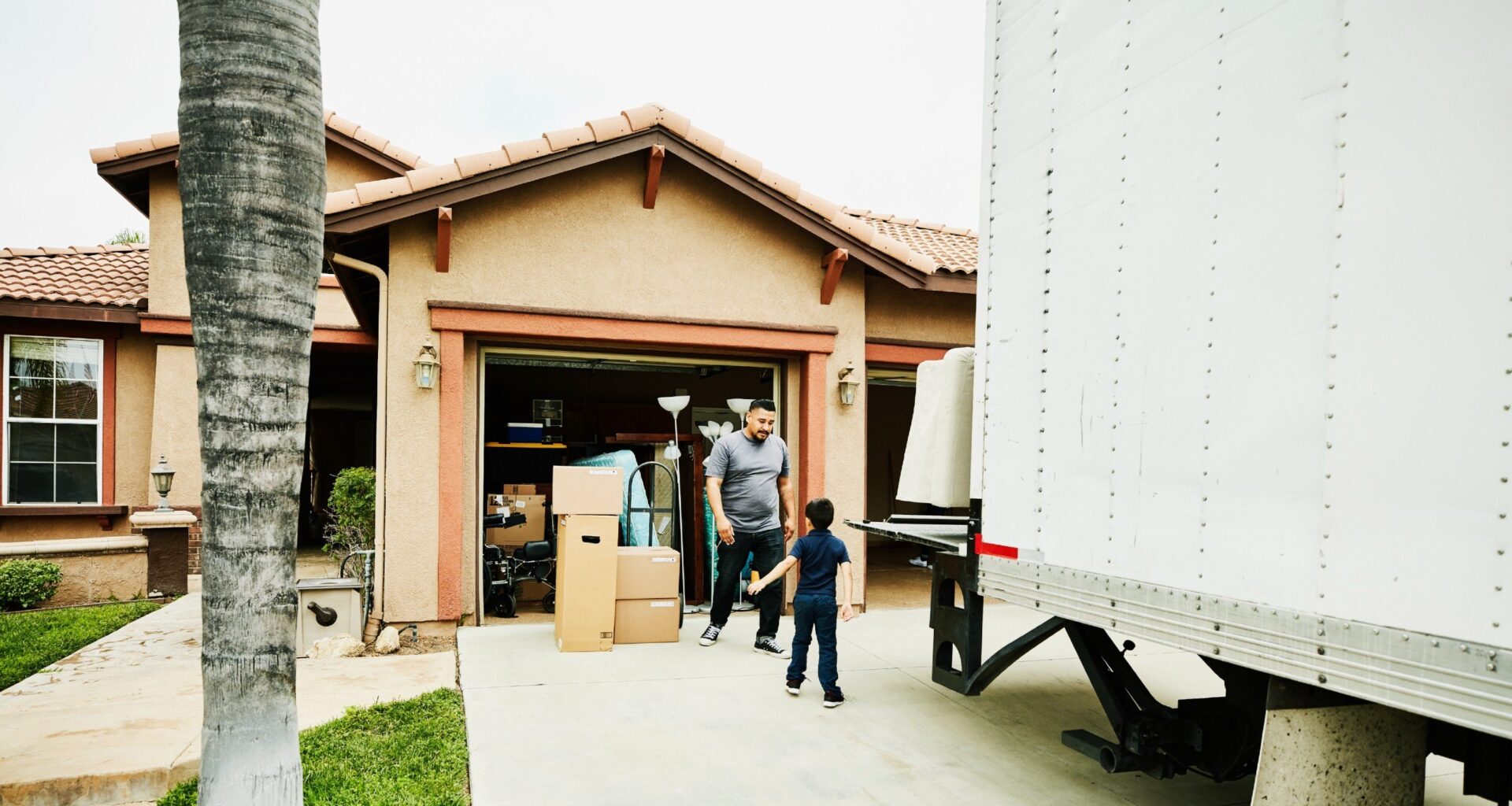
Saddled with high housing costs, many California residents are departing the state for more affordable locations and greater financial security, recent research reveals.
Los Angeles County suffered a population decline of 54,000 residents from 2024 to 2025 as more people moved out than in—and many of those leaving say housing prices are partly to blame.
California’s median home listing price is currently $736,500, but prices in the state’s major metros sit far higher—$1,096,500 in Los Angeles and $985,000 in San Francisco, according to Realtor.com® data.
On the rental side, median monthly rents are $2,691 in the San Francisco metro and $2,760 in the Los Angeles metro, compared with a typical rent of $1,669 across the country’s 50 largest cities.
The California Policy Lab at UC Berkeley found that people who move away from the Golden State relocate to neighborhoods where they save $672 each month on housing costs, including rent or mortgage, utilities, property taxes, and insurance.
For renters, rent typically drops by about 30%—or roughly $631—in their new neighborhoods. Meanwhile, the median home price in their destination cities is nearly $398,000 lower on average, a 48% decrease compared to the California communities they leave behind.
“The price tag has gone up on the California dream, and many families are leaving the state for more affordable places,” says study co-author Evan White, executive director of the California Policy Lab at UC Berkeley. “The difference these moves make is stark. Their destination neighborhoods are half as expensive, and they end up much more likely to own a home within just a few years.”
Seven years after leaving California, former residents are about 48% more likely to own a home than similar Californians who stayed in the state.
Wealth advisor Clint McCalla told Realtor.com in 2024 that he moved from California to Texas in large part due to the cost of living.
“We rented a house in San Diego,” he said. “The cost of living was far too high to justify staying. I didn’t feel like we would ever be in the position to get ahead in California, with how things were trending. Almost everything costs less in Austin. Housing is the biggest savings for our family. We’ve been able to buy a wonderful home in an excellent school district with great neighbors, sunset views, and an exceedingly friendly deer population.”
Housing affordability pressures
A new study by the Los Angeles Business Council Institute finds that housing affordability pressures remain widespread across Los Angeles, with 7 in 10 Angelenos reporting difficulty affording housing. That figure includes more than half of homeowners and 86% of renters. The report also notes that three-quarters of renters have considered leaving Los Angeles altogether.
“Despite billions of dollars in investment and new policies, housing concerns have only become more acute for Angelenos throughout the city, regardless of their age, income, or race,” says LABC President Mary Leslie in a statement shared with Realtor.com®.
A separate survey from UCLA similarly underscores the strain, finding that Los Angeles County’s quality of life has fallen to its lowest level on record amid rising housing costs, economic uncertainty and growing anxiety about the future.
The Los Angeles skyline is seen in a file photo. A new study finds 7 in 10 Angelenos report difficulty affording housingGetty ImagesLos Angeles insider weighs in on the exodus
Real estate agent Jameson Tyler Drew, president of Anubis Properties in the L.A. area, tells Realtor.com that the contrast between Los Angeles and other parts of the country becomes especially clear when he travels.
“When I travel to the Midwest, I’m constantly reminded that the cost of living isn’t the same as in Los Angeles, and the pace of life is much slower,” says Drew. “The taxes on a modest suburban home in Los Angeles could be the down payment for a very nice house in Chicago or Indianapolis.”
Drew notes that broader economic shifts have also weighed on the region’s housing market. “It doesn’t help the real estate industry when the staples of the L.A. economy have dried up or moved on,” he says, adding that many jobs tied to moviemaking have long since left the area.
As costs continue to rise, he believes affordability has reached a breaking point for many residents.
“Is the state becoming cost-prohibitive for most people? Sadly, yes,” says Drew. “The clients and family who left L.A. for greener pastures are thriving for the most part. Yes, they all say the same things: They miss In-N-Out and the weather. But it’s hard to see a future here if you are just trying to start a family.”
Drew also described a challenging employment landscape.
“Regarding the job market in Los Angeles, it’s just about as bleak as it is anywhere else in the country,” says Drew. “There are many job listings out there, but none whose wages can afford a $4,000-a-month mortgage. The entertainment industry has been dead for years now, with most of its workers scattered to Atlanta or Toronto. Other industries throughout the area are feeling the effects of $5 to $6 gasoline and have stopped hiring.”
With wages lagging behind housing costs, Drew says many would-be buyers are choosing to leave.
“With wages not catching up to rent hikes and mortgage payments, tons of prime buyers are looking elsewhere for their futures—and I don’t blame them,” he says. “I am the last member of my high school friend group still living in L.A.; the rest scattered to greener pastures long ago. With an average home price hovering at $900,000 [in L.A. County], the mortgage payment and tax burdens aren’t even remotely sustainable for a family trying to start a life.”