
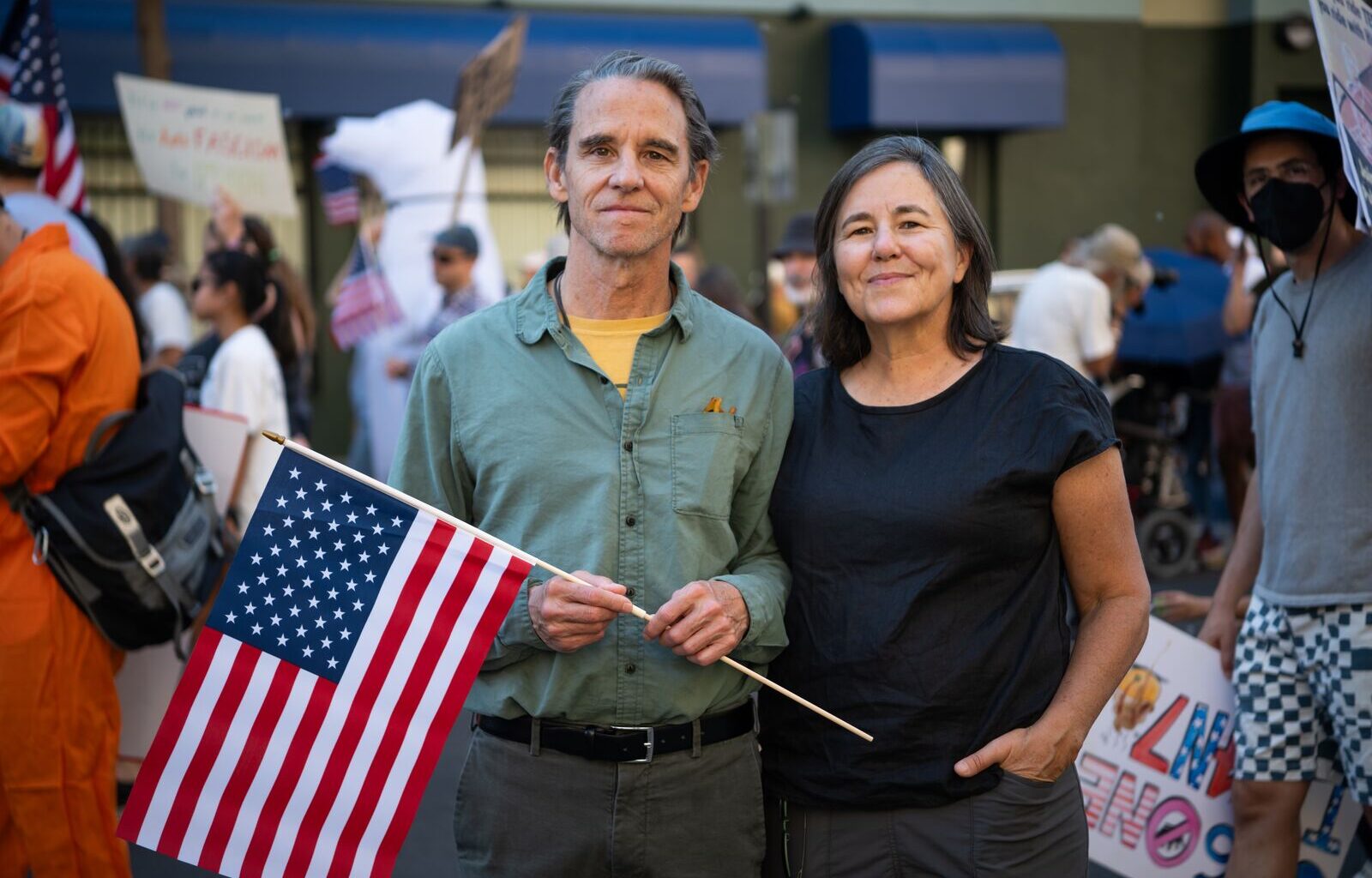
 André Carothers and Annie Leonard. Credit: Brooke Anderson
One day a few decades into the eighteenth century, a small, hunched man named Benjamin Lay declared at the Quakers’ yearly meeting in Philadelphia that God respects all peoples equally, regardless of race.
“Thus shall God shed the blood of those persons who enslave their fellow creatures,” he cried, before plunging his sword through a book containing a bladder of berry juice, which sprayed on nearby congregants. The meeting erupted in chaos.
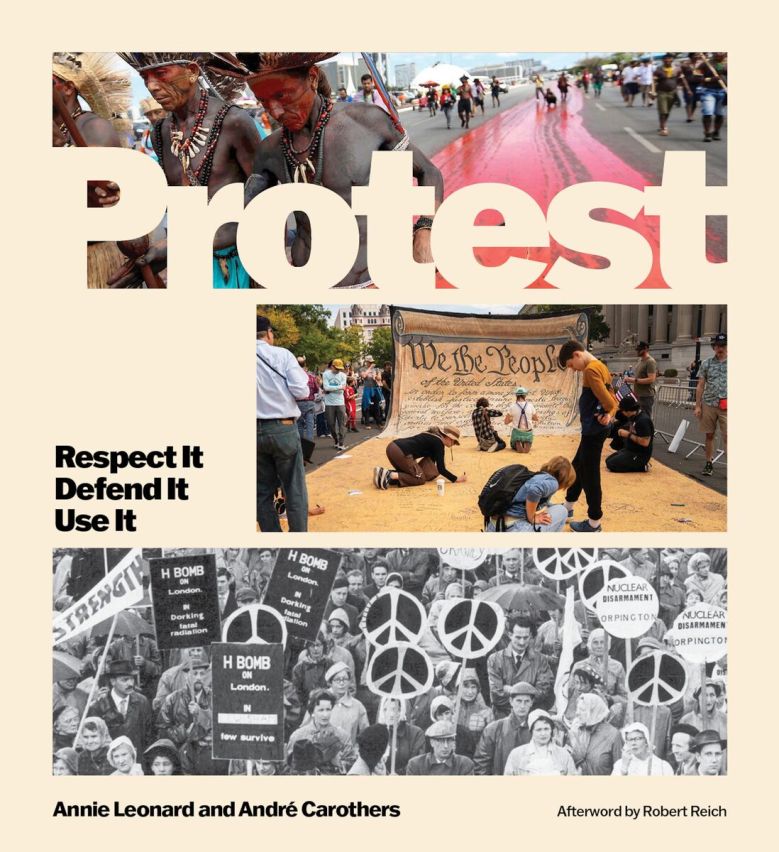
Lay’s performance is one of the more obscure examples of protest included in the new book “Protest: Respect It, Defend It, Use It,” by Annie Leonard and André Carothers, longtime activists who also happen to be North Berkeley neighbors. The book explores the role peaceful activism has played in advancing the public good and the need to protect this right.
Coinciding with the 250th anniversary of the Declaration of Independence, the book documents some 42 protests, from Lay’s in 1738, which led to the banning of slave-owning Quakers from meetings and paved the way for abolitionist movements that followed, to the No Kings marches that began in 2025.
There are events that American schoolchildren learn about in elementary school, like the Boston Tea Party and Rosa Parks’ bus ride, as well as lesser-known acts that took place elsewhere in the world. Among the latter are the Save the Narmada Movement in 1989, when more than 50,000 people came out against the damming of the Narmada River, one of the largest anti-dam protests in Indian history, and efforts in 2014 that saved the Yasuni National Park in the Ecuadorian Amazon from oil exploration.
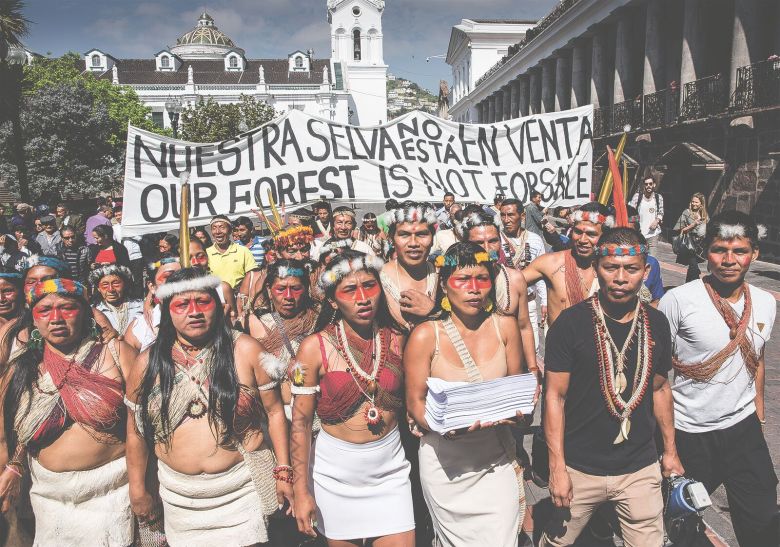 Activists marched to Quito’s National Electoral Council to deliver petitions calling for a referendum to ban oil exploitation in Yasuní National Park. Credit: Mitch Anderson | Amazon Frontlines
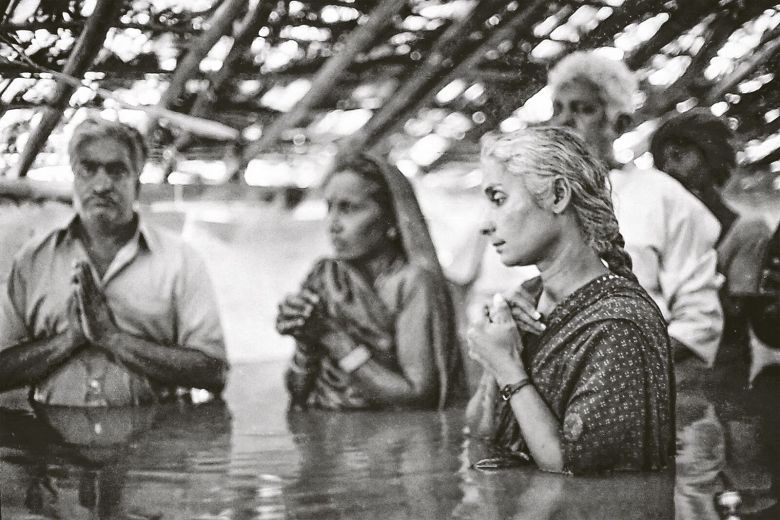 Medha Patkar of the Narmada Bachao Andolan stands in the rising waters of the Narmada Riverin 2017 as an act of nonviolent resistance against the construction of the Sardar Sarovar Dam, which threatened to displace over a quarter million people. Credit: Hari Katragadda | Deepa JaniPhoto
The user-friendly volume contains lots of photos and what Carothers calls “bite-sized nuggets of text” that describe each protest, supplemented with essays by the likes of San Francisco author Rebecca Solnit and labor activist Dolores Huerta.
Leonard and Carothers will appear at a book launch at Mrs. Dalloway’s at 7 p.m. on Tuesday, April 28. Registration is suggested.
The authors are experts on the subject. A lifelong activist who has protested around the world, Leonard was executive director of Greenpeace US from 2014-23. She has also created “The Story of Stuff” project in Berkeley, co-launched the Jane Fonda Climate PAC and campaigned against pollution. Carothers, an activist, writer and organizer, has been involved in campaigns and protests on climate change, human rights, environmental protection and nuclear disarmament for more than four decades. He worked for Greenpeace for 13 years and cofounded the Rockwood Leadership Institute, a training organization for activists.
Speaking with Berkeleyside, they discussed the Trump administration’s attempts to squelch peaceful protests, how UC Berkeley has handled issues of free speech on campus, and what Berkelayans should do to keep the city’s long legacy of activism alive.
This interview has been condensed and edited for clarity and length.
How did the idea for this book come about?
Annie Leonard: Protesting for a better world is in our DNA. We’ve seen it successfully advance so many different causes. Talking to André constantly, I saw an increasing crackdown on the right to protest during the years I was at Greenpeace.
How was that crackdown manifesting at that time?
Leonard: I saw a broader crackdown on protests that took a number of different forms: bogus laws called SLAPP [Strategic Lawsuit Against Public Participation] that outlaw constitutionally protected free speech or peaceful protest and lead to bogus lawsuits. All these different ways that protest was being criminalized. It starts and ends with the vilification of protest. As we studied it more we learned that one of the first things nondemocratic rulers — and big polluting companies — do is vilify or demonize their critics. And we have seen this on overdrive in recent years where protesters are called terrorists or enemies of the state. People calling protests “I hate America” rallies. Black Lives Matter protesters, free speech protesters, Gaza protesters have all been vilified and demonized.
What are the particular challenges we’re facing right now under the Trump administration?
André Carothers: Right now we have an information ecosystem that’s trying to normalize everything that is happening in this country —- mass surveillance, selective prosecution, jail sentences for people who throw tomato soup on a protected work of art. These stories remind us that history did not start this morning. We need to understand the long arc of history to remind us that things are not the way they should be in this country.
What were your goals for this book?
Leonard: To draw people in and open their hearts and minds and recognize the value of protest as a right. We wanted to remind readers that 1) people who are peacefully protesting are part of a long democratic tradition and that 2) protests helped bring us many advances we take for granted today — from weekends to having wheelchair access on curbs and women’s right to vote. Our country is cleaner, safer, more fair and more democratic because of the role of protesters. We wanted to remind readers what’s at stake if we lose this right.
What are some of the protests in the book readers might not be familiar with?
Leonard: The Section 504 protests of 1977 that many people say really supercharged the disability rights movement. They happened right here in the Bay Area. Another is when ACT UP [Aids Coalition to Unleash Power] put a giant condom over Senator Jess Helms’ house in protest of his homophobic actions to prevent health clinics from educating people about safe sex and AIDS prevention.
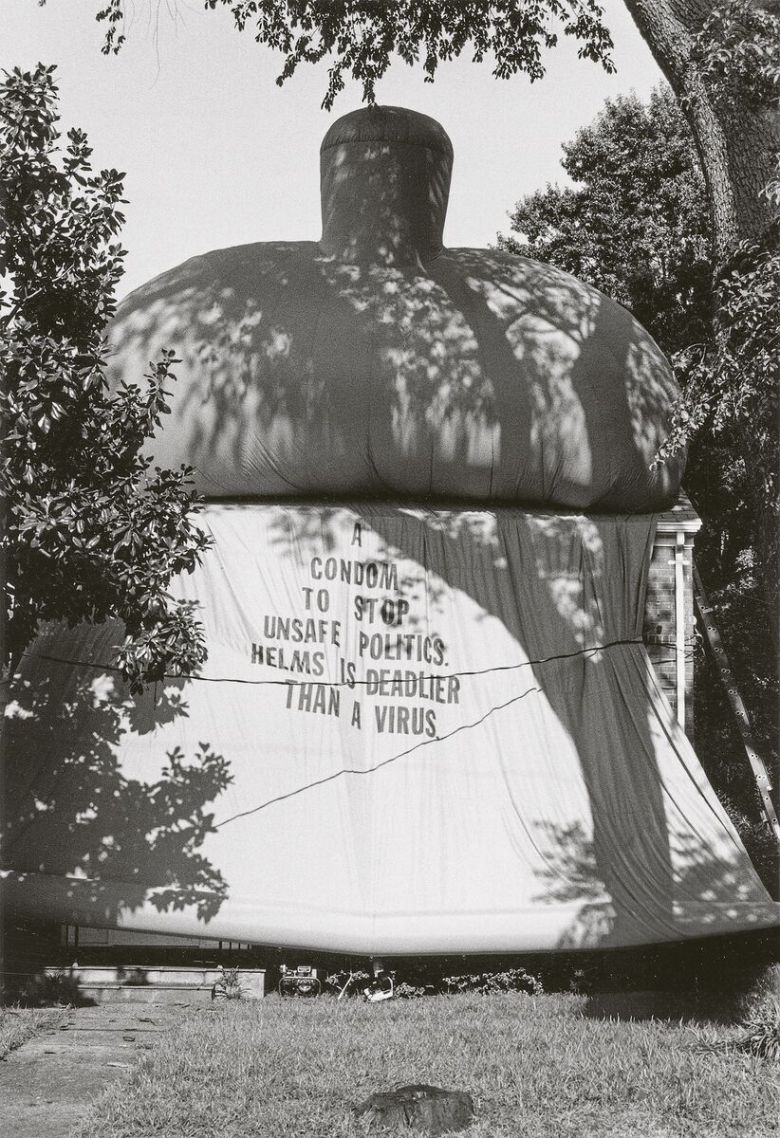 A condom on Jesse Helms’ house drew attention to the senator’s homophobic pronouncements and policies, which had prevented lifesaving research and aid to communities impacted by HIV. Credit: Doug Hinckle | Washington BladePhoto
Berkeley’s claim to fame in terms of protests — the Free Speech Movement in 1964 — was not included in the book. Though there are a couple of references to Mario Savio. Why did you leave that out?
Leonard: There’s between 1,000 and 100,000 protests every single day. So many people lobbied us to include this one or that one. We were only allowed 42. I call the book “a protest tasting menu.” Because we are such fans of Mario Savio we did include his beautiful quote [“There’s a time when the operation of the machine becomes so odious, makes you so sick at heart, that you can’t take part …”] André thinks it’s the best quote on protest in history. The hardest part was choosing which protest. We wanted as diverse an assortment as possible.
UC Berkeley has recently faced scrutiny over free speech issues. How would you rate the university’s response to pressure from the Trump administration as it seeks to exert ideological control over higher education?
Carothers: While UC Berkeley leaders argue they were legally bound to share community data to protect funding, the decision to comply reflects, in a way, a dereliction of duty to the moment that we are in. [Editors’ note: In September, UC Berkeley officials acting at the behest of the UC Office of the President handed over names and personal informationof 160 students, faculty members and staff to the federal government, in response to its investigation into antisemitism on campus.] Non-compliance is an essential tool that has been used throughout history to slow and reverse authoritarian overreach. Especially when many people and institutions do it at once. The University of Pennsylvania and Harvard have all mounted robust defenses. And that defense would have been more powerful if the University of California had joined in. There is, of course, a risk. But history will likely praise the more principled stance, five, 10, 15 years from now. Most of the protesters described in our book were vilified at the time. … Jailed, bankrupted, called traitors, communists, troublemakers. But their principled stand eventually won the day and also won history.
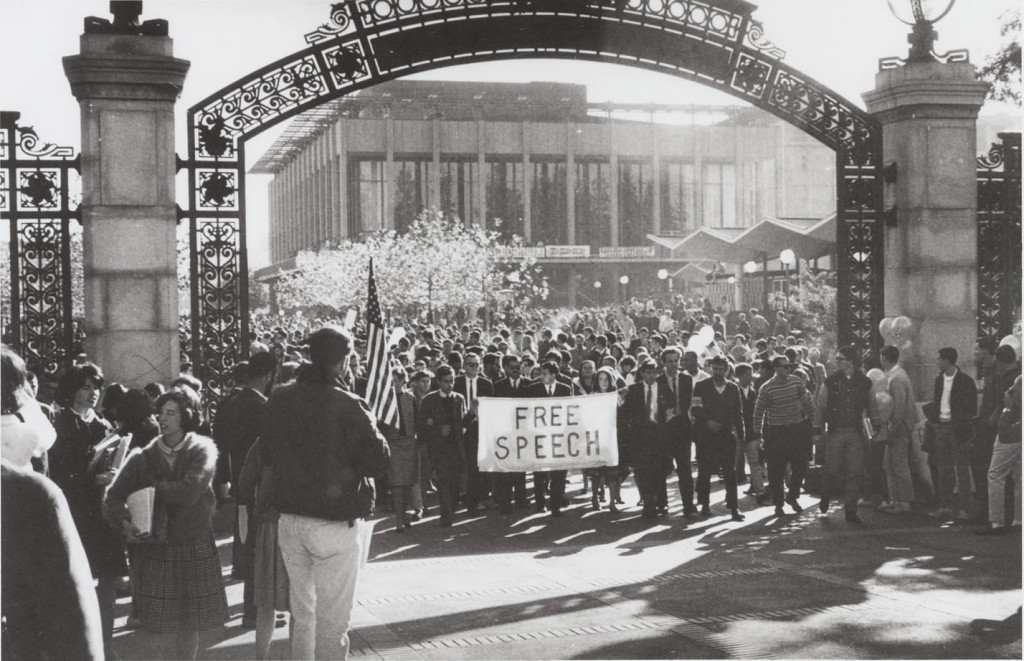 An iconic image from the Free Speech Movement, which erupted on the Berkeley campus on Oct. 1, 1964. Credit: UC Berkeley Libraries
What is Berkeley’s legacy in terms of protest movements?
Leonard: Berkeley is seen as an epicenter for peaceful protests — from the Free Speech Movement to community protests against waste incineration to Berkeley High School students protesting against the Vietnam war. I often say Berkeley is the “protest pace car of the nation.” For decades Berkeley has shown the world the power of peaceful protest.
What about this commonly held notion that marches like No Kings really don’t have any effect?
Carothers: There are many reasons why protests are valuable. They help people who are on the sidelines see what citizen muscle looks like. They bring an issue that they might not know about onto the public stage. They create a community. What the people of Minneapolis did for each other, which is now called neighborism, is the bedrock of effective resistance. They are one rung on the ladder of engagement. When people feel safe and secure in non-violently protesting at a No Kings march, they are much more likely to do the next thing that is required.
Are there other Berkeley protests that were left out of the book that you’d like to recognize?
Carothers: How the Black Student Union at Berkeley High, formed in 1968, successfully lobbied for more Black teachers and instructors, making Malcolm X Day an official holiday and establishing the first ever Black studies department. There were no organized actions. Students got together across race and class lines and said, “This is what we want.” The Berkeley Unified School District agreed. That served as a model for schools in the Bay Area and across the country.
What message do you have for readers?
Leonard: We need to share stories about the role peaceful protest has played in making our city — and the country — better. We need to push back on attempts to curtail the right to free speech and peaceful protest. And most importantly — we need to engage in peaceful protest ourselves. We protect our democratic rights by using them! This is the moment for Berkeley to shine.
We know that most readers don’t get to the end of the article. But you did! To support our in-depth, rock-solid reporting, please consider making a donation to our nonprofit newsroom today. We rely on our readers — particularly the ones who read the whole story!
“*” indicates required fields