
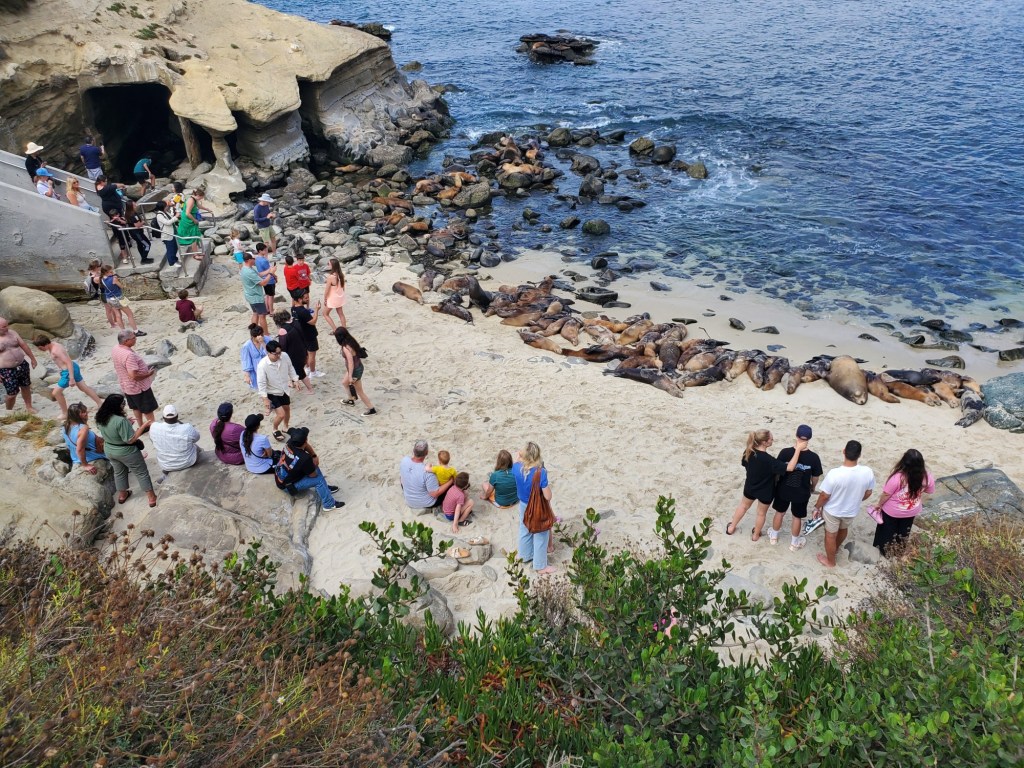
TripAdvisor names La Jolla Cove seventh-best beach in the world
The travel guide and review site Tripadvisor.com has named La Jolla Cove as the seventh-best beach in the world for 2026. The list, released this month, includes among its top 10 beaches in Mexico, Greece, Aruba, Australia and more.
“The Travelers’ Choice Awards Best of the Best title celebrates the highest level of excellence in travel,” according to TripAdvisor. “It’s awarded to those who receive a high volume of above-and-beyond reviews and opinions from the Tripadvisor community over a 12-month period. Out of our 8 million listings, fewer than 1% achieve this milestone.”
TripAvisor says “La Jolla Cove is a scenic beach where blue-green waters meet dramatic cliffs. … Take a stroll on the promenade or go kayaking or paddleboarding, then catch the colorful sunset.”
Two La Jolla administrators to receive school district award
Muirlands Middle School Principal Brendan Simon and La Jolla High School Vice Principal Joe Caviola are being recognized by the San Diego Unified School District as Distinguished Leaders for 2026.
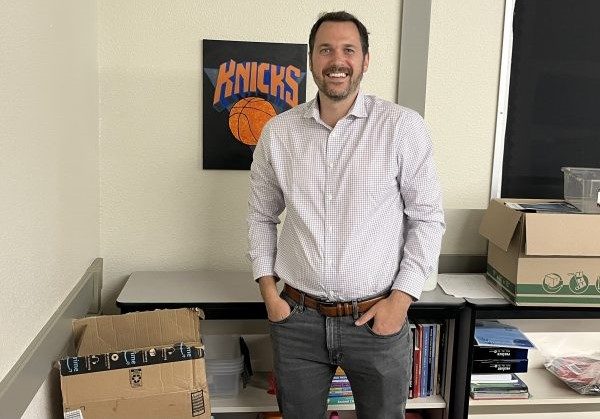 Muirlands Middle School Principal Brendan Simon (Noah Lyons)
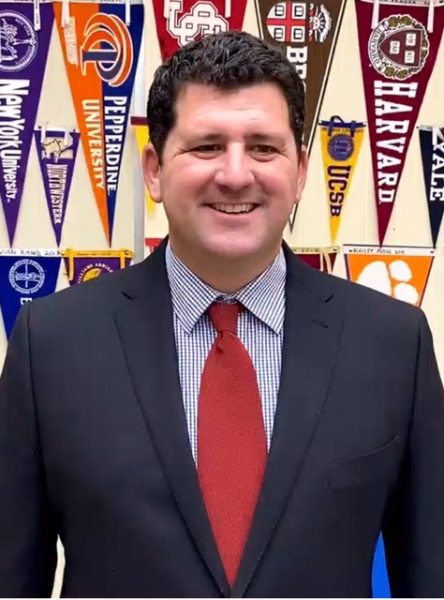 La Jolla High School Vice Principal Joe Caviola (File)
“This is a district-level recognition, so to see [two] La Jolla [representatives] is really exciting,” said SDUSD Area Superintendent Mitzi Merino.
The pair will be recognized at a ceremony Thursday, May 7.
Salk scientist receives inaugural worldwide award
Terrence Sejnowski, a professor and head of the Computational Neurobiology Laboratory at the Salk Institute for Biological Studies in La Jolla, and Nobel Prize laureate Geoffrey Hinton have received the Scientific Breakthrough Award in the World Digital Technology Academy’s inaugural World Digital and Frontier Technologies Awards.
The WDFT Awards were launched to honor “groundbreaking contributions across science, engineering, societal impact and global collaboration in the era of digital technologies,” according to Salk.
Sejnowski and Hinton are being recognized for their pioneering research, highlighted by their development in 1985 of the Boltzmann machine, which provided “the architectural bedrock for deep learning, generative AI and the large-scale systems now driving digital civilization.”
Sejnowski also pioneered a computer program called NETtalk, which could learn to convert written text into speech, laying the groundwork for modern artificial intelligence tools like ChatGPT.
La Jolla professors named to American Academy of Arts and Sciences
La Jolla Institute for Immunology professor and President Erica Ollmann Saphire and LJI professor and president emeritus Mitchell Kronenberg have been elected to the American Academy of Arts and Sciences.
The academy was founded in 1780 by John Adams, John Hancock and 60 other early American leaders who aimed to gather knowledge and address problems in society. Academy members have included Benjamin Franklin, Martin Luther King Jr., Jonas Salk and Madeleine Albright.
Saphire and Kronenberg were inducted for their scientific discoveries and leadership in microbiology and immunology. They are among eight U.S. microbiologists and immunologists elected to the academy this year by their scientific peers.
Three La Jolla stops to be featured on Bike Anywhere Day
The annual SANDAG Bike Anywhere Day returns Thursday, May 21, with three stops in the La Jolla area.
For more than 30 years, the San Diego Association of Governments has presented the regional event to celebrate National Bike Month in May in an effort to alleviate traffic and reduce air pollution while promoting biking.
On Bike Anywhere Day, riders can explore more than 1,800 miles of bikeways throughout the San Diego region from Oceanside to El Cajon and Tijuana.
Participants can pick up a free commemorative T-shirt along with refreshments at any Bike Anywhere Day pit stop while supplies last.
In the La Jolla area, pit stops will be in Town Square on the UC San Diego campus, Pawka Green at the Scripps Institution of Oceanography and the grassy area east of Spreckels Elementary School where the UC Bike Bus ends in University City.
To register for Bike Anywhere Day, visit SANDAG.org/bikeday.
DPR Committee supports Bird Rock blufftop development
The La Jolla Development Permit Review Committee gave its approval to a project at 5386 Calumet Ave. in Bird Rock that would demolish about 50% of a one-story, 1,957-square-foot house and renovate it, resulting in a 4,388-square-foot house with an attached garage.
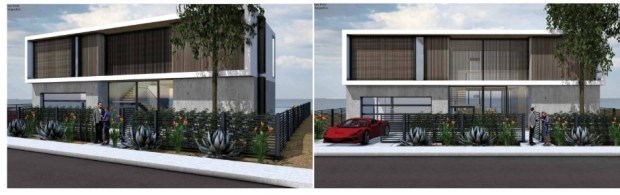 A rendering presented to the La Jolla Development Permit Review Committee shows plans for a home at 5386 Calumet Ave. in Bird Rock. (Screenshot by Ashley Mackin-Solomon)
The proposal previously was heard during the DPR’s April 14 meeting. Upon its return April 21, the applicant provided additional renderings and information about the development’s proximity to the bluff, heights and setbacks, gate materials, how the view to the ocean would be preserved and more.
The committee voted unanimously to support the project, and its recommendation will proceed to the La Jolla Community Planning Association for ratification or further review.
UC San Diego study links diabetes to Alzheimer’s indicators in Latino adults
Researchers from UC San Diego in La Jolla say they have found that diabetes is linked to changes in measurable biological signals in the blood that are associated with Alzheimer’s disease and brain damage in Latino adults.
The study suggests that metabolic health may play an important role in shaping future dementia risk.
The study followed more than 6,000 middle-aged and older Latino adults from several U.S. cities with large Latino populations, including San Diego, as part of a 15-year community health research project. Researchers examined whether people with diabetes — or higher long-term blood sugar levels — showed changes in blood-based indicators linked to Alzheimer’s disease and nerve cell damage.
They determined that people with diabetes had higher levels of blood signals associated with abnormal tau, a protein that normally helps support nerve cells in the brain but becomes harmful in Alzheimer’s disease by forming tangles that disrupt brain function.
Participants with diabetes also showed lower levels of a blood signal related to amyloid, a protein that can build up in the brain and form sticky plaques that interfere with communication among brain cells.
Similar patterns were observed in people with elevated blood sugar levels, even if they had not been diagnosed with diabetes.
The researchers plan to explore whether improving diabetes management can slow or reverse the blood-based changes and reduce long-term dementia risk.
UCSD study looks at national usage of hallucinogenic psilocybin
A UC San Diego School of Medicine study is taking a first-of-its-kind look at the use of psilocybin, the hallucinogenic compound found in “magic mushrooms,” in light of rising usage rates in the United States alongside decriminalization efforts in several states and local jurisdictions and heightened interest by the general public.
Researchers at UCSD and New York University’s Grossman School of Medicine reported that about 2.8% of U.S. residents older than 12 — about 8 million people — had used psilocybin in the past year.
The team analyzed data from the 2024 National Survey on Drug Use and Health. This was the first year the large‑scale survey asked psilocybin‑specific questions among 58,633 respondents. Previous national surveys have grouped psilocybin with other hallucinogens and focused on lifetime use rather than during the previous 12 months.
The findings have implications for clinical practice. In the past decade, clinical trials have indicated that psilocybin has promising therapeutic effects for depression, but the safety of unsupervised, naturalistic use remains unclear. In controlled clinical settings, participants are carefully screened, doses are standardized and psychological support is provided.
Researchers say studies that track the mental health of people over time as they use psilocybin are needed, as well as increased public health surveillance as decriminalization and potential federal approval of the substance progress. ♦