
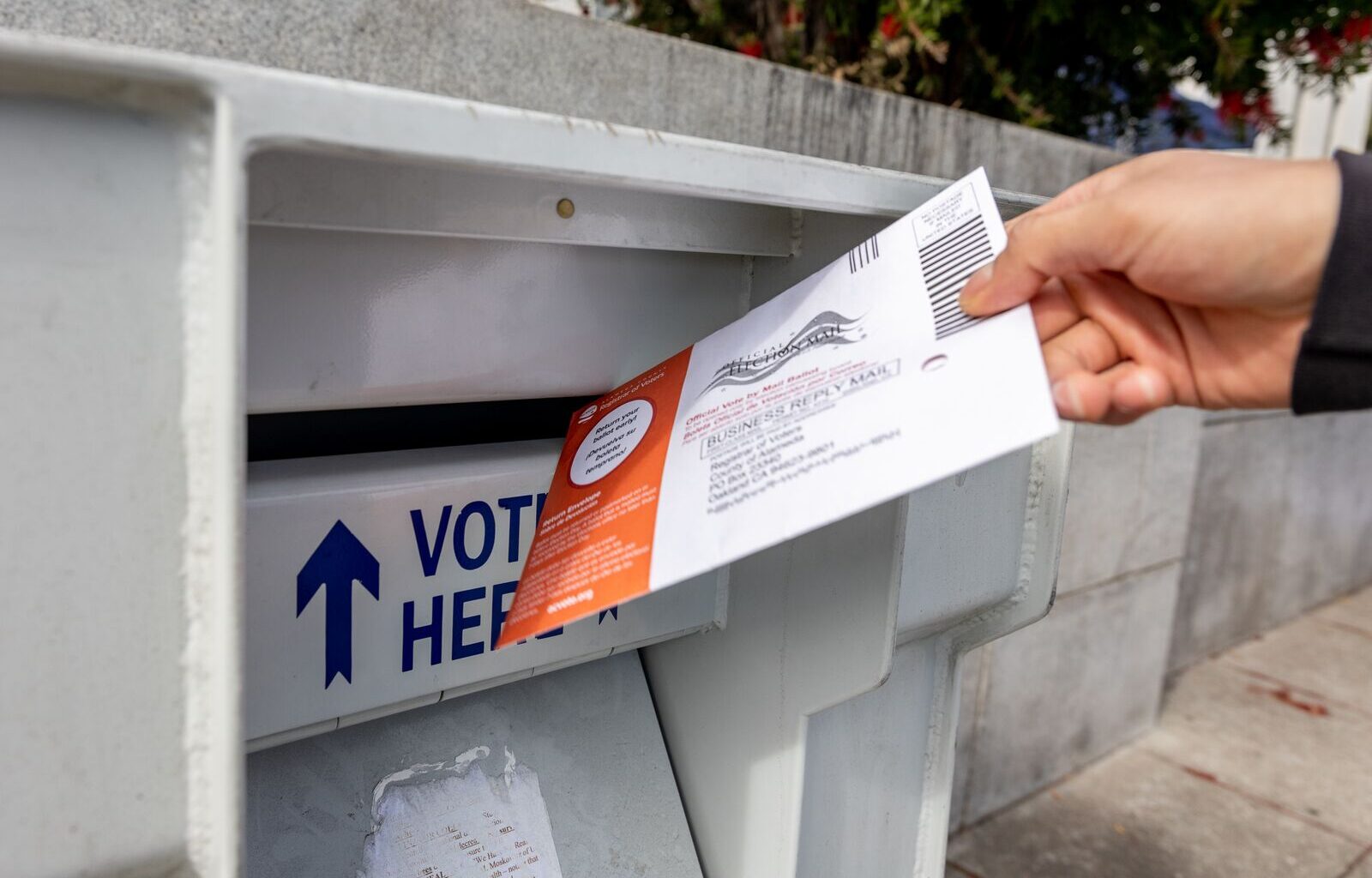
It’s that time again. Election season is around the corner.
June 2 is California’s 2026 primary. Fields of candidates running for state offices, like governor and assemblymember, will be narrowed down to two. Locally, voters will weigh in on key races like district attorney and superintendent of schools. And Oakland voters will be asked to approve or reject several ballot measures, including a major parcel tax and business tax relief.
We’re here to help you understand what’s on the ballot and how to take part in the election. Wondering about something we haven’t addressed? Let us know.
Why are we having a primary election?
There’s a general election in November that’s shaping up to be a very big deal because it’s a midterm — an election that falls halfway through President Donald Trump’s four-year term. This election will decide the balance of power in Congress. It could also take California down a different path because voters will choose the next governor, lieutenant governor, attorney general, and other top leaders, as well as vote on propositions. And locally, several seats on Oakland’s City Council and school board will be up for grabs, plus we’ll choose a mayor (yes, again).
But first, there’s the primary. Voters will use this election to winnow down candidates for the November state and county races and decide on local issues.
How to register to vote
Go to the California secretary of state website and be prepared to enter your driver’s license or state ID number, the last four digits of your social security number, and your date of birth. If you don’t have a license or ID, you can still register, but there are a few additional steps.
To register, you must be:
18 or older
A U.S. citizen and resident of California
Not currently serving a federal prison sentence for a felony
Not currently found mentally incompetent to vote by a court
Voters also have rights, including the right to a ballot and materials in a language other than English, the right to vote without anyone bothering you or telling you how to vote, and the right to report illegal or fraudulent activity. California voters’ full rights are described on the secretary of state’s website.
The deadline to register to vote is always 15 days before an election. But don’t worry if you miss that. You can always still vote by conditionally registering, even on the same day as the election. It’s called conditional registration, and it’s not hard. For more information, check out the secretary of state’s website.
What are some key deadlines?
Besides making sure you’re registered, some other key dates include:
April 23: Voter guides are mailed to registered voters. These are filled with useful information about candidates.
May 4: Ballots are mailed out to all registered voters in Alameda County and voting begins.
May 4: 24-hour ballot drop boxes open.
May 23: Some voting centers open.
May 26: Last day to ask for a replacement vote-by-mail ballot.
May 30: More voting centers open.
June 2: Last day to vote. Preliminary results are posted by 8 p.m., with final results taking longer to count.
How does voting work?
All registered voters should get a ballot in the mail. The registrar begins sending these out on May 4. If your ballot doesn’t arrive, you may want to sign up for the state’s free ballot tracker to see what happened, and you may need to request a replacement.
Once you have your ballot, there are several ways you can vote:
Fill it out and mail it back to the registrar so it’ll be counted. If you do this, you may want to drop it off at a post office or mailbox well before June 2 to be extra sure it’s counted.
Fill out the ballot you got in the mail and deliver it to a dropbox. The registrar sets up 24-hour dropboxes across the county starting on May 4. Here’s a map of the dropbox locations.
Vote in person at one of the voting centers in the county. You can bring your mailed ballot, or you can request a ballot at the center. Some voting centers open 11 days before June 2, while others open 4 days before. For a full list, check out the registrar’s website.
What’s on the June 2 primary ballot?
Voters in Oakland will see the following on their ballot, with some small differences for certain legislative offices, which have boundaries that don’t overlap entirely with the city’s.
Oakland and county ballot measures
Measure E: a city parcel tax ranging from $192 for single-family homes to $131 per unit for apartment buildings and a formula to determine the rate for non-residential parcels. The money would pay for city services.
Measure C: would provide tax relief to businesses that gross under $1 million per year and new companies of any size. The relief would cut business tax bills in 2027.
Measure D: Oakland has a special retirement fund for police officers and firefighters that closed to new members in 1976. It’s called “PFRS.” This measure would expand eligibility for the PFRS board and reduce the number of required board meetings.
Measure A: a $48 parcel tax to fund the Peralta Community College District for eight years, providing roughly $8 million each year.
Statewide offices
Governor
Lieutenant governor
Secretary of state
Controller
Treasurer
Attorney general
Insurance commissioner
State Board of Equalization, District 2
State Assembly
18th District (Oakland, Alameda)
14th District (North Oakland, Berkeley, Richmond)
Congress
House of Representatives, 12th District (Oakland, Berkeley, San Leandro)
County nonpartisan offices
Alameda County district attorney
County superintendent of schools
County supervisor, 3rd District (East Oakland, Alameda, San Leandro)
Other nonpartisan offices
State superintendent of schools
Superior court judges (27 judges on the ballot!)
How does the primary work?
California has open primaries, meaning for nearly all contests, we don’t limit voters’ choices among candidates based on their political party registration. All of the candidates running for a particular office, regardless of what party they belong to, appear on the same ballot. And voters, regardless of what party affiliation they have, choose whomever they want.
The top two voter-getters will then advance to the November general election.
There’s one small twist for county-level races like district attorney and supervisors: If a candidate receives more than 50% of the vote in the primary, they win, and there’s no runoff in November.
What this means for the June 2 primary election is that voters will choose their picks for governor, attorney general, and other statewide offices, plus Congress and the state legislature, and the two candidates who receive the most votes will advance to the November general election. But if any of the candidates running for Alameda County district attorney, or other local offices, get more than 50% of the votes, they’re the winner.
For more information about the nuances of California’s open primary laws, check out the League of Women Voters of California’s website.
Where can I learn more about the Oakland ballot measures and local races like DA?
One important local race is Alameda County district attorney. You can meet the candidates at The Oaklandside’s forum this Wednesday, April 29. The event is sold out, but we’ll livestream it.
Two ballot measures in Oakland are also getting a lot of scrutiny.
Measure E would impose an annual parcel tax to fund police, fire, and homelessness services, as well as programs that keep public spaces clean and accessible. If approved, the measure would impose an annual $192 levy on single-family parcels, with exemptions for certain low-income households, seniors, and others. For owners of apartment buildings and other multiple residential unit properties, the tax is $131 per unit. For non-residential parcels, including commercial buildings, the tax will vary based on the size of the property. Proponents say it’s necessary to fix Oakland’s structural deficits. Opponents say Oakland already taxes property owners a lot and underdelivers on services. Read our full coverage of Measure E
Measure C would give small businesses — those that gross under $1 million per year — one year off from paying the city’s business tax. And brand new businesses, small and large, would get to skip paying up to $1 million in taxes their first year. Supporters say this will juice Oakland’s local economy and provide much-needed relief to brick-and-mortar businesses. Some merchants say it won’t make much of a difference. Read our full coverage of Measure C
We’ll be covering other facets of the primary election in depth through June 2. You can find our ongoing stories and resources here.
“*” indicates required fields