
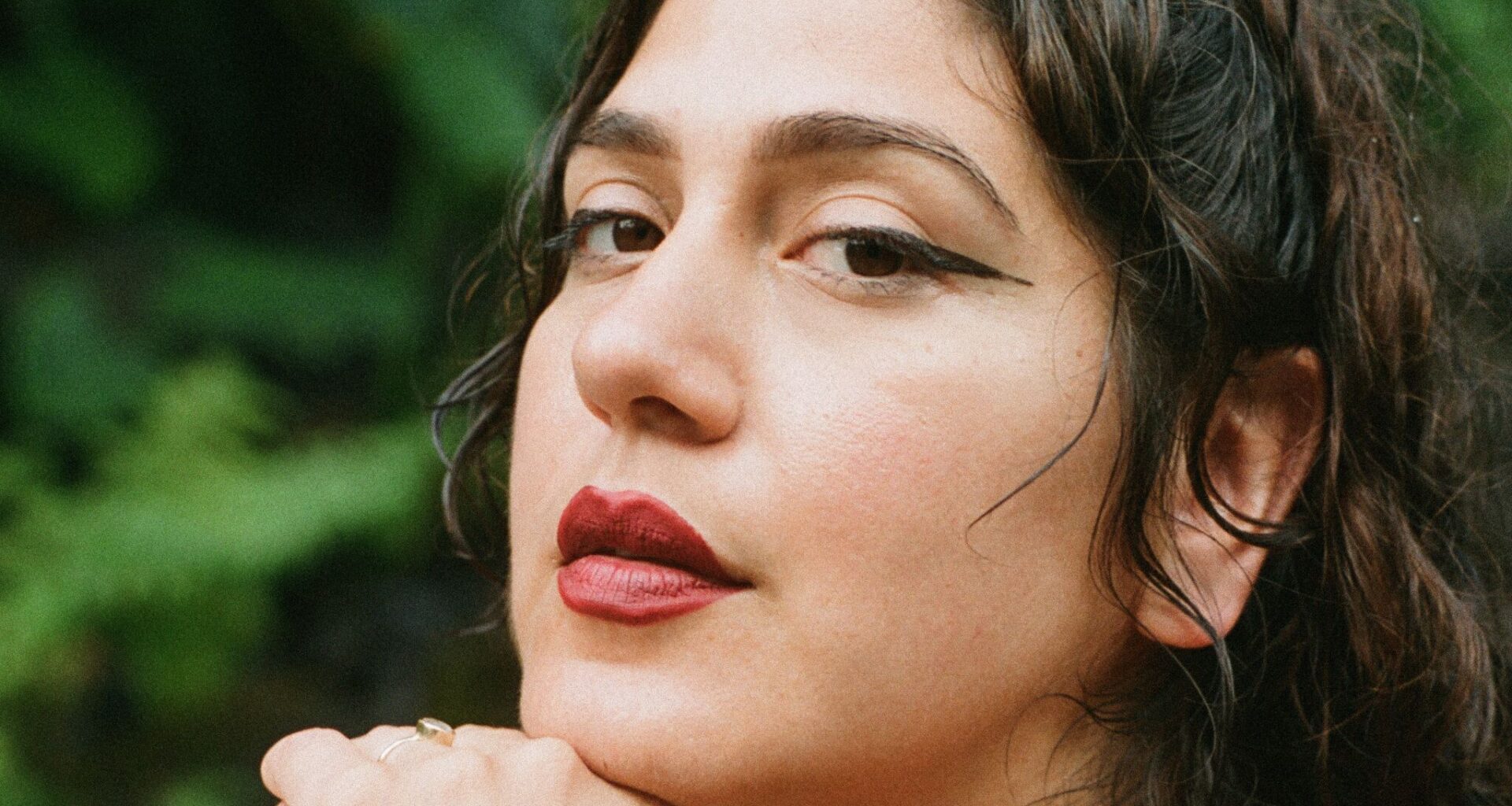
La Doña is entering a new chapter with “Corrientes,” her second full-length album, and an ambitious East Bay release show to match.
The San Francisco singer-songwriter, whose real name is Cecilia Peña-Govea, is known for blending traditional Latin American forms with contemporary sounds. She describes the new project as a deeper and more expansive work than her 2024 debut, “Los Altos de la Soledad.”
“Corrientes,” which means “currents,” draws from Afro-Indigenous musical traditions including cumbia, rumba, bachata, merengue and son jarocho. Peña-Govea said the record — released Wednesday, April 29 — pushed her musically and spiritually, asking more of her than her previous album did.
“I felt like the first album was really kind of a more localized approach and view of like the Latin American diaspora of music, but this one felt like it was a lot more immersive,” she said in a recent interview with the Chronicle. “Just a stretch for me musically, like really difficult arrangements and advanced instrumentations and interpolations of the different genres.”
She said the work took her beyond craft.
“Spiritually, it required me to go a lot deeper in these practices that I felt familiar with,” Peña-Govea said. “It illuminated how much more there was for me to engage with and kind of learn.”
That process brought her back to family history as much as it pushed her forward artistically.
Before she was known as La Doña, Peña-Govea grew up performing with La Familia Peña-Govea, the family band led by her parents and rooted in a wide range of Latin American traditions. Music was everywhere in her childhood, along with the expectations that came with it.
In the interview, Peña-Govea described moments of recognition while recording and studying in Mexico, then returning home and sharing those discoveries with her father as they looked through his vinyl collection.
“There were definitely like full circle moments,” she said. “It felt so healing. It brought me closer to my grandma, who passed almost 10 years ago. It made me feel like I’m closing a circle and maybe opening a circle along my heritage in moments.”
She also described recording at Estudio Egrem in Cuba as one of the defining experiences of making the album.
“I felt imposter syndrome in certain moments,” Peña-Govea said. “I was like, ‘Am I doing this? Is this really happening?’ But it felt so right, and I felt so supported the whole time that I knew it was the right time for me to take on this project.”
The emotional tone of “Corrientes” also suggests a shift. La Doña’s earlier work was often framed through politics, place and self-definition. Her emergence as La Doña was tied to a 2018 car crash on Interstate 280, after which she said the first song of the project came to her fully formed.
“Corrientes” does not leave that behind so much as build on it.
Asked how she balances demanding arrangements with emotional openness, Peña-Govea said she sees that tension as central to the work.