
“These unplanned, disruptive closures could have incredible impacts on the workers and the communities,” Gunda said. “It’s really important … to make sure we have the policies in place to support the transition in a way that we protect Californians.”
“ I’d like to think that some of these strategies are forthcoming,” said Josh Sonnenfeld, a senior researcher at UC Berkeley Labor Center. “Given this is the sixth refinery closure or conversion [in six years], I think we need to pick up our pace here.”
Sonnenfeld previously worked for the Blue Green Alliance, which helped Contra Costa County mitigate the 2020 conversion of the Marathon Refinery to renewable diesel. That change cost 700 refinery workers well-paid union jobs. In response, state lawmakers established the Displaced Oil and Gas Workers Fund to help pay for training and job searches.
The Workforce Development Board of Solano County received $3 million from the fund last year to help laid-off Valero workers, and is offering up to $25,000 in grants to small businesses affected by the closure. Advocates have lobbied to extend and expand the fund, as its authorization sunsets in 2027.
Sonnefeld thinks California leaders should look to other states as examples. For instance, New York created a tax stabilization fund for refinery towns and cities to make up for the sudden loss of refinery dollars, while Michigan and Minnesota each established a community transition office.
“We haven’t set up that infrastructure yet in California around whose job is it to make sure that workers and communities are successfully transitioning,” Sonnenfeld said. “In California, we don’t want to acknowledge that they’re actually folks that are being hurt by the energy transition.”
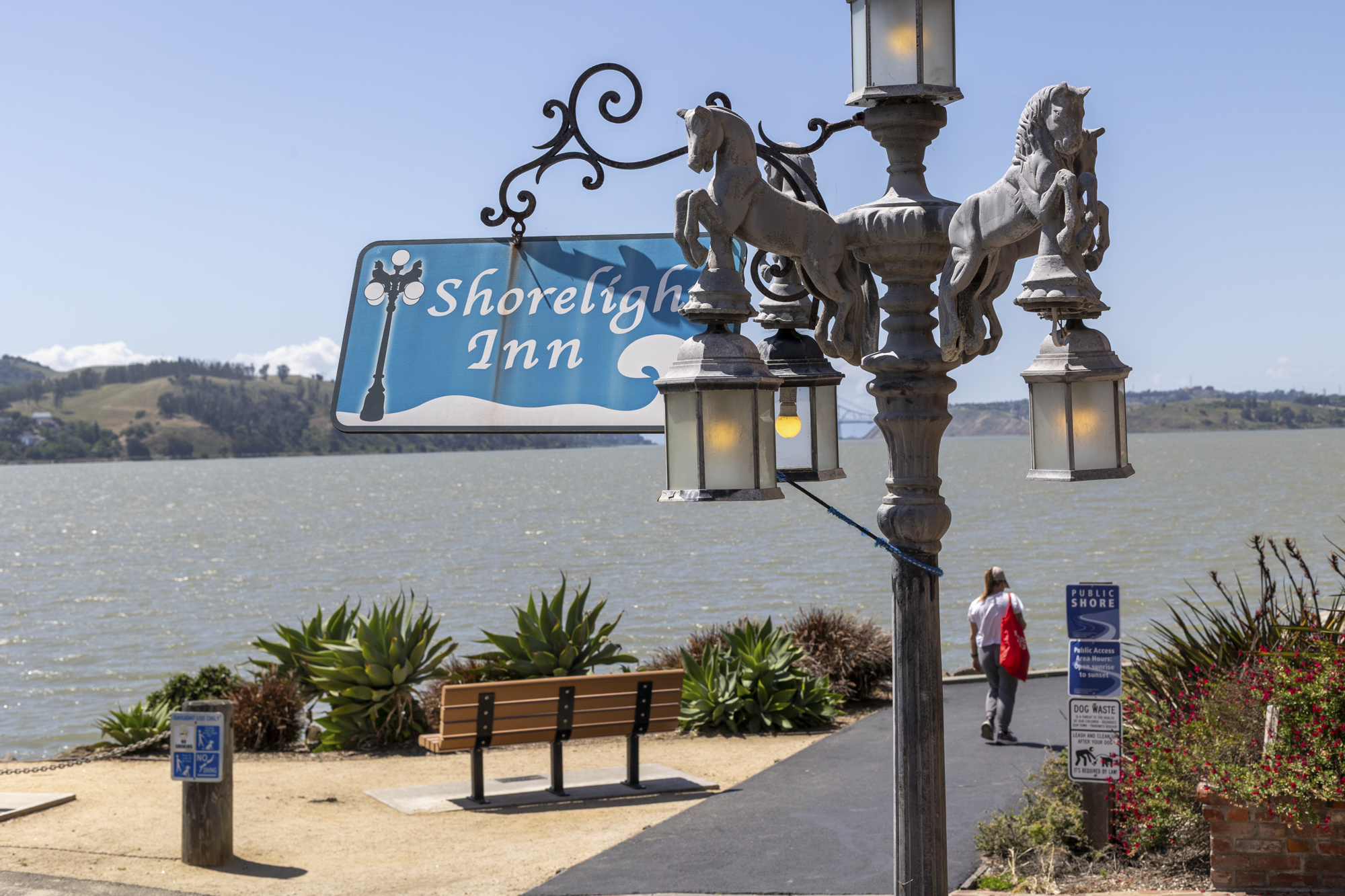 A visitor walks along First Street near the waterfront on April 28, 2026, in Benicia. (Gustavo Hernandez/KQED)
Sonnenfeld said regional governments have shouldered more of the responsibility for mitigating the impact of refinery closures.
The Bay Area Air District launched a first-of-a-kind program this year where regulatory fines against polluters will be passed on to affected communities in the form of grants.
The air regulator issued $82 million in fines against Valero in 2024 for over a decade of excess emissions at the Benicia refinery, which will provide some $60 million in funding.
Benicia plans to seek up to $43 million of the grants, which are also open to local businesses. Applications are due in May, and the awards are expected to be announced in September. That’s the same month that Signature Development, the company Valero hired to manage the sale of refinery land, is expected to present plans to repurpose the property to the city council for approval.
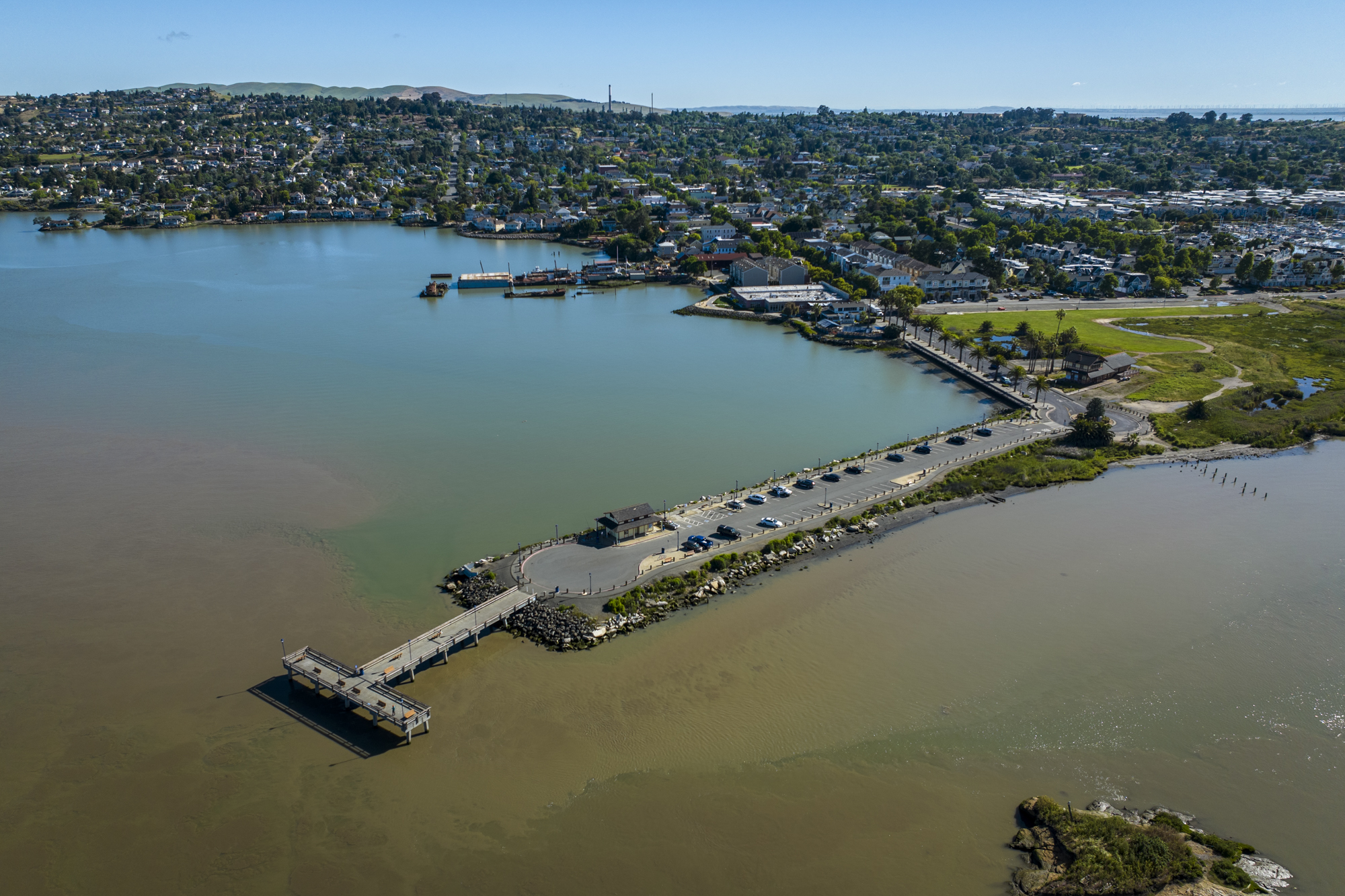 The waterfront in Benicia on April 24, 2026. (Martin do Nascimento/KQED)
Until then, Benicia is on a white-knuckle transition trying to jumpstart a new, green economy without knowing when Valero will leave, or how long it will take to decontaminate and repurpose the refinery site.
The state legislature is considering a bill to help California’s eight remaining refinery towns plan better. SB 1259 would require refineries to plan for decommissioning and estimate the costs and timeline for cleaning up after a closure.
Birdseye said the legislation wouldn’t benefit Benicia.
“We’re in a very precarious moment,” Birdseye said. “ But I’m filled with hope because of what we have here.”
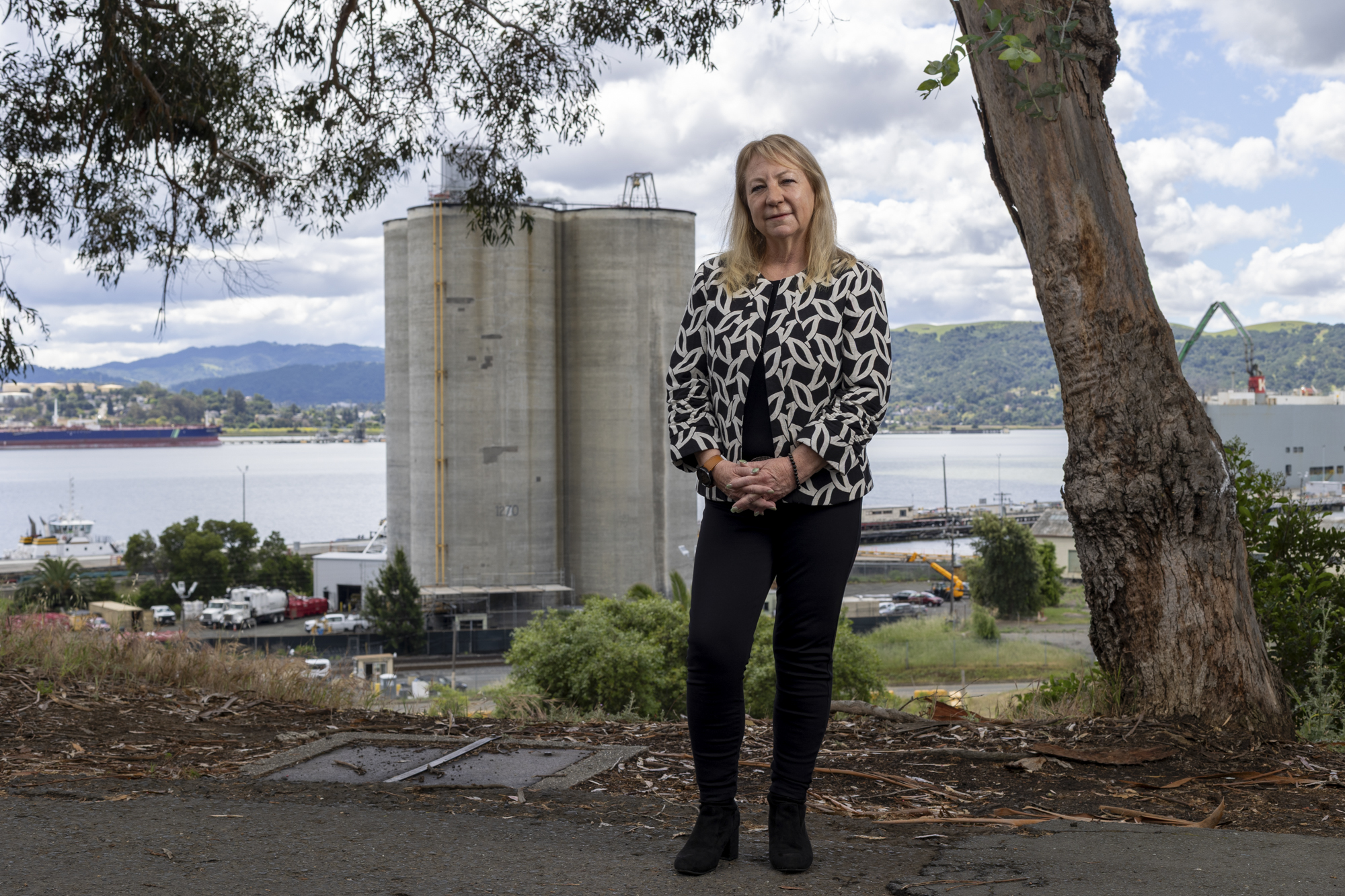 Kari Birdseye, a Benicia City Council member, stands overlooking Benicia’s marine oil terminal near the site of the Benicia Clocktower, on April 13, 2026, in Benicia, as the city prepares for the closure of the Valero refinery and the loss of roughly 10 percent of its annual tax revenue. (Gustavo Hernandez/KQED)
Birdseye said businesses have inquired about moving to Benicia for its central location between two interstate highways, with a rail line and port.
From the city’s old clock tower, Birdseye gestured to a berth below, where Valero had exported petroleum coke, a black dust that’s a refining byproduct and a health hazard. She said a federal agency, the Bureau of Ocean Energy Management, has identified the port as a possible supply chain and manufacturing site for the nascent offshore wind industry in California.
“We can put these large pieces of equipment on ships that go out the Golden Gate and either go down to the Port of Long Beach, Morro Bay or up to Humboldt, where they can be assembled into wind turbines,” Birdseye said. “That’s the perfect scenario for a just transition away from fossil fuels.”
On a recent afternoon at Benicia’s waterfront, resident Stephen Golub said one thing lost in the economic discussions about Valero’s departure is the gains in environmental and public health.
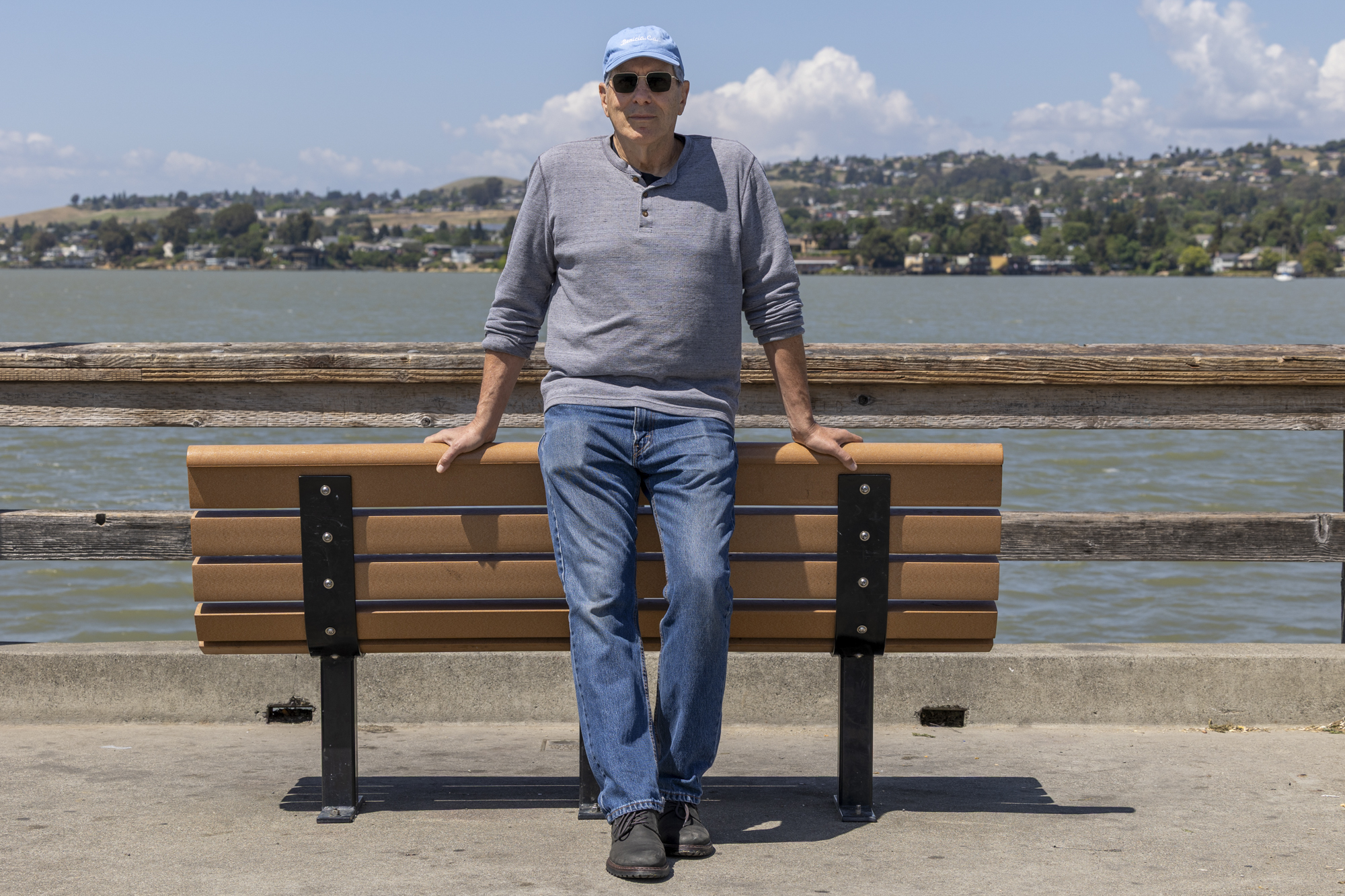 Stephen Golub, a Benicia resident, poses for a portrait along the waterfront on April 28, 2026, in Benicia. (Gustavo Hernandez/KQED)
“They were polluting our air again and again, sometimes secretly, sometimes more openly,” Golub said. “They were poisoning our politics by pouring massive funds into political campaigns.”
Golub said without a refinery, it’s easier to enjoy all that Benicia has to offer, including 28 public parks, stable political leadership, a vibrant art scene, good schools and safe streets.
“Down the line, maybe 10 or 20 years, people will talk about this thriving community with all it has to offer, and they’ll say, ‘Hey, did you know that there was once a refinery here?’” Golub said.“I really think that’s what’s in the city’s future.”