
BAKERSFIELD, Calif.(KBAK/KBFX) — Bakersfield College (BC) has no system in place to record audio of calls made to its college safety department, raising safety and transparency concerns.
The discovery came during an Eyewitness News investigation into two separate threatening calls that lead to lockdowns at BC and California State University, Bakersfield (CSUB) in early February.
On Feb. 2, CSUB officials locked down the campus and notified the public that a person had called the campus claiming they had a gun and were going to shoot up the campus and blow themselves up. The following day, officials at BC reported that an anonymous person had threatened their campus over the phone, sparking a lockdown. Officials at both campuses said the threats were later deemed non credible.
The similarities and proximity of the two calls presented the possibility of them being made by the same person. As a result, Eyewitness News asked both campuses, via a California Public Records Act request, to provide audio copies of the calls made to each campus, in order to compare them against each other.
CSUB officials provided a copy of it’s call about a week later. In it, one can hear the caller claim they had a gun and a bomb and were on their way to the campus.
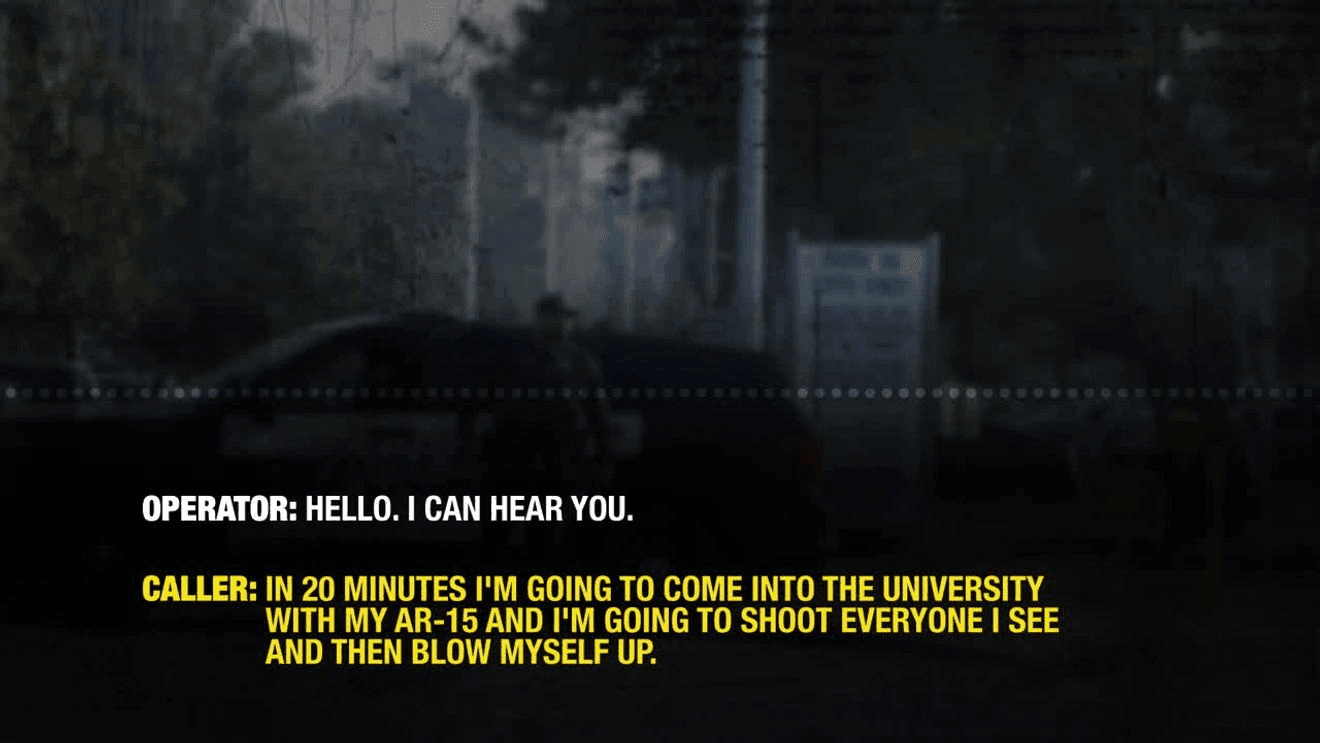
“In 20 minutes I’m going to come into the university with my AR-15 and I’m going to shoot everyone I see, then blow myself up,” the caller told a member of the CSUB IT Service Center.
A portion of a threatening call made to the CSUB IT Service Center on Feb. 2 that lead to a lockdown and emergency evacuation of the campus.
Several weeks later, on Mar. 3, BC’s records manager told Eyewitness news that no recording was made of the call.
“The District has determined that there was no recording made of the call in question, thus there are no records within the scope of the request,” BC’s records manager said via email.
The lack of a recording presents a possible safety and transparency concern, according to Eyewitness News Legal Correspondent Dennis Beaver.
“The value of that is you are recording these phone calls so if some crazy calls you with a threat or whatever it might be you have that person’s voice recorded,” Beaver said.
Beaver, who is not involved in this case, said there’s an easy way to record such calls and comply with the law. California is considered a ‘two-party consent’ state, meaning the recording of phone calls and private meetings is only allowed if all parties involved consent to it. Law enforcement is exempt from this law as long as recording is within their official duties.
A simple pre-recorded statement like “for customer service we record all calls” would cover a school legally to record calls, according to Beaver.
“If you continue with that conversation, you’re agreeing to being recorded,” Beaver said. “Why an institution, school, or university would not record these calls is beyond me. It’s so simple to do as long as you comply with the law.”
A spokesperson with BC confirmed that the campus does not record calls for service, but emphasized that it’s dispatchers do record written details of calls to create a record of relevant details. The full statement from BC Executive Director of Marketing and Communications LaNina Andrews can be found below:
Thank you for reaching out, Michael.
Regarding your questions about our call handling procedures, please note that Campus Safety is committed to the security and privacy of our students and staff. Currently, all incoming external calls are handled by trained dispatchers who immediately log all relevant details into our dispatch system. This creates a record of the incident, which is then relayed to officers via our radio system.
It is important to highlight that all radio traffic between dispatch and officers, as well as officer-to-officer communication, is automatically recorded as standard practice.
Our current operational protocols are designed to ensure that critical information is captured, verified, and acted upon in real-time, while simultaneously respecting the privacy and confidentiality of those reporting sensitive or emergency information, consistent with California privacy standards, including California law requiring two-party consent for the recording of confidential telephone communications. We have not made changes to these operational practices since February, as they have proven effective in maintaining accurate logs of calls for service.
At this time, we do not have a representative available for an interview, but we hope this clarification provides a better understanding of our commitment to safety and documentation.
Eyewitness News requested an interview with a representative from BC to talk more about why the campus does not record calls for service, but were told a representative was not available to speak on the matter. The campus maintains that it’s current system of logging calls has proven effective in maintaining accurate logs of calls for service.