
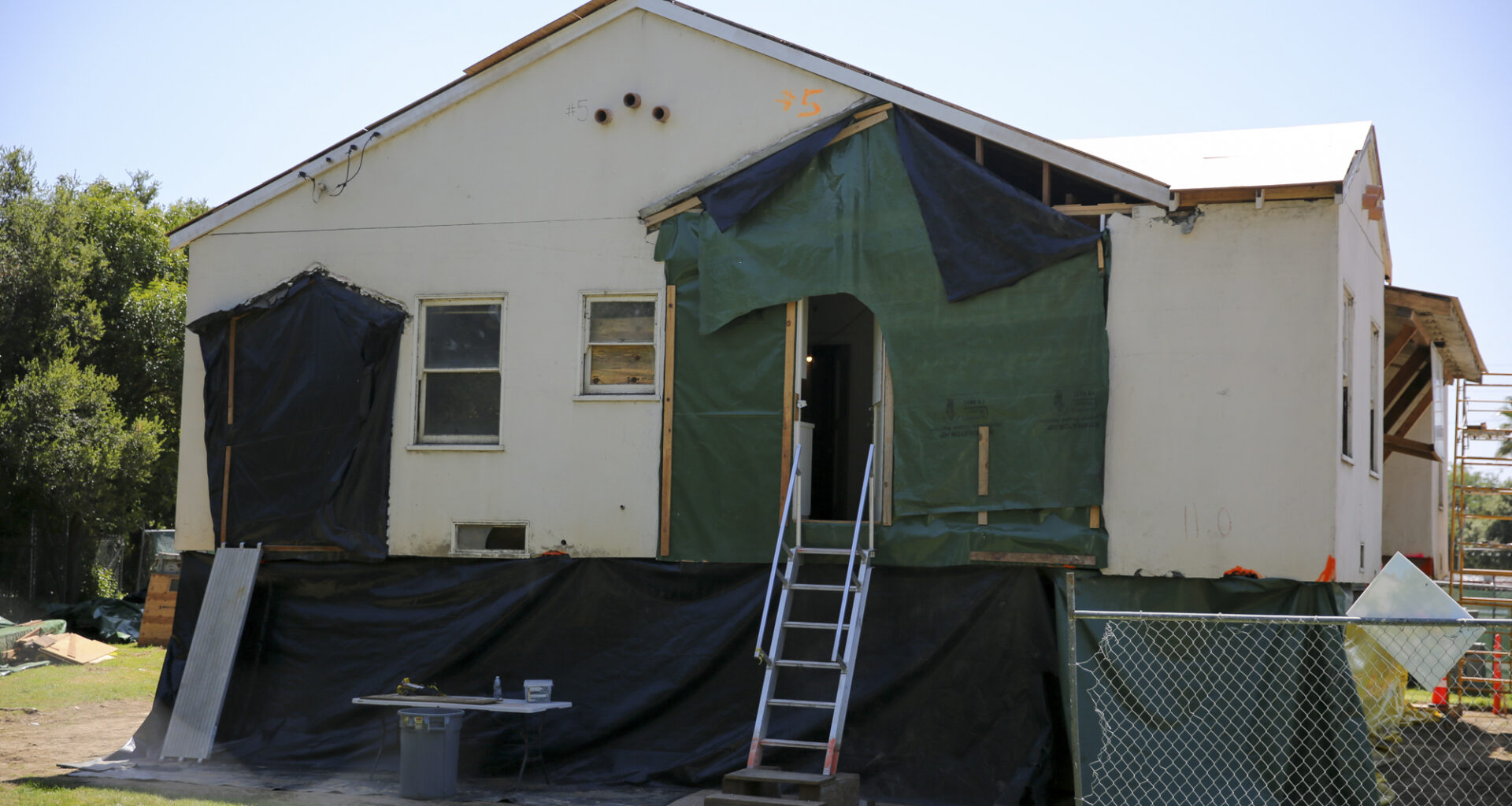
It cost $700,000 to prep the house for moving and to relocate it to its new plot inside History Park, adjacent to migrant farmworker cabins that were used for decades on the Sakauye farmstead and later donated by Eiichi Sakauye.
The home’s preservation and relocation is the result of a collaboration of the nonprofit History San José, which runs History Park, the Japanese American Museum of San José, the Preservation Action Council San José and Councilmember Rosemary Kamei.
“We came together for a purpose and recognized that preserving history isn’t just about saving the structure. It’s about creating a space for cultural education, for storytelling that connects people with lived experiences of those who came before us, to the Sakauyes and their extraordinary tale of perseverance in the face of a lot of discrimination,” Kamei said during an event celebrating the home’s relocation Thursday.
“As a daughter of immigrants, I have faced it. My family has faced it, others who may look differently have faced it, and so education is key,” she said. “That’s why relocating the farmhouse to History Park matters so much. It ensures that this home will not only survive, but will be accessible, visible and alive with meaning for generations to come.”
In August 2024, Kamei made an impassioned plea to city officials and other councilmembers to work to preserve the home.
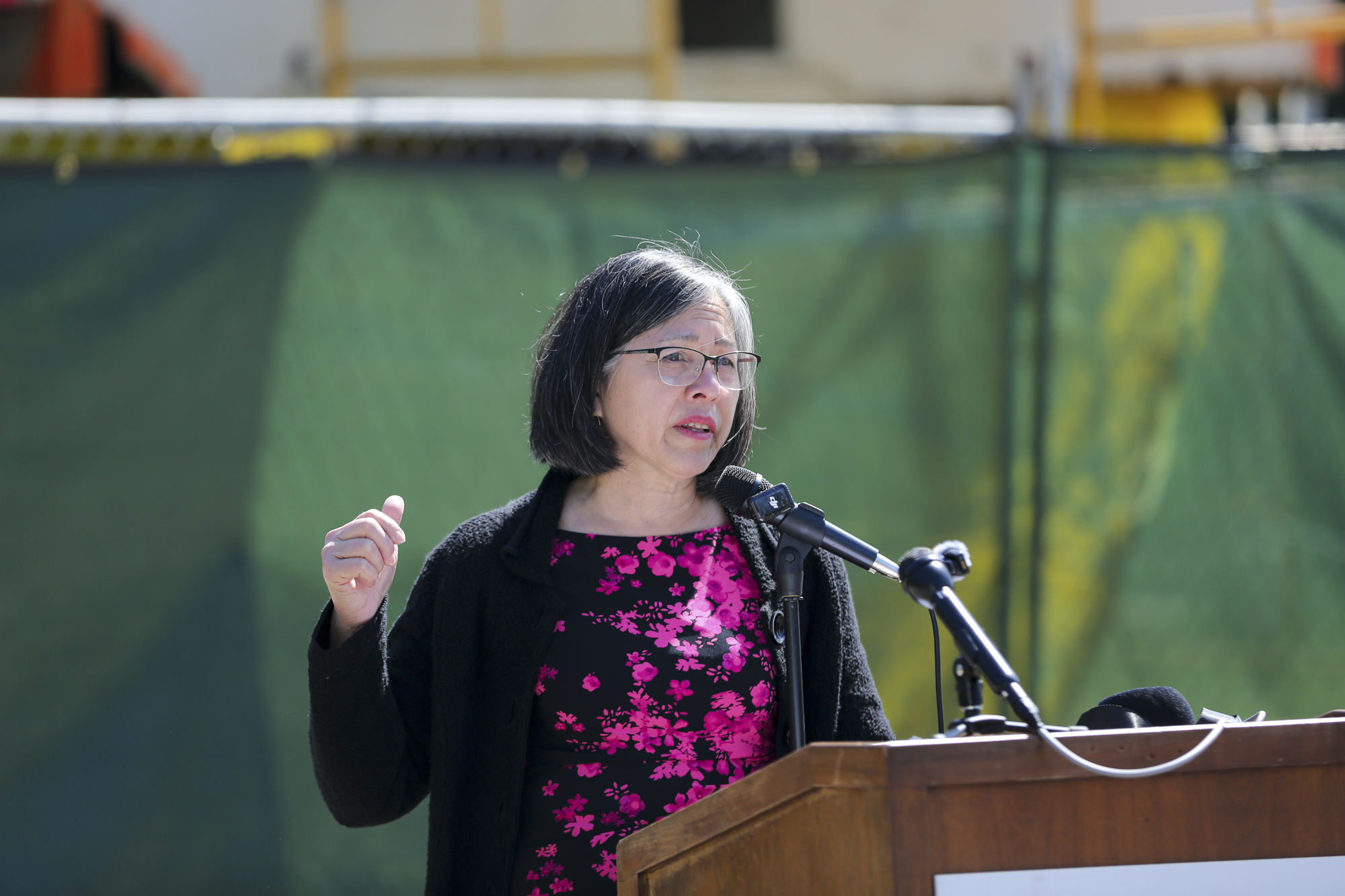 San José City Councilmember Rosemary Kamei said she was proud to see the Sakauye farmhouse relocated to History Park in San José during a press conference on April 30, 2026. (Joseph Geha/KQED)
She and others hoped to keep the home on its original site, but the developer was opposed to changing plans to accommodate it.
Eiichi Sakauye’s daughters also wrote to the council that they didn’t think the home needed to be saved, but later endorsed the plan to preserve it elsewhere.
Hanover Company, a Houston-based developer, leveled everything except the farmhouse on the 22-acre site in 2025, but kept the home secured until it could be moved. Hanover’s plans include nearly 1,500 apartments and townhomes, as well as a 2.5-acre public park.
“We would have liked the developer to see the potential of it on-site, and you can lead a horse to water, but it just didn’t click,” Ben Leech, executive director of the Preservation Action Council San José said.
Leech said ultimately he is very happy to see the home safely relocated where it can become an educational resource.
“It’s rare in this business that you have a win. So I’m going to take this as a win,” he said Thursday. “It’s one thing to see it here empty. It’s going to be even better to see it here programmed and telling the story that we think it can tell.”
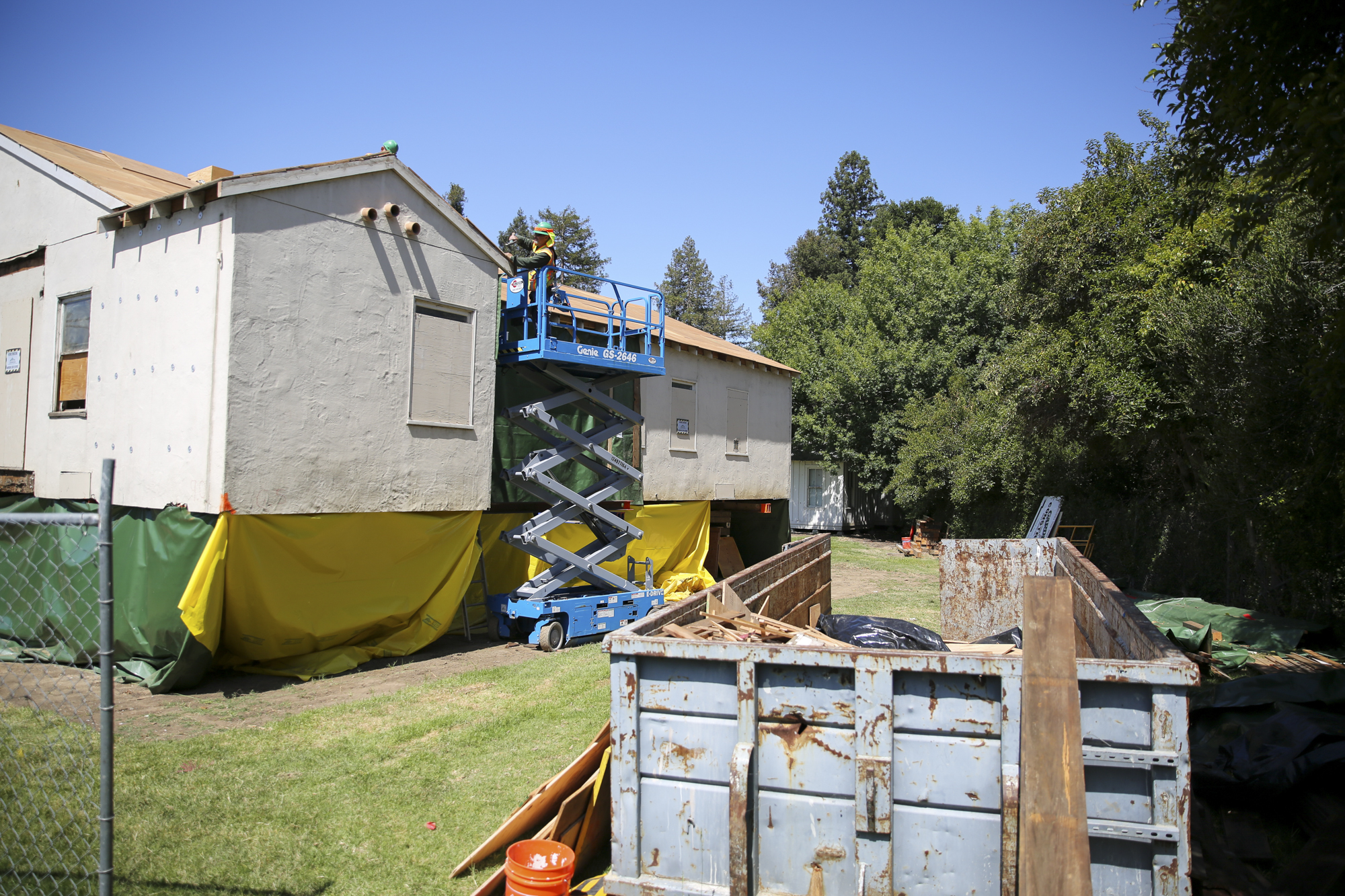 Construction crews work on portions of the Sakauye farmhouse roofline at History Park in San José on April 30, 2026. (Joseph Geha/KQED)
To relocate the home, its red-tile roof and the supporting structures had to be removed in six pieces, and the entire home had to be sawed in half to move by truck, according to Jim Salata, president of Garden City Construction, which moved the home.
History San José says about $300,000 more will be needed to continue the work of lowering the home — which currently is being reassembled and is perched on steel beams — onto a foundation and restoring it.
More funds will be needed to curate and execute a future gallery space in the home that will be co-curated and operated by the Japanese American Museum of San José and History San José, though a timeline isn’t clear.
The gallery could include a staging of Eiichi Sakauye’s office, space for school programs, and permanent on-site space for the museum at History Park, according to History San José.
The fundraising effort will be supported in part by the Sakauye Farm Legacy Grove, which is slated to be located next to the home. Donors can buy plaques and tree dedications in the grove, which will include seven fruit trees that were common to many Japanese American farmers such as persimmon, Japanese apricot and varieties of plum.
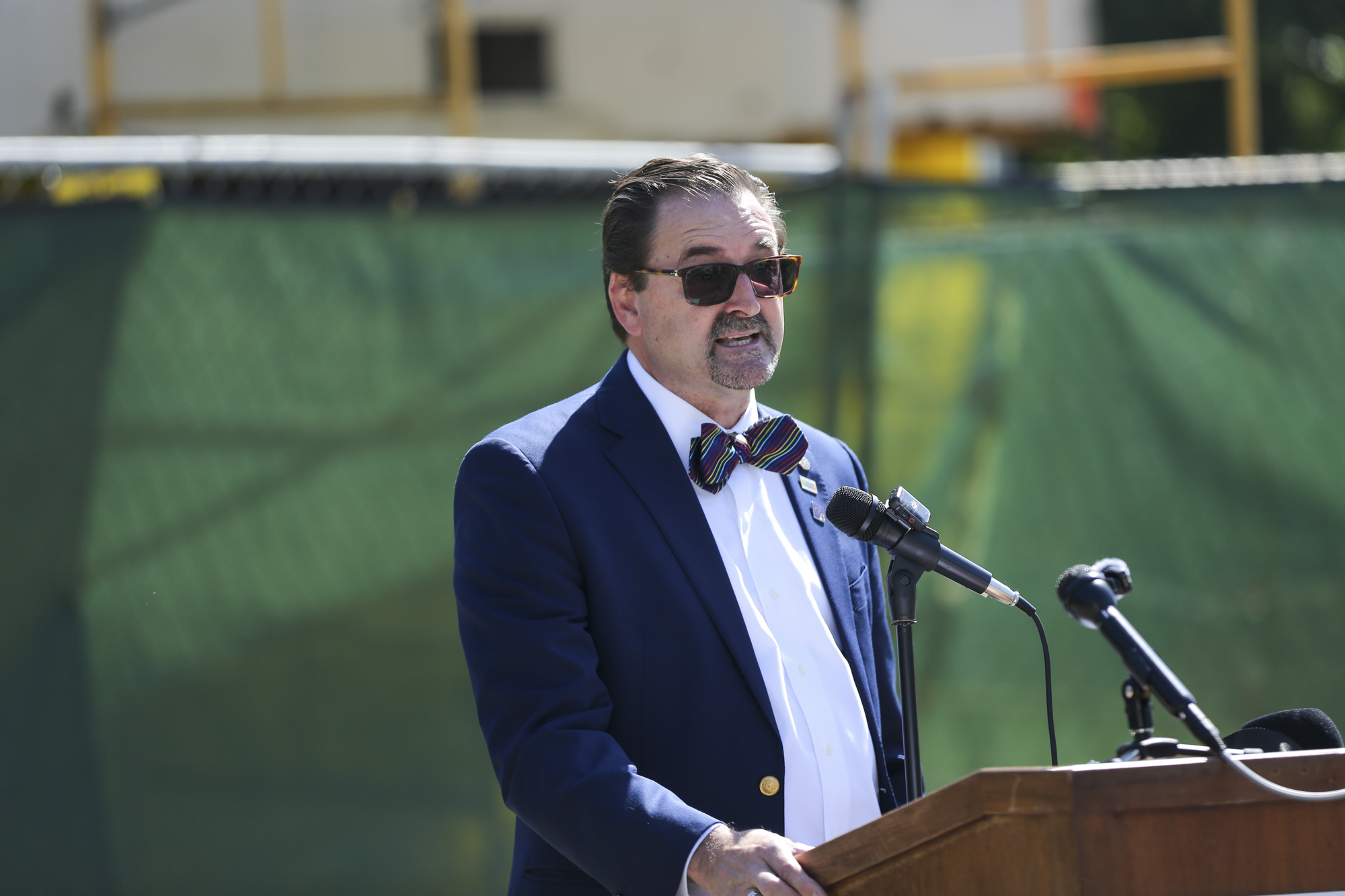 Bill Schroh Jr., the President and CEO of History San José, speaks during a press conference celebrating the arrival of the Sakauye farmhouse at History Park in San José on April 30, 2026. (Joseph Geha/KQED)
Hatakeyama said the home being in History Park, where it can be displayed as part of the larger history of the area and the country, is a big change for Japanese Americans.
“As a woman of color, as a child of the diaspora, I think there’s a lot of us that can relate to not really seeing your story in many public spaces… and where you felt comfortable being your authentic self,” she said during the event.
“And so now to have this museum here… is a way that we can really tell the future generations that this history is everybody’s history,” she said. “This is American history, this is part of San Jose, this is an integral part of what it means to be part of San José and the Santa Clara Valley.”