
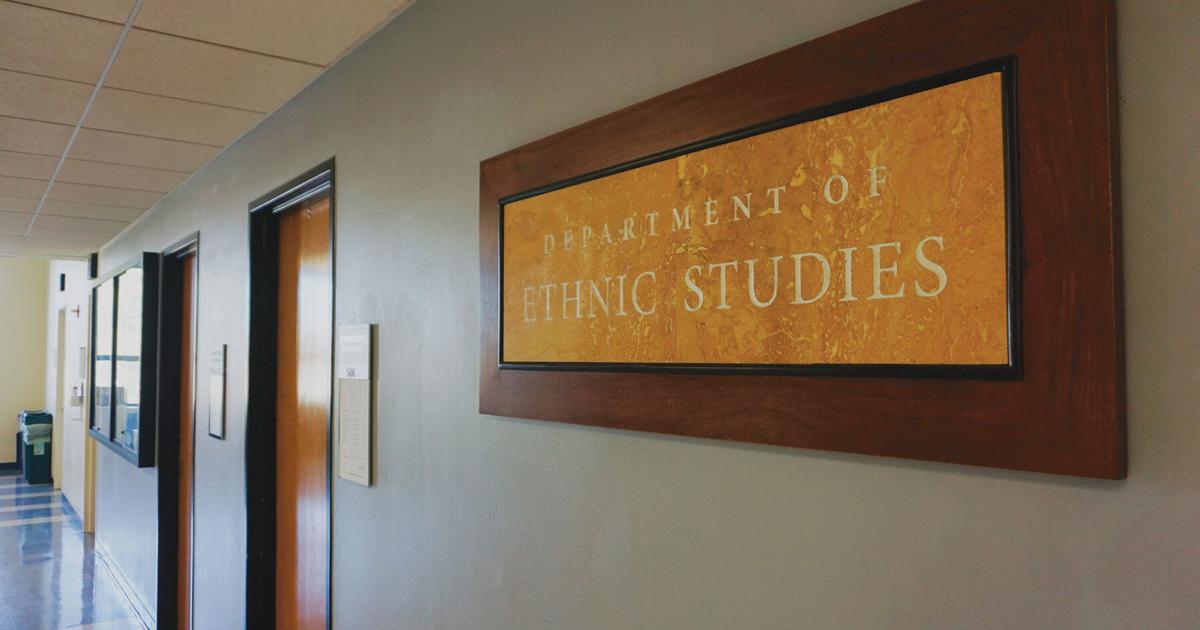
UC Berkeley’s ethnic studies department will not renew two lecturer positions for the 2026-27 academic year due to “financial deficits,” according to ethnic studies department Chair Lorena Oropeza. This reduction represents an elimination of 10% of courses taught by lecturers in the department.
These cuts are impacting two pre-six lecturers — those who have not yet taught the 12 semesters required to be eligible for continuing lecturer status.
Diana Negrín, a pre-six lecturer in the department, said she only found out her fall comparative ethnic studies course – Diaspora, Identity and Place – had been dropped when she checked the course catalog herself.
“Neither the Dean’s office nor the department have actually said a thing to us as professors, nor to the students,” Negrín said in an email.
Another pre-six lecturer, Juan Berumen, believes he may also be impacted by these cuts. When his previous students asked him what courses he would be teaching in fall 2026, he found that none of his courses were listed on the course registry.
According to Oropeza, these cuts are in line with the university’s collective bargaining agreement with the lecturers’ union, UC-AFT.
David Skolnick, co-chair of the Bay Area chapter of UC-AFT, alleged that affected lecturers were not given any notice prior to the end of this semester, stating that the news came as “quite a shock.” He added that Oropeza told several lecturers that canceled classes would be taught by ladder rank faculty who have been hired, but that claim was not currently reflected by the course catalogue as of press time.
“They’re relying on the complicated nature of all the different budgets to rationalize and excuse the laying off of lecturers,” Skolnick said. “I think the budget process is intentionally opaque so that we can’t really hold the administration accountable for these kinds of decisions.”
Oropeza stated the ethnic studies department will be offering more courses in fall 2026 than it did in fall 2025. However, Ellis Xue, a sophomore at UC Berkeley majoring in ethnic studies, said they noticed there were significantly less classes focusing on Asian American diaspora, African-American and Chicano studies being offered. Xue noted that they had a “more difficult time” finding classes that fit their schedule.
Xue said they chose to major in ethnic studies because it is the “most human major” on campus. They said the major demands that students “go outside and connect with other people” through community service.
However, they added that in their experience, the delivery of curriculum in their ethnic studies classes has been “less organized” than usual. Berumen attributed the decline in quality of education to the instability that lecturers experience.
“If we don’t respect the lecturers by providing them a livable wage, they have to scramble to find gigs elsewhere,” Berumen said. “It hurts the students as well, because now (the lecturers) are less focused on teaching and just more focused on surviving and trying to stack as many classes as possible. In the end, students are the ones that lose out the most.”
Although this round of cuts is not impacting continuing lecturers, many of them also noted a looming lack of job security.
Pablo Gonzalez, a continuing lecturer in the ethnic studies department, said that despite working at UC Berkeley for 14 years and receiving the Distinguished Teaching Award, he thinks his job is not secure, saying his “suitcase (is) always packed.”
Jesus Barraza, another continuing ethnic studies lecturer echoed that sentiment, describing himself as an “academic day laborer.” He expressed that despite teaching more than 250 students a year, he is “barely making enough to make ends meet.”
“The University treats Ethnic Studies as an academic ghetto,” Barraza said in an email. “From the Department’s inception, the University has looked for ways to starve the Department. From the cuts in the late 1990s that prompted eight students to go on hunger strike, to failing to replenish faculty lines when Ethnic Studies professors retired. It seems as if the University sees us as expendable.”