
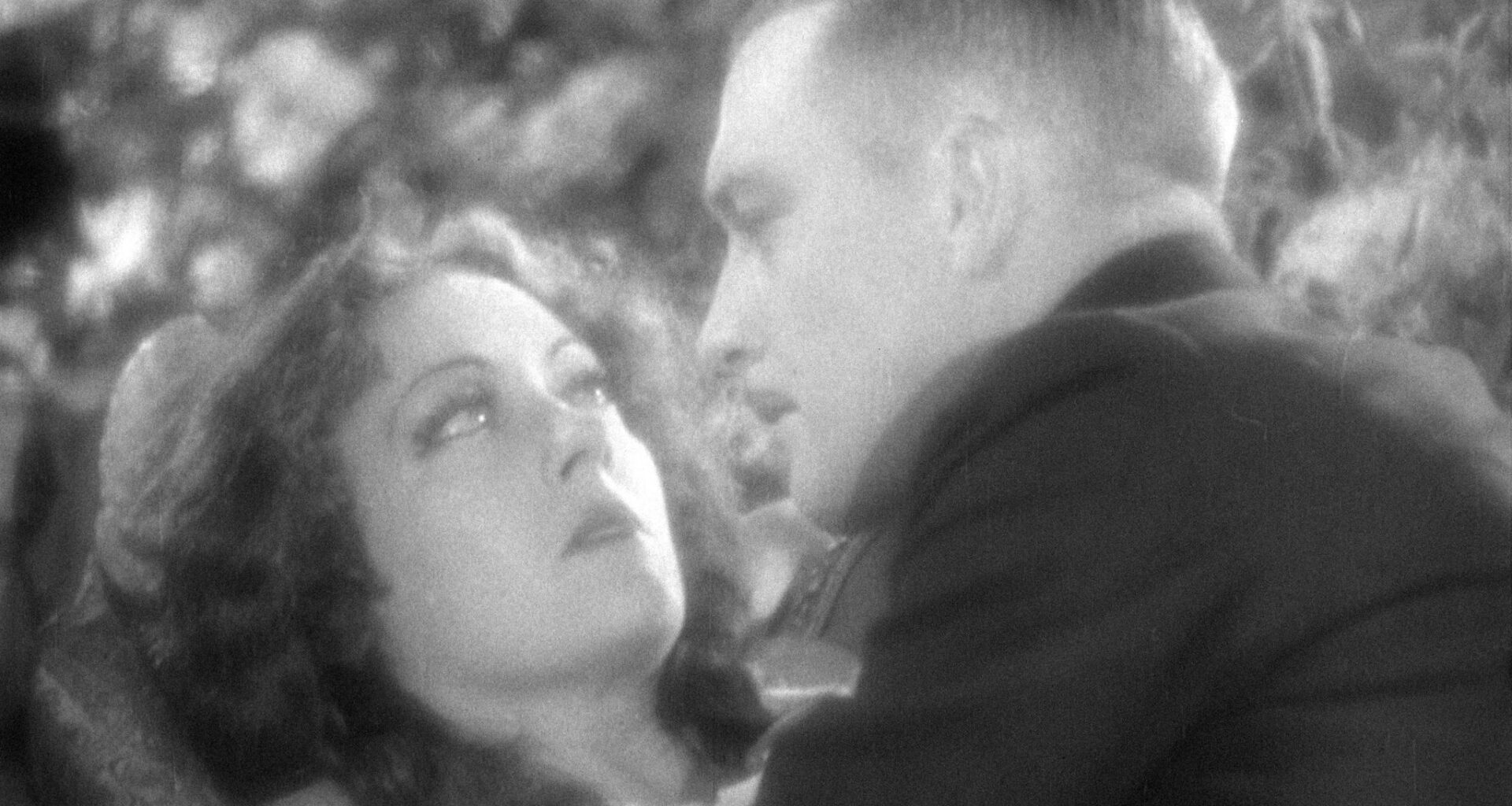
Gloria Swanson stars in Erich von Stroheim’s “Queen Kelly” (1929).
S.F. Silent Film Festival
After two years at other venues as the Castro Theatre was being renovated, the San Francisco Silent Film Festival returns to its ancestral home in time for its 30th anniversary.
Technically, it’s the 29th edition — the COVID-19 pandemic forced the cancellation of its 2020 event — but in the three decades since its debut in 1996, the festival has become one of the world’s most important exhibitions of silent film and a true Bay Area cultural treasure.
29th San Francisco Silent Film Festival: Wednesday-Sunday, May 6-10. $25-$30 opening night; $18-$25 other programs. Castro Theatre, 429 Castro St., S.F. www.silentfilm.org
Executive Director Stacey Wisnia, Artistic Director Anita Monga and their team have programmed a standout lineup for its five-day run Wednesday-Sunday, May 6-10. Here’s what Chronicle staff writers and silent film admirers Tony Bravo and G. Allen Johnson are excited about:
Article continues below this ad
Johnson: Looking forward to seeing you at the festival, Tony! The organization effectively had a shakedown cruise last month with a one-off screening of the Clara Bow classic “It” (1927). I was out of town, but you went.
Presentation-wise, how was the restored Castro as a silent-film venue?
San Francisco Chronicle Logo
Make us a Preferred Source to get more of our news when you search.
Add Preferred Source
Bravo: There’s nothing like seeing a 1920s silent film in a historic 1922 theater with live musical accompaniment. The view from the balcony with the restored ceiling and chandelier is spectacular. The Castro and this festival were formative in my love of silent film.
Clara Bow stars in Victor Fleming’s silent film “Hula” (1927).
S.F. Film Festival
Johnson: Sounds like it’s now the closest to the way a movie was first experienced there since the 1920s. Thankfully, I can get my big-screen fix of Clara in “Hula” (1927; 3 p.m. Friday, May 8), a collaboration with “Gone With the Wind” and “The Wizard of Oz” director Victor Fleming.
Article continues below this ad
Now, onto the grand opening-night film, “Queen Kelly” (7 p.m. Wednesday, May 6), by one of the great visual stylists of silent cinema, Erich von Stroheim, and his star Gloria Swanson. This was a troubled production to say the least — filmed in 1928-29 but not released until 1932.
Swanson and von Stroheim had a real falling out, yet they starred together as actors two decades later in Billy Wilder’s “Sunset Boulevard” (1950).
You’re reading “The Curse of Queen Kelly,” a book by Pamela Hutchinson published in March. I’m holding off on reading it until after I see the movie, so can you give me some spoiler-free prep?
Gloria Swanson, left, and Walter Byron in Erich von Stroheim’s “Queen Kelly,” a silent film made in 1928-29 that has been newly restored.
S.F. Silent Film Festival
Bravo: The behind-the-scenes story, which Hutchinson tells in such rich detail, is as bonkers as the film itself. That says a lot — “Von” as he liked to be known, was a mad genius at the height of his artistic lunacy.
Article continues below this ad
By the late 1920s, Swanson reached the zenith of her fame and creative ambitions. She was the Taylor Swift of her day, and she was looking for a new era.
Enter a charismatic Bostonian banker named Joseph Kennedy, the father of President John F. Kennedy and Sens.Robert and Ted, who was looking to prove himself as a producer. Von’s script about a postulant nun who spends a night with the crown prince of a mysterious European kingdom and then ends up in Africa running a brothel was a creative gamble.
They stopped filming once Swanson got fed up with Von’s perfectionism and the kinky touches he added to the story, like the panty scene. She was also having an affair with her business partner Kennedy, which I’m sure will be depicted in Michael Fassbender’s currently filming Netflix “Kennedy” series.
But the footage that’s left has had an unbelievable afterlife, first appearing in a meta scene in “Sunset Boulevard” (1950) and now with this latest edit.
Johnson: Other than “Queen Kelly,” which program are you most looking forward to?
Article continues below this ad
Paul Richter stars in “Sensation im Wintergarten” (1929), a German silent film with a Weimar circus setting.
S.F. Silent Film
Bravo: “The Humming Bird” (1924; noon Saturday, May 9), also starring Swanson. She disguises herself in drag as a boy and looks like a very pretty gay twink.
The German “Sensation im Wintergarten” (1929; 5:30 p.m. Thursday, May 7), with its Weimar circus setting, looks promising. I’m also curious about the early cowboy film by legendary director William Wyler, “Blazing Days” (1927; 11 a.m. Sunday, May 10).
And don’t forget lighter fare like comedy shorts by Laurel and Hardy (10 a.m. Saturday, May 9), which is a perfect introduction for kids.
Article continues below this ad
Monte Blue, left, and Patsy Ruth Miller in “So This Is Paris” (1926), an early success by the comedy master Ernst Lubitsch.
S.F. Silent Film Festival
Johnson: I’m especially looking forward to the three films that close the festival on Sunday, all by groundbreaking directors.
Start with an Ernst Lubitsch comedy “So This Is Paris” (1926; 3 p.m.), about temptation that may undo two married couples. I love Lubitsch, he is my favorite screwball comedy director — 1942’s “To Be or Not to Be” is one of the greatest movies ever — and I am looking forward to a silent example of his legendary “touch.”
Then there’s Danish master Carl Theodor Dreyer’s “Love One Another” (5 p.m.), a 1922 German film which rails against antisemitism. How that country would change in a decade, and how timely today.
A scene from King Vidor’s groundbreaking silent film “The Crowd” (1928).
S.F. Silent Film Festival
Cap it off with “The Crowd” (1928; 7:30 p.m.), a film I love but have never seen on the big screen. King Vidor does not get enough credit for his role in helping to invent the language of cinema. He was one of ultimate “make one for them, make one for me” guys. Here’s a guy who made one of the 1920s’ biggest blockbusters, the World War I movie “The Big Parade” — basically the “Saving Private Ryan” of its day — and then got MGM to fund “The Crowd,” an experimental film about a struggling young couple that addressed the divide between rich and poor.
It lost money, but it’s now considered among the very best silent films.
Bravo: The list of musical collaborators this year also deserves to be highlighted. The San Francisco Conservatory of Music is back playing for “Queen Kelly,” and they’ve been an essential part of the experience. Same with the Mont Alto Motion Picture Orchestra. The acoustics in the balcony are better than ever.
Johnson: That’s a great point. Silent movies aren’t really silent, are they? There’s so much to see and hear packed into a five-day schedule. I wish there was one of those Japanese-styled capsule hotels right next to the Castro Theatre to catch some power naps between programs on those marathon days.