
Before the Pacific Coast Highway, before Malibu and before multimillion-dollar beachfront homes, Topanga Creek flowed freely down through the Santa Monica Mountains. The water, swelling and subsiding with the seasons, eventually dumped out into a large lagoon, which in turn drained out to the Pacific Ocean.

Historically, the lagoon covered 30 acres of coastal wetlands. But over time, the brackish water slowly gave way to homes, beach parking lots and the Pacific Coast Highway. Today, less than 1 acre of the lagoon remains.
A similar process has played out in coastal wetlands up and down California. Coastal wetlands are ecosystems where saltwater and freshwater meet, providing habitat for unique, rare and endangered species such as the “remarkably adorable” and “visually charming” tidewater goby (as described by the Resource Conservation District of the Santa Monica Mountains), a tiny gray-brown fish that lives only in such regionally specific waters. Other species that use the area include the endangered monarch butterfly, protected nesting birds and western pond turtles. California grunion also occasionally pop up on the beach to spawn.
Article continues below this ad
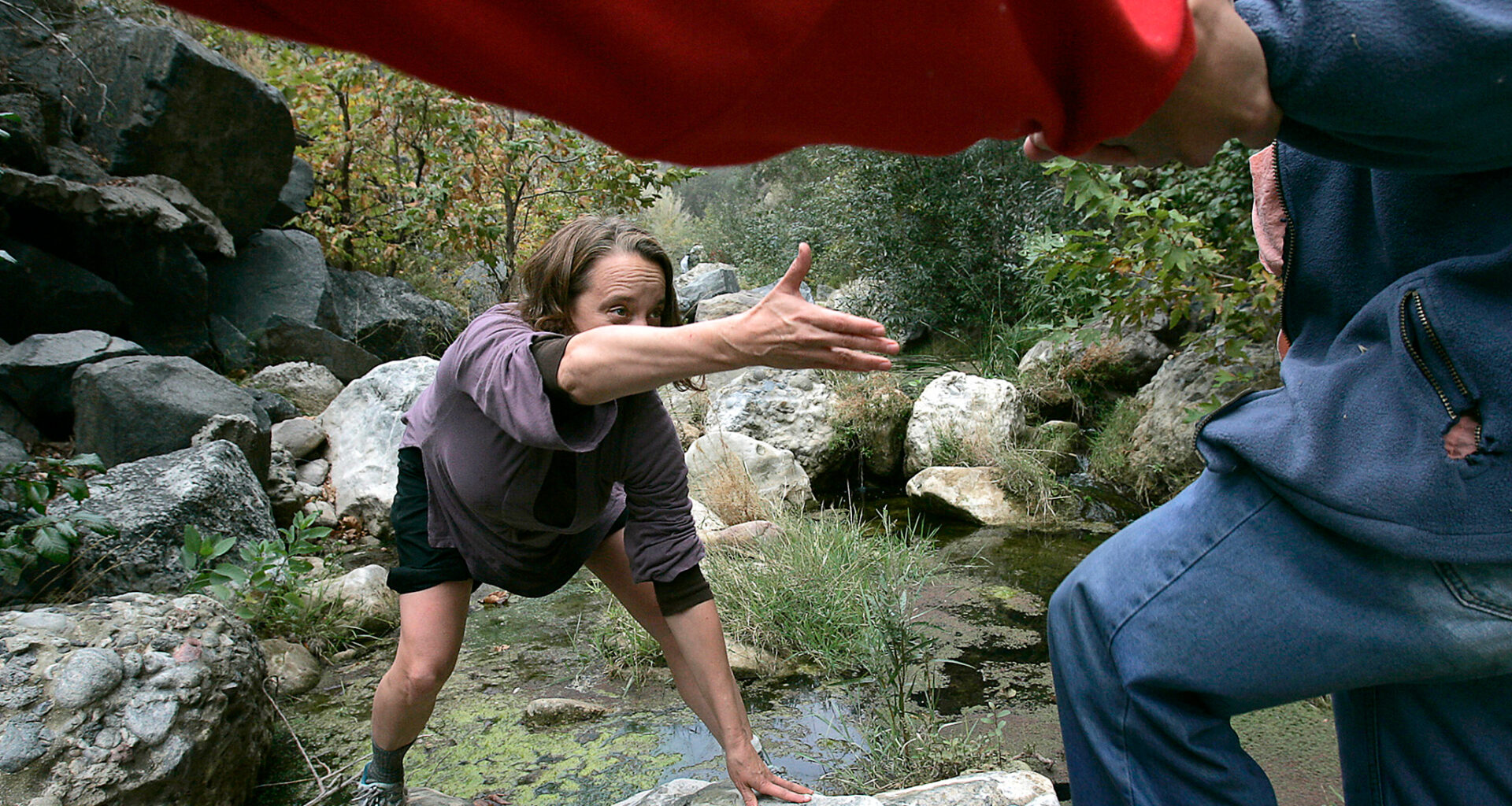
Citizen scientists Rebecca Ramirez and Bernard Yin, from left, join federal, state and local agencies, including conservation biologist Alyssa Morgan, right, to rescue federally endangered tidewater gobies that inhabit the Topanga Lagoon in Malibu, Calif., on Friday, Jan. 17, 2025.
Christina House/Los Angeles Times/Getty Images
Abigail Sanford, a biologist with U.S. Fish and Wildlife Service, holds a federally endangered tidewater goby at Topanga Lagoon in Malibu, Calif., on Friday, Jan. 17, 2025.
Christina House/Los Angeles Times/Getty Images
Unfortunately for the tidewater goby and other species, their habitat directly lines up with prime beachfront real estate. Over the years, developers have unceremoniously filled in coastal wetlands and lagoons so they could build structures on top, especially in the decades of rapid California development before intensive environmental reviews and public meetings. An estimated 95% of the state’s coastal wetlands have disappeared over the past 150 years due to these development patterns.
Article continues below this ad
In Malibu, a last-ditch effort is underway to save and expand the Topanga Lagoon, which contains some of the last remaining coastal wetlands in the state. The adjacent Topanga Beach, a popular recreation spot serving nearly 1 million visitors each year, is also under threat from coastal erosion.
The Topanga Lagoon Restoration Project, which would expand the lagoon to between 7 and 10 acres in size, represents “one of the last opportunities to restore a significantly larger and more functional lagoon” in the area, according to the project website.
The Resource Conservation District of the Santa Monica Mountains is the project manager for the restoration project, with additional partners and stakeholders spanning various state and local agencies. It’s been a 20-year effort to even get to the current stage of planning for the project, and even that was stymied again by the Palisades Fire last year.
Article continues below this ad
Isaac Yelchin, biologist with the Resource Conservation District of the Santa Monica Mountains, finds a frog in the sediment-filled Topanga Creek as he searches for signs of wildlife within the wildfire zone in Malibu, Calif., on Thursday April 3, 2025.
Melina Mara/The Washington Post/Getty Images
A key part of the project will involve rebuilding a Pacific Coast Highway bridge that travels above the lagoon and had artificially shrunk the mouth of the creek’s outlet. Replacing the 79-foot bridge with a new 460-foot bridge would allow the lagoon to widen once again, back toward its intended shape. The restoration project would also provide additional beach habitat, trails and visitor services.
Sand and native material removed during the restoration project would be moved just offshore to help fend off further coastal erosion, as coastal communities all over California are trying to add more sand to protect their beaches.
From an ecological standpoint, the restoration can’t come soon enough. The project had just completed its environmental impact report and public meeting process in 2024 when the January 2025 fire tore through the project area, destroying facilities at the state park like the historic Topanga Ranch Motel. State wildlife staff and others rushed out to Topanga Creek and the lagoon to rescue the endangered steelhead trout and the tidewater goby. The tidewater gobies were released back into the lagoon in June; the steelhead trout were relocated to a Santa Barbara County creek while Topanga Creek heals. The Topanga Lagoon restoration project area itself was used as a site to sort hazardous materials and debris after the fire, and the planning process is now finally underway again after the fire detour.
Article continues below this ad
Pejiman Sabet and his wife, Gili, dance in front of their family members on Topanga Beach in Malibu, Calif., Tuesday, Sept. 28, 2021, as a surfer rides a wave in the distance.
Jae C. Hong/AP
The project got a boost recently, receiving $500,000 in Measure A funding from a Los Angeles County parks bond to support the design and engineering stages. Construction is expected to start in 2027 or later and stretch on for five or six years, “with the ultimate schedule based on the availability of funds and construction resources,” according to the project website. But for the lagoon, which has faced threats from development, erosion and fires for years, the half-million dollars represents one small step closer to a future that looks a little more like its past.
“There were noticeable differences onsite a year after the fire,” the project website notes about a beach cleanup this January. “The once scorched hillsides boasted brighter greenery and the beach contained much less twisted, burnt debris. The beach parking lot was now open to the public, and the highway above more bustling. Changes weren’t limited to the scenery alone; there was palpable hope among the volunteers. Feelings of a brighter future lay ahead for both the community and the still healing ecosystem.”