
Tony Thurmond explains why he should be California’s next governor | California Politics 360
Superintendent of Public Instruction Tony Thurman, thank you so much for making time for us. Thank you. So being California governor, this is *** hard job at *** hard time. Why do you wanna do it now? Look, I love the state, you know, I was born here, um, and I know the state’s going through *** lot of hard challenges, but I think that this is our moment to overcome them, and I’ve had *** chance to work on just about every issue that we talk about in this race. I’ve. Uh, built housing, um, as *** council member and as *** legislator. Uh, I’ve taken care of homeless foster youth who needed housing and dealt with crime issues and environmental issues and healthcare, and so I think I have *** lot to offer. The state has done *** lot for me as someone who, you know, is the son of immigrants who lost both my parents by the time I was 6 years old, raised by *** stranger and, and growing up in *** household where I depended on. Free lunches, food stamps, and government cheese, and all kinds of public assistance. Um, I’ve always wanted to just get back to the state, and that’s what my 18 years as an elected official has meant, and I can’t think of *** more crucial moment to be providing leadership to the state, and I hope that the voters of this state see it that way as well. California is facing multi-year money problems that could put the next governor, potentially you, in *** situation where you’d have to decide whether to cut spending or raise taxes or *** combination of both. What do you see yourself doing? It’s probably *** combination. I do think that we can. Stamp out some waste and fraud and abuse. I think we’ve seen some examples of where, um, you know, grants that go out and there’s no accountability for tracking those dollars. I think that there are billions if you look at, um, you know, unemployment and other agencies where there are dollars that have been misused that we can. You know, shut that down and collect that revenue. Like which agencies, I, I think that, um, we’ve seen, um, at EDD, uh, we’ve seen billions. Uh, I think that there’s been fraud in, in many forms of insurance, uh, scams, and so I think that there’s money that we can do better, but I think as governor what I will require is that every agency that makes grants has to have an auditing function, every single agency, even if it’s *** small team. Um, I think we’ve seen recently that, um, dollars have gone out and, and people said there’s no auditing function, uh, there’s no accounting. People talk about money going into homelessness services with no accountability and some examples of, of, of some bad actors, and I think that we have to have more accountability, and I will require every single state department that gives grants to have *** team that does some audit and to try to beef up the auditing. Functions of our state auditor’s office, um, or the California Comptroller’s office, um, aside from that, I think we do still need to have some additional revenue, but it can’t come on the backs of working Californians and middle class people. Uh, Californians are already paying plenty, and we can’t ask anymore, but I do think we can tax billionaires and ask billionaires to pay their fair share, and quite frankly, I’d like to use that revenue. To give *** tax credit to Californians to have *** little more money to pay for the high cost of gas, groceries, and housing, you know, *** lot of the folks in my race are saying they’re going to lower costs. I don’t see how you do that. Uh, government can set conditions that ultimately businesses help to set some costs, but by itself government can’t just lower *** cost. And so I think right now we have to do two things provide immediate support to Californians in the form of *** tax credit. And then focus on helping Californians to build their wages so they have more money to afford to live in the state while we work to lower costs in California. So I just want to confirm you would tax billionaires and use that money to provide tax or just not billionaires *** tax credit, correct? OK, not billionaires, but not billionaires, everybody else, but everyone else, everybody else, OK, yeah. Um, one big spending issue is health care in the state, and one sort of, um, ***, *** newer program, uh, provides health insurance to low income undocumented Californians through Medi-Cal. Uh, what would you do with that program? Would you keep it in place, or, OK, I would, um, I was *** legislator when we provided that program for undocumented, uh, Californians, and. I would like to be the governor who restores it, and here’s why. If people are going to the emergency room to get care, they’re driving the cost up. And so I think it’s the right thing to do to make sure that people have access to care and I think from *** standpoint of financial benefit, it will, it will help to keep costs down, healthcare costs in California. Um, ultimately I think we need *** single payer healthcare system that really brings costs down and creates less overhead, less bureaucracy, and more focus on the patients. Employers should be providing their employees with healthcare, and the big companies that force their employees to have to go and use, you know, public assistance for healthcare, yeah, I, I’m gonna hold them accountable and say, look, either provide your employees health insurance because they work hard for you, or if you. Force them to depend on the state, then that means these big companies are, they’re going to have to pay some fees for that. But ultimately *** single payer healthcare system helps us to address those costs, to bring costs down, and to make sure that there are more people who have access to care. So you would implement *** single payer healthcare system. What’s your timeline on that? I think it takes *** few years to roll that out. I think we have to be honest. This is not, this is not, you make *** left turn and you’re at your destination. You know, I, you know, I’ve been out of the legislature since 2018, and as an, as an assembly person. Um, I was *** co-author on legislation for single payer, and there’s *** reason why we still don’t have it. One of the reasons is it’s complex, and, um, our healthcare system is extremely complex, but we’re watching as the premiums for Affordable Care Act are going up. We’re watching as more Californians have been kicked off of Medi-Cal. Uh, we know that we need to have ***. System and we’ll need to work with um doctors and healthcare providers to uh create that system and the specifics, but generally speaking, I I’ve always supported single pair. My, my brother who passed away when he was 35, he lost his job, he lost his insurance right when he was diagnosed with *** rare liver disorder. He didn’t smoke and he didn’t drink, and ultimately that disorder cost him his life. I don’t think anyone should lose their life because they don’t have access to care. And we’re seeing more and more people who are going without care. California needs to have single payer, and ultimately, uh, I want California to do what other states have done and to pilot *** kind of uh uh long-term care insurance so that Californians have the ability to care for their loved ones who are elderly. If you don’t qualify for IHSS in this state, you might be spending $100,000 out of your pocket. To care for an elderly loved one. And so I think it’s come time for California to pilot *** program that other states have also piloted. So how are you paying for these things again? You’re taxing billionaires and in some ways we may have to put more impact on the healthcare companies. They’re having record profits at *** time when more people are not covered and The good news is Americans are living longer. What comes with that are more ailments and illnesses that require care. And again, I think having *** system where there is some form of long term care insurance means we ultimately pay less than what we’re collectively paying. But the state struggles with efficiency in government programs. I’ll give you two examples the 911 system. That was supposed to be up and running. It was supposed to adapt to new technology and be in place. That hasn’t happened yet. That’s been underway since 2019. The California High Speed Rail is also another project that has been plagued by inefficiencies and delays and cost overruns. I mean, how would you make sure that *** single payer system is efficient and, I mean, doing what you’re saying it’ll do? Well, you got me there, right? There’s *** lot of bureaucracy in government. Um, and, uh, we have to work on efficiency. There’s no question about that. But you can’t tell me that in the birthplace of, uh, the Silicon Valley, and technological advances that we can’t come up with systems to help us do better. Uh, I believe that we can. You can’t tell me that as we celebrate the return of the crew, uh, from Artemis. Circling the moon where their pilot is from California, you can’t tell me that there isn’t California innovation that can help us come up with *** better way to address the way we deliver care in the state. Uh, you know, we have big challenges, but Um, you know, I’ve, I’ve dealt with big challenges my whole life and I don’t run from them. Um, we just have to pull the right people in to think through how we get through it. We have to execute and we have to have accountability and monitor our progress. We have to create *** benchmark that says here’s where we’ll be in 1 year, in 2. In 3 and in 5, the same goes for the high speed rail, and Californians have *** right to be upset about the high speed rail because so much has been promised to Californians, and so far all anyone’s gotten to see and show for it is delay, delay, and delay and money that’s been spent. There’s some new members of the High Speed Rail Authority who I believe are going to help to move this in the right direction, but this is not *** forever project. It has to be on *** timeline with benchmarks that say, uh we will deliver. There were delays in terms of assembling the land. There were lawsuits or environmental challenges. That’s behind us now. So that means now it’s time for us to step on the gas and to accelerate, if you will, and move this project forward, and Californians deserve to see results. Switching gears to education, I mean, as we’ve talked about this in the past, California is spending more than ever on education. Yet it’s struggling with low classroom performance issues, kids who can’t, uh, I mean, are struggling to do math, science, and reading. And also juggling this issue with teachers and the California Teachers Association, for example, having these strikes over low wages and classroom conditions that they see how will you manage that? The reason we’re seeing all these strikes is how we fund education in our state, and we still fund, we’re one of only 6 states that fund schools based on what we call average daily attendance. Student is there, *** few $100 for the school. Students not there, those dollars are lost for the day. Um, it is time for. To move away from that and to give *** guaranteed revenue, guaranteed budget to our schools that is based on their enrollment so that schools can predict what revenue they’ll have to work with to uh provide for their education staff, provide for materials and resources and technology. And so I, I believe that will help us to move away from what we’re seeing in terms of declining enrollment driving uh what happens in California schools. Um, our population has been down, uh, in California for *** couple of decades, and then since the pandemic we’ve seen even more decline and so um. I believe that we have to help schools do something that we’ve never done before, that we have to figure out *** way to attract more students into our system. We even in this climate that we’re facing, we may need to have *** deeper partnership with, uh, Mexico and, and with other states that border California where we allow students who can enter the state. To attend *** California high school and be duly enrolled in *** community college, um, so that we are getting more revenue for our schools, um, and at the same time building out *** workforce that will work on the jobs that California can’t fill right now and so we face challenges, but we have to do problem solving that will help us to move through those challenges, and I believe that we can. So for people who see your title as superintendent of public instruction, you are an elected official, *** constitutional officer who is technically supposed to oversee our public school system. Uh, what would you say to those who are like, what, what have you been doing the last 8 years? You know what, Californians have *** right to say we want more for our kids. I want more for our kids. Both of my children. Attended and graduated, uh, California public schools, um, and I wanna see every student have *** great experience here and, um, I think everyone’s right to want to see more for our kids. The good news is we have seen some trending up and some progress in math in science and in reading, but it’s not enough. This is not *** time for us to rest on our laurels. I look back to how it was when I started. Our schools were so far below. You know, even average proficiency, um, and so while there’s been improvement, we’ve come from such *** far place and *** low place. We have more to go. And what I say to Californians is we’ve got to do the one thing we’ve never done. We have to invest in *** plan. That make sure our kids learn to read by 3rd grade, like many other states have done, like Mississippi, they call it the Mississippi miracle. You make sure every student gets taught to read using phonics-based instruction. They have access to books, they get extra tutoring, um, more dyslexia. Screening, these are all things that California has done *** little bit of at *** time, and I’m honored to have worked on some of this, and our governor’s worked on some of this, but you can’t piecemeal this together. And so I’ve written *** five-year plan that will help to move California forward in literacy by making sure we have all those things that I mentioned. It’s gonna take *** private public investment to pay for it. We’re talking about $1.5 billion over the next 5 years to really provide for that, but it will return dividends for California students, and we will see our students continue to show *** positive, you know, rise as it relates to reading scores and. Reading is *** gateway skill. When you can learn to read, you can read to learn anything. And so what I’d say to Californians is, yeah, it’s been tough for California students and Um, yes, I’m the state superintendent, and that means I have responsibility for everything, and I won’t shy away from that, but I ask people to recognize that we have 1000 school districts, each of them with their own elected school boards who are making decisions every single day. My job is to try and bring them together, try to get resources for them from the state, and to help lead us together as *** state, and I’ve been doing that even through *** pandemic, the worst that we have ever seen. In terms of the impact that it’s had on our kids. But I can say, California is doing more than any other state to help our kids bounce back from the pandemic. We give more tutoring, longer school days, we’ve secured $6 billion for broadband. It is heartbreaking. To know that in the first days of the pandemic, I discovered that *** million kids without access to *** computer or the internet, how could they be connected? And so we’ve secured $6 billion for broadband. We’re moving the state in the right direction. We’re beginning to see improvements. Um, we’ve added. Things that kids will need for their future, like personal finance, so they can learn how to avoid debt. We offer *** free preschool for every single 4 year old, $4 billion for mental health, *** billion dollars every year for arts. We’re putting the tools in place. We need to continue the work and I want to have the opportunity to continue this work as governor of California, but circling back to my earlier question, I mean, school boards are struggling to provide, I mean, some of these school boards are going broke. I mean, we’re seeing some of these teacher strikes across the state, the California Teachers Association lined up these contracts. Tracks to, I mean, sort of put on this movement. I mean, does the California Teachers Association have *** little too much power? Is, is that like *** flex that’s well directed, um, at these local districts that are trying to implement what you just laid out? I mean they have great power and they’re using it to put *** spotlight on the fact that California still doesn’t provide enough revenue for each of its school districts and for the 10,000 schools in our state. Uh, states like New York spend more per student than California and even today with as much of our budget that is devoted to education, California still ends up being in the 30s in per pupil spending. Um, there are things that we have to change and *** lot of that is revenue. Uh, more revenue for our schools. Uh, we have to address the fact that we have more than 240,000 homeless students who live in our state, including 10,000 homeless teens. I’m working on *** measure right now to provide housing for those homeless teens and supports so they don’t become homeless adults. As much as we have all in terms of the wealth in the state, we have more poverty than most states in the nation in terms of children living in poverty and so our kids face *** lot of challenges and that’s why we give them universal meals, that’s why we have the Community Schools program to support them. These things are all barriers that affect all those districts seeing those strikes. I don’t fault the teacher union for using their, their, their muscle. They’re saying more revenue needs to come to our schools, but we have to find solutions for how to do that. But should *** district like San Francisco completely wipe out its reserves to give in to CTA as they reportedly did. Should Sac City Unified go broke to give in to CTA, I mean, as they have done year to year, I mean, should, should there be *** recalibration of just how much power *** group like that has in our education system? Well, I’ll just say this, you know, for districts that are struggling with the idea of how to pay for the high cost of healthcare. Um, I watched, uh, as some districts could not break through in the negotiations to end their strike. Meanwhile, every day that they’re on strike, more dollars are mounting, more costs are going out the window, and so what I did is I proposed that we work together to say we’re gonna figure out where we get more revenue over the next two years to cover the high cost of revenue. I’m looking for solutions to help these districts as they try. Get through these tough questions, I think CTA and other groups are raising the right question how do we get more revenue to our schools? I think they’re making good decisions to say yes, their employees deserve to have health care for them and their families, but the bigger question that still has to be answered is how do we help districts pay for that today and tomorrow? And those are the kinds of things I’m working on with our districts. It’s why I’ve been talking about getting more revenue to our state. This isn’t *** new problem. Our state has been lopsided in revenue for *** long time, certainly since Prop 13 passed, you know, that creates *** space where big corporations pay less than everyday homeowners pay. Um, we can close those loopholes in Proposition 13 and get more revenue for our cities and school districts and counties without taxing homeowners or seniors or farmers or small businesses anymore, but it does mean that those who’ve enjoyed the greatest wealth have to share just *** bit to help everyday working Californians. OK, switching gears here. Should California delay its state climate goals? I think it’s time for us to evaluate them. I, I, you know, look, I, I love the goals. I love the ambition of the goals, but sometimes the goals get stated with the headline first without the plan for how we’re gonna get there. I think we have to look at where we are in this moment, and some of the goals that we have cannot be reached with the current infrastructure that we have. We still have to build out the grid. We probably need at least *** million charging stations to even get to the place where everyone’s driving. An electric car and if everyone’s driving an electric car, we’re going to have to provide some subsidy for low income families and other working families to be able to afford an electric car. We’re not there yet. We’re not there yet. We are still in *** place where while climate change is real. And I believe in protecting the environment. I’m 100% voting record on almost every environmental group. We have to be realistic about where we are and what our transition away from fossil fuel needs to be. And so I think our climate goals probably require some um evaluation. And modification of our goals, but we still have to figure out how to move with urgency because we can see every single day weather patterns, high winds that are telling us that climate change is real enough that something needs to change. We cannot continue to do what we’ve been doing, but we may have to modify the dates by which we say we’re going to reach 100%. Um, we’re free from fossil fuel 100%. Um, I think it’s gonna take some real thought, but we’ve got great institutions like the University of California, uh, the Cal State University System to help us think through how do we bring alternative technologies into the conversation. That help us to get there while we’re working through that transition. Banning the sale of gas-powered cars by 2035, is that something you would do? Seems like we’re not quite there yet. I love the goal. I love the goal, but again, I don’t want to just state *** headline. I want to be realistic about what I think we can achieve. I think we have to reevaluate. We can’t, we could not meet that goal. We cannot meet the goal of 2035. We don’t even have the charging stations to do it or the infrastructure to do it, and so it may require some modification. I like the ambition of the goal because I think we have to push ourselves with urgency. I just want us to be realistic on what we can achieve and then make sure we build the infrastructure to match that goal. On crime there is *** tug of war between California under *** court order to reduce and stabilize its prison populations, but at the same time there are Californians who feel like some criminals just aren’t being held accountable for the crimes that they do in the state we’ve seen that with some questions around the elder parole law, um, child sex offenders just how would you manage that as governor? At the end of the day, there’s gotta be accountability, right? You commit *** crime, there’s gotta be some accountability, and I can tell you that in the last 2 years. I’ve had cars either broken into or stolen 3 times, and your cars, yes, one was stolen out of the driveway, found it at *** chop shop, uh, twice broken into, um, and so I get it. People are frustrated and they should have an expectation. That something’s gonna be different and, and I’ve said that as governor that I will immediately work to uh make sure that we get an additional 2000 police officers and 911 dispatchers in place to help us address issues around crime and safety. I supported one of the accountability measures that says in retail theft that there should be more accountability for those who commit retail theft because *** lot of our business corridors and small business. Businesses were deeply impacted, but I don’t think that we can police our way out of this situation. I think it has to be *** combination of good community policing programs with intervention programs like the one that I started that gives *** paid internship to young people in Oakland and we’re expanding it to LA where you get on an internship where you learn about STEAM careers. The whole reason that I created this program and I raised. All the money privately for it is so that young people can earn some money but learn about *** profession where they can enter and have *** great paying job that will allow them to continue to stay in the state of California. We have 85,000 some jobs in computer science and technology. Many will go unfilled unless we prepare our young people to be in those jobs. They call them the jobs of tomorrow. I call them the jobs of today. AI is here to stay. We’ve got jobs here now. We have *** uh massive biotech sector that I wanna see grow even more. This is *** special sector for California. And it’s *** place where *** person can get *** great job whether they have *** PhD or *** high school diploma. We even have some programs that allow people to work in it who have no diploma, where you get *** certificate, you get training, and every time you get another certificate, you earn more money. And so I believe that we have to double down on these programs as intervention programs in parallel to what we do around law enforcement programs to help us address crime and safety. And I think that we can do that in the state. Some have linked crime to also our homelessness issue and just generally on that, how would you, what would you do to provide meaningful, significant change to what we see on our streets and sidewalks in the state? Here’s what we haven’t done in terms of our programs to help those who are homeless. We have to require that the participants engage in programs like substance abuse. Uh, we see rampant drug use on our streets, and that cannot be tolerated. There was *** time where in some Bay Area cities, 2 people were dying every single day from the use of fentanyl, and, uh, and so, um, we have to ensure that the programs that we fund in this state for those who are unhoused, they have to be programs that have built-in substance abuse treatment, and they have to have mental health supports built into them. There are programs here in Sacramento County that I know of, uh, big shout out to La Family Programs and other programs that I know of in the Bay Area. When they require substance abuse treatment and mental health programs, these programs have *** success rate that is upwards of 90% of retaining individuals in the program and having them not go back to being homeless. Um, 40% of the people in our state who are homeless are older Californians. They don’t wanna be on the street. But many of them are making decisions between paying for food and rent. And so if we take care of that 40% and then we take care of the 10,000 homeless teens in our state, um, that’s part of the way there. The rest of the way is building tiny homes and funding affordable housing and rapid rehousing programs to help those who are homeless and struggle with mental health issues and substance abuse, um, and I believe we can begin to get there if we make those, uh, requirements in the programs that we offer. Would you continue providing state money to cities and counties for homelessness prevention? I would absolutely. There are proposals in the governor’s, uh, budget, uh, proposed budget that actually cut some of the funding for homeless programs in half, and I would actually go the other way, um, but there’s questions about like the accounting of this money, which is why Governor Gavin Newsom has faced so much scrutiny because more than $20 billion went out the door and then. I mean there’s really not *** lot to show for it, so how would you manage that? I do think we have to hold those bad actors accountable. There’s no question of that. And again, no grant should ever go out the door without *** way of having at minimum *** report from that nonprofit that says, did you make any progress? What is the balance on hand from The funds that you received and how did you spend those dollars. This is basic accounting. I ran nonprofits for 20 years and as part of being *** nonprofit leader we’re required to fill out reports to the foundations for the funds that they received. This is not rocket science. This is something that should be required and again, every government agency should have *** measure of knowing how those dollars are being spent and tracking it and having *** system um that goes off. You know, in the nonprofit world, we’re providing reports any interval either every 6 months or every year, and if you see something in that funding that is being used for *** purpose that’s not intended, that is the warning sign, right? And you do audits and you do, you do spot visits, and so I believe it’s possible to increase our accountability, but I don’t think we should give cities unfunded mandates and say, take care of the homeless and then say oops, we’re gonna scale back the funding. For the thing that is probably the most complex problem that they’re ever gonna deal with, there’s *** reason that we haven’t solved homelessness because it’s *** very complex problem, and many times those who are homeless are working poor. In other states where they’ve given the allowances to those who are homeless, um, they found that many of the folks who were homeless were working poor, and that’s how they reduced the number of those who are on the streets and so. Um, we’ve got to be thoughtful, but we also have to make sure that there’s accountability in how the dollars get tracked. OK. How will you represent all Californians, even those who are not part of your political party? Um, I mean, it’s been that way for 18 years, you know, and I’m running on *** campaign that’s not, I am *** Democrat and I’m proud to be *** Democrat. Those are my values, but the issues that I’m running on, they’re not about partisanship. They are tabletop kitchen top issues. Can you provide enough for your families? And so, you know, some Republican voter or declining state is watching this interview. I want them to know. I want their vote because I want to work for them as I’ve done for the last 18 years, working for all Californians. This isn’t about working only for those who vote for you or from the same party as you. And right now our economic challenges are the greatest challenges we experience in the state, and that means as governor, it would be an honor to represent all Californians and to work on programs that help people in our big cities, in our rural communities. I’ve been traveling this whole state and I listen to hear where the challenges are and I work on solutions. All the things in my platform come from conversations that I’ve had with Californians who’ve let me know where they struggle and where they need help and um. The state has done so much for me. I consider it an honor to be in public service to the people of this state, and I want to represent all of them regardless of their party. OK, uh, what grade would you give Governor Gavin Newsom? Hm, what grade? *** through F, *** through F. Superintendent *** through F. OK, report cards coming right now. All right, um. You know, when you look at issues like how the, how the governor, you’re gonna give him *** grade, I’m gonna give him *** grade, I’m gonna give him *** grade. I was, I was gonna say that if you look at the way he’s fought Trump, um, and the way he led on Prop 50, I give him an ***. For that, um, I think *** governor often has to balance pushing back on the federal administration, but also knowing when to work with the administration, and I’ll give you examples of where I can work with this administration, but I’ve had to sue this administration. I’ve written legislation to push back on the reckless immigration policies that we’ve seen, but on those efforts, I give the governor an ***. Overall, um, I would say I give the governor overall. Um, for the reasons that came up, high speed rail, um, promises made around, uh, single payer healthcare, uh, promises made around homelessness, um, you know, these are still big challenges, and I, I don’t think it’s any one person’s fault, but if you’re asking me the grade that I give, the grade I give is minus. OK, Three words that you would use to describe California under *** Governor Tony Thurmond. Um, 3 words, um. Hopeful. Um, prosperity. Um United All right, Mr. Superintendent, thank you so much for your time. That’s it. That’s it. I’m just getting started. 30 minutes is up. I know.
Tony Thurmond explains why he should be California’s next governor | California Politics 360

Updated: 8:25 AM PDT May 3, 2026
Tony Thurmond sat down for an interview with California Politics 360 for a wide-ranging conversation on his run to be the state’s next governor.The Democratic State Superintendent of Public Instruction is running in the race to replace Gov. Gavin Newsom, who terms out at the end of this year. “I love this state, I was born here and I know the state’s going through a lot of hard challenges, but I think this is our moment to overcome them,” Thurmond said when asked why he’s running for governor now. Thurmond said he plans to tackle fraud and waste in government spending, citing agencies like the Employment Development Department (EDD) and insurance scams as areas of concern. “I do think we can stamp out some waste, fraud, and abuse. I think there are billions, if you look at unemployment and other agencies—if we can shut that down and collect that revenue,” Thurmond said. He added, “As governor, what I will require is that every agency that makes grants has to have an auditing function. Every single agency.” To lower costs, Thurmond said he would raise taxes on billionaires while providing tax credits to working people. On healthcare, he emphasized his support for continuing insurance coverage for undocumented immigrants and transitioning to a universal healthcare system. “I think it’s come time for California to pilot a program that other states have piloted,” Thurmond said. When asked how he would fund these initiatives, he responded by saying he would tax billionaires.”In some ways, we may have to put more impact on the healthcare companies,” Thurmond said. “They’re having record profits at a time when more people are not covered.”Thurmond acknowledged inefficiencies in government programs, such as the 911 system and the California High-Speed Rail project.He said he would work to improve efficiency. “There’s a lot of bureaucracy in government, and we have to work on efficiency. There’s no question about that. But you can’t tell me that in the birthplace of Silicon Valley that we can’t come up with systems that can do better,” Thurmond said. On education, Thurmond proposed changing the way the state funds public schools by basing funding on student enrollment rather than daily attendance. He also suggested partnerships with neighboring states to allow students to attend California high schools and be dually enrolled, saying, “I believe we have to do something we have never done before and find ways to attract more students into our system. Even in this climate, we may have to have a deeper partnership with other states that border California.” Thurmond addressed concerns about his tenure as superintendent, saying, “Californians can say they want more. I want to see every student have a great experience. I think everyone is right. The good news is we’ve seen some trending up and progress in math, in science, and in reading. But it’s not enough. This is not a time to rest on our laurels.” He added, “What I say to Californians is we’ve got to do the one thing we’ve never done—invest in a program to ensure our kids can read by third grade, like other states have done.”On climate goals, Thurmond said California’s plans to cut oil and gas use may need to be recalibrated. “I think it’s going to take some real thought, but we’ve got great institutions like the UC, Cal State to help us think through how we bring alternative technologies,” Thurmond said. When asked about banning the sale of new gas-powered cars by 2035, he said, “Seems like we’re not quite there. I love the goal. I love the goal, but again I don’t want to just state a headline. I want to be realistic about what I think we can achieve.”Thurmond also outlined plans to hire 2,000 additional police officers and 911 dispatchers while funding more crime intervention programs. On homelessness and housing, he said he would ramp up mental health and substance abuse treatment centers and fund affordable housing. When asked to grade Gov. Gavin Newsom’s performance, Thurmond said, “if you look at how he fought Trump and Prop 50…I give him an A on the effort.” “But overall, I give him a B-,” he said, pointing to the high-speed rail project and homelessness issues in the state. Thurmond described California under his leadership in three words: “Hopeful, prosperity, united.”See more interviews with California governor candidates here.KCRA 3 Political Director Ashley Zavala reports in-depth coverage of top California politics and policy issues. She is also the host of “California Politics 360.” Get informed each Sunday at 8:30 a.m. on KCRA 3.
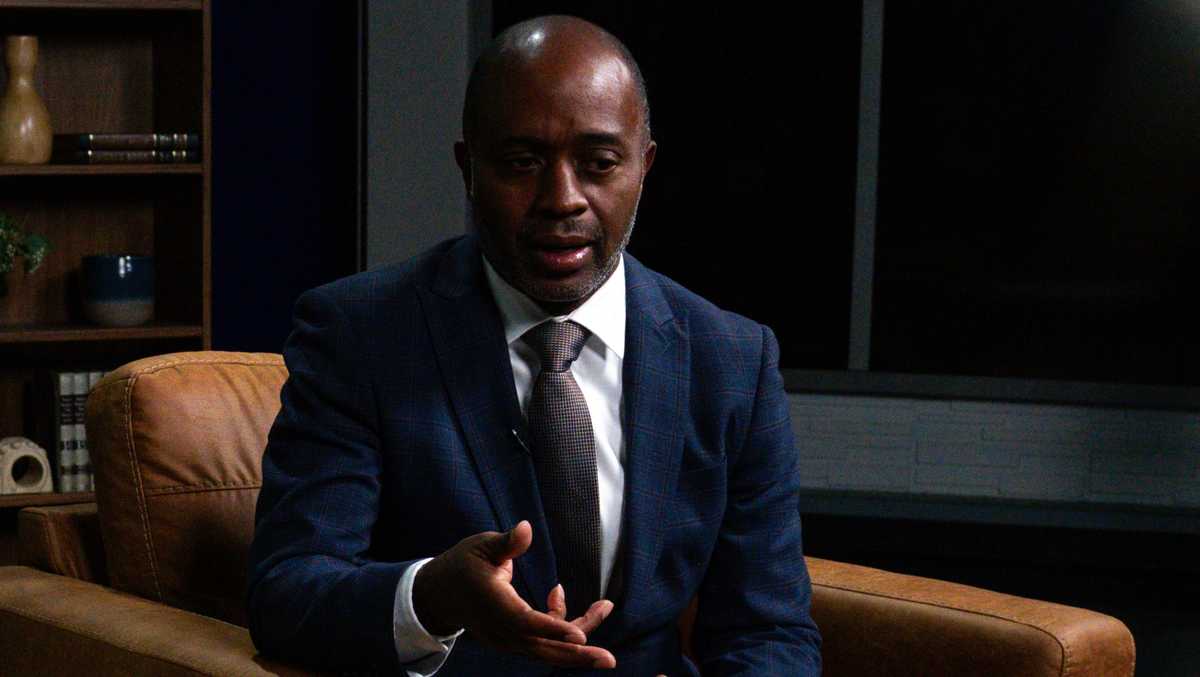
Tony Thurmond sat down for an interview with California Politics 360 for a wide-ranging conversation on his run to be the state’s next governor.
The Democratic State Superintendent of Public Instruction is running in the race to replace Gov. Gavin Newsom, who terms out at the end of this year.
“I love this state, I was born here and I know the state’s going through a lot of hard challenges, but I think this is our moment to overcome them,” Thurmond said when asked why he’s running for governor now.
Thurmond said he plans to tackle fraud and waste in government spending, citing agencies like the Employment Development Department (EDD) and insurance scams as areas of concern.
“I do think we can stamp out some waste, fraud, and abuse. I think there are billions, if you look at unemployment and other agencies—if we can shut that down and collect that revenue,” Thurmond said. He added, “As governor, what I will require is that every agency that makes grants has to have an auditing function. Every single agency.”
To lower costs, Thurmond said he would raise taxes on billionaires while providing tax credits to working people.
On healthcare, he emphasized his support for continuing insurance coverage for undocumented immigrants and transitioning to a universal healthcare system.
“I think it’s come time for California to pilot a program that other states have piloted,” Thurmond said. When asked how he would fund these initiatives, he responded by saying he would tax billionaires.
“In some ways, we may have to put more impact on the healthcare companies,” Thurmond said. “They’re having record profits at a time when more people are not covered.”
Thurmond acknowledged inefficiencies in government programs, such as the 911 system and the California High-Speed Rail project.
He said he would work to improve efficiency. “There’s a lot of bureaucracy in government, and we have to work on efficiency. There’s no question about that. But you can’t tell me that in the birthplace of Silicon Valley that we can’t come up with systems that can do better,” Thurmond said.
On education, Thurmond proposed changing the way the state funds public schools by basing funding on student enrollment rather than daily attendance. He also suggested partnerships with neighboring states to allow students to attend California high schools and be dually enrolled, saying, “I believe we have to do something we have never done before and find ways to attract more students into our system. Even in this climate, we may have to have a deeper partnership with other states that border California.”
Thurmond addressed concerns about his tenure as superintendent, saying, “Californians can say they want more. I want to see every student have a great experience. I think everyone is right. The good news is we’ve seen some trending up and progress in math, in science, and in reading. But it’s not enough. This is not a time to rest on our laurels.” He added, “What I say to Californians is we’ve got to do the one thing we’ve never done—invest in a program to ensure our kids can read by third grade, like other states have done.”
On climate goals, Thurmond said California’s plans to cut oil and gas use may need to be recalibrated. “I think it’s going to take some real thought, but we’ve got great institutions like the UC, Cal State to help us think through how we bring alternative technologies,” Thurmond said. When asked about banning the sale of new gas-powered cars by 2035, he said, “Seems like we’re not quite there. I love the goal. I love the goal, but again I don’t want to just state a headline. I want to be realistic about what I think we can achieve.”
Thurmond also outlined plans to hire 2,000 additional police officers and 911 dispatchers while funding more crime intervention programs. On homelessness and housing, he said he would ramp up mental health and substance abuse treatment centers and fund affordable housing.
When asked to grade Gov. Gavin Newsom’s performance, Thurmond said, “if you look at how he fought Trump and Prop 50…I give him an A on the effort.”
“But overall, I give him a B-,” he said, pointing to the high-speed rail project and homelessness issues in the state.
Thurmond described California under his leadership in three words: “Hopeful, prosperity, united.”
KCRA 3 Political Director Ashley Zavala reports in-depth coverage of top California politics and policy issues. She is also the host of “California Politics 360.” Get informed each Sunday at 8:30 a.m. on KCRA 3.