
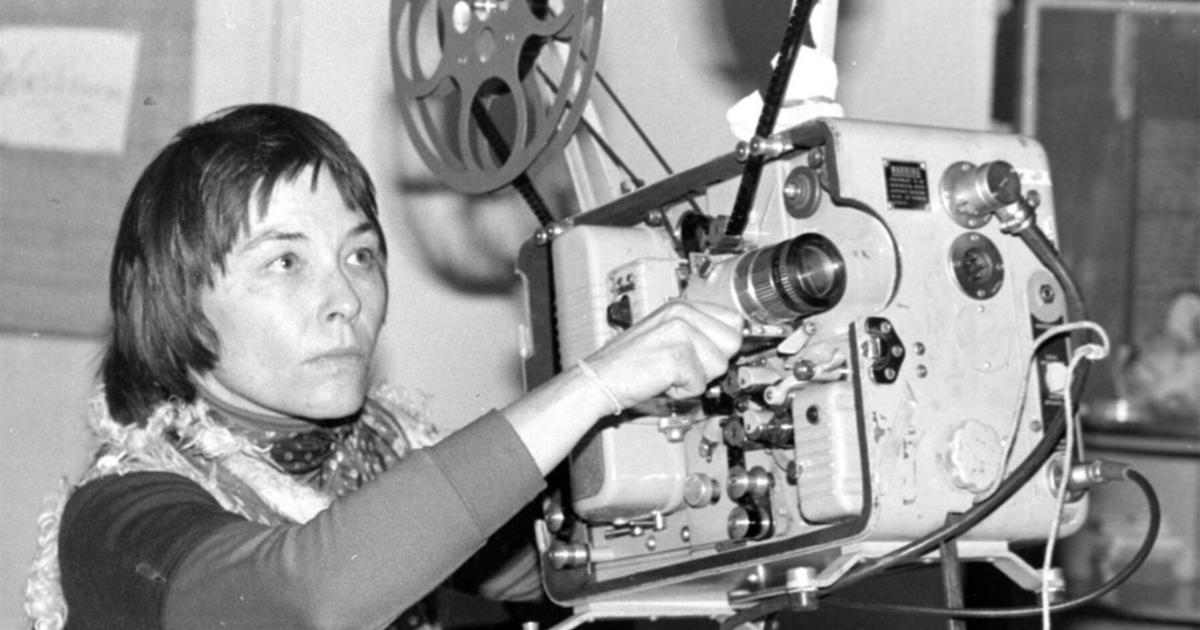
San Francisco celebrated Lesbian Visibility Week with a screening of Caroline Berler’s 2018 documentary “Dykes, Camera, Action!” at the Roxie Theater on April 26. The showing marked both the end of the week’s celebrations in the city and the third collaborative effort between Frameline, The Curve Foundation and The Roxie to create a space to celebrate the long, rich history of lesbian culture.
The film industry has historically shut out voices that are not white, male and heterosexual, leaving any creatives who do not identify as such to fight harder to be heard — and lesbians have found it challenging to get their work out there.
But as Berler expertly showcases in “Dykes, Camera, Action!,” lesbians have never shied away from telling their stories on the silver screen — it’s just a matter of paying attention.
“It felt so important to learn this history and give these women credit for what they did,” Berler said in an interview with The Daily Californian.
Berler was especially motivated to bring lesbian filmmakers back into the conversation following the fallout of the 2016 presidential election.
“All of a sudden, we were up in arms with fear about women’s issues, LGBTQ+ issues … it really just lit a fire,” she said. She went on to quote Rose Troche, a lesbian filmmaker and subject of the documentary: “Anger (is) a beautiful engine for creativity.”
One of the most striking parts of the documentary is its ability to remain timeless while covering more than 50 years of history, both in cinema and in American politics. As Berler and countless others have pointed out, progress is not linear. Many of the battles shown in “Dykes, Camera, Action!” ring remarkably true to the ones lesbians fight today, such as a Lesbian Avengers protest against the banning of a children’s book featuring lesbians.
Another very poignant and inspiring segment of the documentary is the chapter on the New Queer Cinema wave. The segment showcases the iconic lesbian marks left on the canon of queer film — movies such as “But I’m a Cheerleader,” “The Watermelon Woman” and “Go Fish” — following the end of the conservative Reagan and Bush era. Berler shows how creative greatness can emerge when artists are given space to breathe and reflect. Considering the United States’ current conservative administration and its attacks on LGBTQ+ protections, it is inspiring to watch the New Queer Cinema wave segment and think about what may lie around the corner for cinephiles. As Berler put it, “when times are bad, that’s when it’s most important to fight for what you believe in” — and what better way to fight than with art?
Take, for example, the state of entertainment today, which has presented reasons to stay hopeful. Even if audiences have to wait a little bit longer, there are still signs of the pendulum starting to swing back.
Berler expressed hope following the immense viewership and popularity of “Heated Rivalry” across all kinds of audiences, while also highlighting Netflix’s “The Beast in Me” for its inclusion of a lesbian main character. In Q&A after the screening, Jenni Olson, a filmmaker and subject in the documentary, cited “Bottoms” and “Portrait of a Lady on Fire” as recent favorites that would make for worthy additions to an updated version of the documentary.
While screening “Dykes, Camera, Action!” was first and foremost a way to celebrate Lesbian Visibility Week, another equally striking aspect was the documentary’s tribute to the unifying power of movies and the moviegoing experience. Watching the documentary in a crowded theater — one that cheered for its favorite lesbian movies and laughed at the dramatically dated depictions of the past — reinforced the idea that while we might be invisible for the rest of the year, it’s a joy to see each other now, in person and on the big screen.