
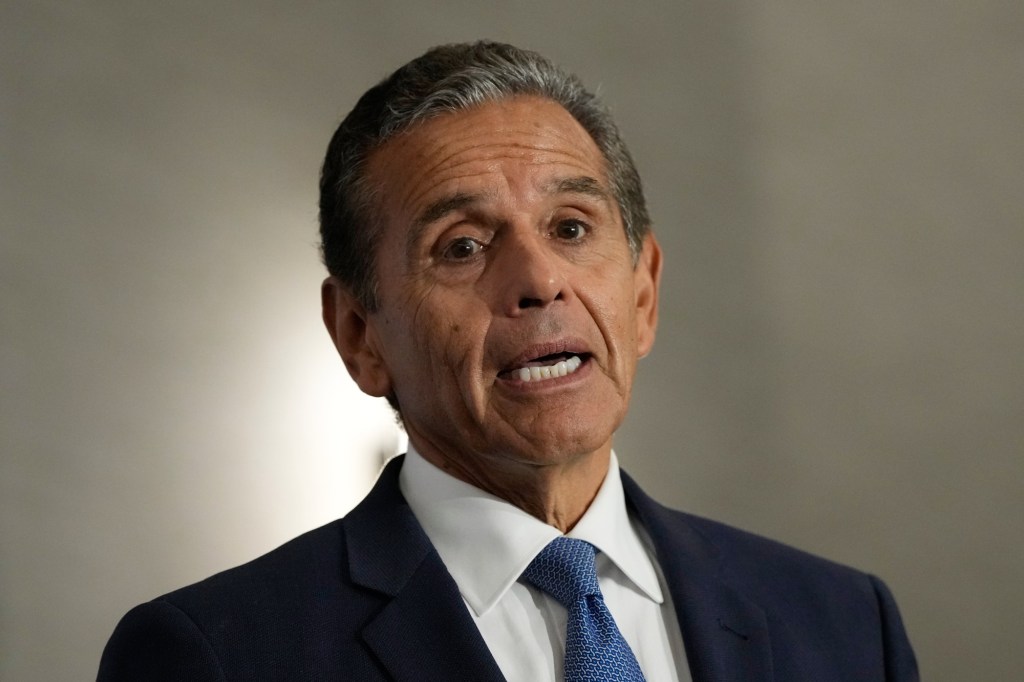
Ahead of the June primary election, the Southern California News Group compiled a list of questions to pose to the candidates who wish to represent you. You can find the full questionnaire below. Questionnaires may have been edited for spelling, grammar, length and, in some instances, to remove hate speech and offensive language.
Name: Antonio Villaraigosa
Current job title: Former Mayor of Los Angeles
Age: 73
Political party affiliation: Democratic
Incumbent: No
Other political positions held: Assembly member (1994 – 2000), Assembly Majority Leader (1996-1998), Assembly Speaker (1998-2000), Los Angeles City Council member (2003-2005), Mayor of Los Angeles (2005-2013), President of the U.S. Conference of Mayors (2011-2012), Chairman of the Democratic National Convention (2012), California Infrastructure Advisor (2022-2023)
City where you reside: Los Angeles
Campaign website or social media: antonio2026.com
What is your top economic development priority for the state? How will you work with cities to achieve this? (Please answer in 250 words or less.)
Making California more affordable must be the top priority of our state’s next governor. And the foundation of a strong economy is infrastructure. You can’t grow jobs, build housing or move people and goods without it.
That’s what I did in Los Angeles. I championed Measure R, bringing $40 billion in transportation investment to the region and creating hundreds of thousands of good-paying jobs. We broke ground on transit projects that had been talked about for decades. We built more housing in eight years than in the 12 years before me, and we built it near transit so people could get to work without sitting in traffic for hours. We cut crime by nearly 50%.
I also took on the taxes that were driving businesses out of the city. I pushed to eliminate L.A.’s gross receipts tax — one of the highest in the region — because it punished companies for growing and pushed them to leave or expand elsewhere. Studies showed that waiving these taxes for businesses during their first three years actually increased city revenue as more businesses formed and stayed. That’s the kind of pro-growth, common-sense reform California needs statewide.
California needs to build again — housing near transit, energy infrastructure, water storage, EV charging stations and a modern grid. We need to cut permitting timelines and work directly with cities to get projects moving. California has the talent, innovation and resources to lead the world. We just need a governor who knows how to build.
Affordability continues to be top of mind for Californians. What is one specific area where the state could bring about immediate relief for residents? (Please answer in 250 words or less.)
With Trump’s disastrous tariffs and war raging in Iran, the price of everything is skyrocketing. We have the second-most-expensive utility prices, the second-most-expensive rent, the most expensive gas, some of the most expensive groceries, etc.
One specific area I will tackle is energy costs. We need an “All of the Above” energy policy, with renewables like solar and wind, but also nuclear, natural gas and, yes, gas-powered cars. We must keep our commitment to tackling climate change, but we can’t do it at the expense of good-paying jobs, and we can’t just have energy mandates that unfairly burden working families.
To secure our energy future, we need to build. That includes solar and wind generating capacity along with transmission lines that currently take over a decade to approve and build to completion — the slowest approval process anywhere in the western U.S. By building our generation capacity, we can meet our energy needs and goals, while creating jobs and ultimately, making energy more affordable.
I’ve done this before. As mayor of Los Angeles, I converted our entire bus fleet from dirty diesel to natural gas and transformed the Port of Los Angeles from one of the dirtiest ports in America to one of the cleanest in the world. I know how to lead on climate while keeping costs down for working families.
Legislative Republicans this year called for a one-year suspension of the state’s gas tax. Meanwhile, another legislative proposal would consider charging drivers based on how much they use the roads as opposed to the fuel consumed. As governor, would you support any of these proposals? How else would you hope to alleviate prices at the pump for California drivers? (Please answer in 250 words or less.)
I have released a five-point plan to address gas prices and give Californians relief at the pump, and it saves money without making the quality of our roads worse.
First, my plan establishes a California Fuel Affordability Guarantee — when gas prices exceed $5.50 per gallon for 30 consecutive days, automatic rebates get sent to Californians.
Second, we must protect our in-state refining capacity. If we lose one more refinery, prices will go up to $8.75/gallon.
Third, we need to cut the regulatory red tape that adds an estimated $0.50 to $1.30 per gallon above what drivers in other states pay.
Fourth, I will reform CARB and impose a moratorium on new regulations that increase energy costs until each passes an independent cost-benefit analysis.
And fifth, we invest in the transition to clean fuels and EV infrastructure so Californians have real alternatives.
On the gas tax, it only accounts for 61 cents per gallon. My plan would cut prices by a lot more. The American Society of Civil Engineers gives California’s roads a “D,” and we need that money to fix them up. I’m against a mileage tax that charges people for every mile they drive, but as more Californians switch to electric vehicles, we need to figure out how EV drivers pay their fair share for the roads they use. But the answer has to be fair and simple, not another burden on people who are already stretched thin.
How do you propose to manage the state’s budget to ensure long-term fiscal stability? What areas would you consider for spending cuts, and, similarly, where would you like to see increased investment and why? (Please answer in 250 words or less.)
The state of California is in very poor fiscal health. We’re projected to run deficits of $18 to $35 billion year-over-year for the next several years. And with the stock market underperforming even baseline expectations, this coming fiscal year could be even worse, since our tax code relies on Silicon Valley selling stock.
The top 1% of earners in California pay roughly 50% of the state’s income tax. That may sound good on paper, but it leaves our budget at the mercy of a few thousand taxpayers. We need to rewrite our tax code to give our state a more diversified revenue stream, grow businesses in California that pay taxes and close loopholes like the one that lets commercial property owners exploit the benefit meant for homeowners, which stops regular assessments.
And according to the bipartisan Think Long Committee, California should also broaden the sales tax to cover services and not just goods, lower the corporate tax rate to stop businesses from fleeing to other states, invest more in the rainy day fund to end the boom-and-bust budget cycle and invest in K-12 and higher education with accountability tied to results. I agree with many of their recommendations.
As Assembly speaker, I balanced budgets with a Democratic and a Republican governor, with a surplus. And then, as mayor, when some said L.A. would go bankrupt, I made the tough calls and left the city on sound financial footing. I know how to do it, and I’m the only one in this race who has a record of doing it.
One of the main concerns cited by opponents of a proposed billionaire tax is that it would push the state’s wealthiest residents to move elsewhere. Should this tax proposal qualify for the ballot and be approved by voters, what would you do as governor to ensure California remains a place where entrepreneurs and innovators want to live, so that the Golden State can continue to benefit as one of the world’s largest economies? And if it doesn’t pass, how would you propose the state pay for health care amid the Trump administration’s funding cuts? (Please answer in 250 words or less.)
I don’t support the so-called billionaire tax because it will really be a tax on the middle class when all the billionaires leave. California only has 188 billionaires living in the state, and every week, it seems there’s news of another one fleeing the state or moving their business. I support a federal wealth tax that makes billionaires pay their fair share, but not at the state level, where it can be easily avoided by moving out of California.
California is already one of the worst states to do business in. If the goal is to lower the tax burden on working families, we need to grow the economy so our revenue doesn’t depend on Silicon Valley.
Speaking of health care, should the state provide free or subsidized health care, such as Medi-Cal, to undocumented immigrants? Should there be any conditions placed on their eligibility? (Please answer in 250 words or less.)
Yes. California already pays for health care for the undocumented when they wind up in the emergency room after they become severely ill. Paying for preventative care saves money in the long run. And as we saw during COVID, with infectious diseases, if we don’t care for everyone, the entire population is vulnerable. If I can’t convince people that it’s the right thing to do, I can convince people that it’s the smart thing to do.
In addition, Medi-Cal is what millions of Californians rely on to stay healthy. Having a healthy population is good for the economy, and making health care more affordable for the people who need it most is simply the right thing to do. Undocumented immigrants still pay taxes, do important jobs and own businesses that employ others. They send their kids to the same schools, go to the same churches and contribute meaningfully to the cultural fabric of California. Letting undocumented people get sick or even die of treatable medical conditions because they can’t afford health insurance is deeply immoral.
Would you continue to implement CARE Court, which is meant to help get people with severe mental illnesses off the streets? What changes, if any, would you make to the program? (Please answer in 200 words or less.)
Yes, I would continue to implement CARE Court. Orange County and Los Angeles County recently ranked as two of the worst counties in the entire state for implementation of Care Court. We’ve spent $24 billion to address homelessness, and in that time period, it’s gotten worse. The logical thing to do, then, is to try new things. CARE Court is an innovative solution that brings all parts of our government together and fills the gap that’s been missing for too long — mandatory treatment for addiction or mental health problems. CARE Court isn’t a panacea, and it’s not going to do much for the people who are homeless simply for economic reasons, but it will make a considerable dent if only counties give it the chance.
To make CARE Court actually deliver on its promise, I would push for stronger state oversight of county-level implementation, including tying funding to clear performance benchmarks so that counties can’t simply let the program languish. I’d also prioritize expanding the treatment bed capacity and behavioral health workforce that CARE Court depends on. A court order means nothing if there’s no bed, no clinician and no housing placement waiting on the other side.
As part of combating homelessness, elected officials often talk about the need to prevent people from losing their homes in the first place. What policies or programs should the state adopt to make housing more affordable for renters and homeowners? What do you propose the state do to incentivize housing development and expedite such projects? (Please answer in 250 words or less.)
Our affordable housing crisis ultimately boils down to two words: supply and demand. When demand outpaces supply by this much, the average family in California can’t afford to buy a home. We need more homes for people of all income levels. People often criticize new homebuilding by saying that these homes are unaffordable, but in fact, they make every other home more affordable. Through a process called filtering, people who can afford new construction will move there, freeing up homes they used to occupy, lowering the purchase price and the rents for those homes. We’ve already seen this happen in places like San Diego, Los Angeles, Sacramento and more.
We also must reform the environmental review process. The approval process adds months to years and adds tens of thousands to the final price of new homes. Exempting infill housing, which we know is environmentally friendly, is a common-sense reform.
Another strategy I support is stopping companies like BlackRock and foreign investment firms from buying up single-family homes. Homes should be for people to live in, not for billionaires to park cash. This will lower demand by a modest but measurable degree, putting downward pressure on the price of homes.
And finally, we need to enforce the law. Some mayors and council members who represent wealthy enclaves think that affordable housing doesn’t belong in their city limits. They’re wrong, and by withholding state funding for cities that flagrantly violate the law, I will get them to sing a different tune.
What is a policy or project from the Newsom administration that you’d like to expand or continue? Is there something you’d change about the approach? (Please answer in 250 words or less.)
California is unaffordable, and housing costs are by far the biggest reason why. I commend Gov. Newsom for focusing on this in his second term, specifically by signing a number of bills aimed at increasing housing production. Those bills include SB 79 (permitting more homes near transit), AB 2011 (streamlining mixed-use in commercial areas), AB 2097 (eliminating parking mandates near transit), SB 9 (allowing lot splits by-right) and SB 35 (strengthening the Housing Accountability Act). These reforms are necessary, and they have already resulted in thousands of homes being built across the state.
Just as I said in my previous answer, California needs to dramatically expand the supply of housing for all income levels: market-rate, missing middle, affordable, public housing, single-family homes, townhomes, duplexes, high-rise apartments, etc. As governor, I will continue this effort and go even further by holding cities accountable to their housing production goals. Together with the legislature and the attorney general, I will enforce the housing laws of this state and use the power of the purse to bring cities into compliance.
Conversely, name a policy or program from the Newsom administration that you’d want to eliminate or make major revisions to and explain the changes. (Please answer in 250 words or less.)
Where I most disagree with Gov. Newsom is on the issue of public safety. When I walk down to CVS and see everything behind a glass case, it’s a reminder of where we went wrong. As San Diego Mayor Todd Gloria said, we should be locking up criminals, not laundry detergent. I was the only Democrat currently running for governor who supported Proposition 36 on the ballot in 2024, the ballot measure that added penalties for serial thieves. Not only did I support it, I appeared in advertisements for it.
Gov. Newsom opposed Proposition 36, and his push to reduce prison overcrowding is admirable. But the voters passed Proposition 36 with 68%, a supermajority, and they did that because they had had enough. As mayor, I cut crime by more than 50% and grew the LAPD to a record 10,000 sworn officers. I learned then that you can’t grow your economy, increase transit ridership, improve education outcomes or achieve any of your goals if crime is rampant. The California Constitution lists public safety as the No. 1 responsibility of the government for a reason, and as governor, it will be my top priority.
Artificial intelligence has become a ubiquitous part of our lives. Yet public concerns remain that there aren’t enough regulations governing when or how AI should be used, and that the technology would replace jobs and leave too many Californians unemployed. How specifically would you balance such concerns with the desire to foster innovation and have California remain a leader in this space? (Please answer in 250 words or less.)
Artificial intelligence is a powerful tool that has already reshaped the world economy. Hospitals have used AI to detect lung cancer in CT scans months before human radiologists are capable of detecting it. Weather prediction models have made it easier to plan for major storms. Audio can now be captioned in real-time for the hearing-impaired watching live newscasts. There are so many use cases for AI, and we’re just beginning to understand how this technology will change our lives.
Yet, there are also dangers. Companies have been caught using AI for “dynamic pricing models,” invoking privacy concerns. AI deepfakes have made it harder to tell what’s real and what’s fake. Lawyers have filed briefs with hallucinated case citations. Data centers used to power AI are popping up everywhere, including in areas where they cannot satisfy the energy and water demands of these data centers.
More importantly, AI is transforming our economy at a pace we’ve never seen before, and working families are feeling it first. Across every industry, companies are racing to automate jobs. The savings go straight to the top while hollowing out the middle class. We can’t afford to wait until the damage is done. We need to invest in workforce training now so our workers have the skills for the jobs of tomorrow. As governor, I’ll work with the legislature to fund job training programs in high-growth fields, strengthen union protections and hold corporations accountable when they put their own employees out of work to increase profits.
Last summer, President Donald Trump not only deployed federal immigration agents to California to carry out his mass deportation policy; he also federalized the National Guard and sent them to Los Angeles. How would you respond as governor should the president deploy more federal agents or troops to California again? (Please answer in 250 words or less.)
Last summer, Los Angeles was occupied territory. The National Guard was deployed, illegally, to strike fear and chill thousands of Angelenos’ First Amendment rights. And why? Because our state refused to cooperate with the military-style deportations that are ripping families apart across California.
The Ninth Circuit held that Trump’s deployment of troops in Los Angeles was illegal. Trump failed to articulate any discernible reason why they should be there in the first place, just as he fails to articulate anything he does. All we know about his motive is that he hates California because we voted against him three times, causing him to lose the popular vote twice. That’s why he’s holding up disaster relief funding for the L.A. fires, too.
As governor, I will not allow the National Guard to be deployed illegally by the president. And I will defend California at the ballot box, in the courts and lead a mass movement to defend our civil liberties.
That’s why on day one, I will sign my ICE Accountability Plan, a series of emergency executive orders to hold ICE accountable and protect our communities. We will launch a multi-agency task force to inspect every detention facility in California for health and safety violations. We will deploy our child welfare system to protect children in immigration custody. We will create real accountability for ICE agent misconduct and excessive force. And we will safeguard schools, churches, hospitals, homes and workplaces from illegal raids conducted without a judicial warrant. You can read the full plan at antonio2026.com/ice. Fear will not rule California.
What’s a hidden talent you have? (Please answer in 250 words or less.)
I love to dance, and some even say that I do it well.
Sonia Kacker, CA-26 candidate, 2026 primary election questionnaire
Jacqui Irwin, CA-26 candidate, 2026 primary election questionnaire
Liam Andres O’Neill Hernandez, CA-26 candidate, 2026 primary election questionnaire
Sam Gallucci, CA-26 candidate, 2026 primary election questionnaire
Chris Espinosa, CA-26 candidate, 2026 primary election questionnaire