
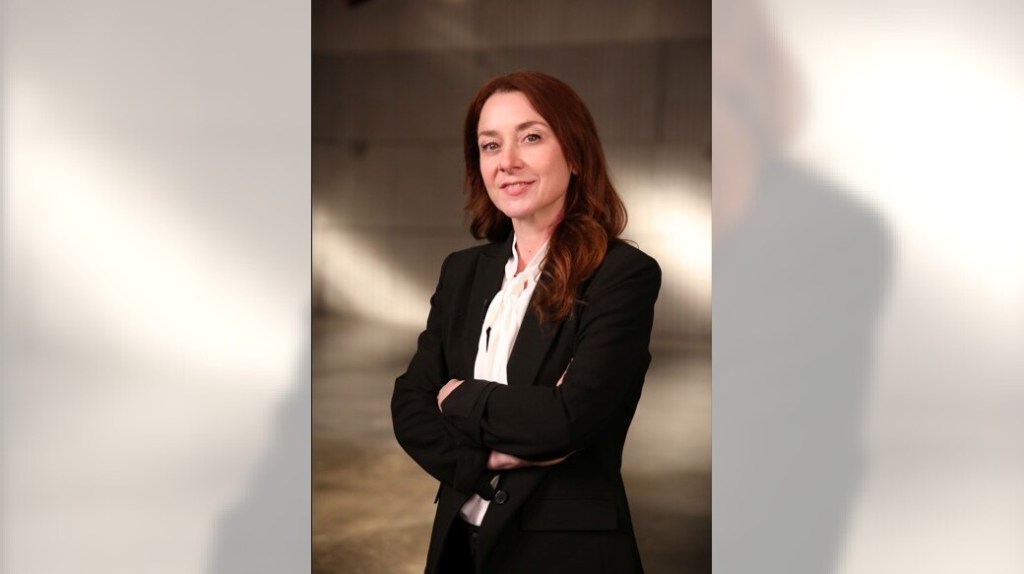
Ahead of the June primary election, the Southern California News Group compiled a list of questions to pose to the candidates who wish to represent you. You can find the full questionnaire below. Questionnaires may have been edited for spelling, grammar, length and, in some instances, to remove hate speech and offensive language.
Name: Anna Slotky Reitano
Current job title: Deputy County Counsel, Justice and Safety Division
Age: 44
Incumbent: No
Other political positions held: None
City where you reside: Glendale
Campaign website or social media: reitanoforjudge.com
What do you consider to be your judicial philosophy? (Please answer in 200 words or less.)
My judicial philosophy is grounded in fairness, respect for the rule of law and an unwavering commitment to treating every person who enters the courtroom with dignity. I was a trial attorney at the public defender’s office for over a decade and am now deputy county counsel in the Justice and Safety Division. This experience has given me a broad and balanced perspective on the justice system in Los Angeles County and the real-world impact of judicial decisions.
As a public defender, I represented individuals at their most vulnerable and saw firsthand the importance of due process, careful listening and ensuring every voice is heard. In my current role as deputy county counsel, advising county departments and supervising civil matters, I work to advance solutions that promote public safety, fairness and community well-being. These experiences inform my approach to judging: thoughtful, even-handed and grounded in legal principle. Since I have been working for the county for years already, I also have a practical understanding of what Los Angeles County has and needs.
A judge must be impartial, prepared and patient. I will apply the law consistently and without bias, while ensuring that all parties feel respected and understood. My goal is to foster trust in the courtroom by making decisions that are fair, transparent and firmly rooted in the law.
How do you think your personal experience — legal or otherwise — would inform your decisions as a judge? (Please answer in 200 words or less.)
My personal experiences shape how I would serve as a judge with empathy, perspective and discipline. As a mother of three boys, I understand the importance of patience, listening and making thoughtful decisions that affect families and futures. That perspective reminds me that people who come before the court are not just cases, but individuals whose lives may be deeply impacted.
Since handling my first hearing as an extern at Legal Services 20 years ago, I have worked across multiple areas of the law, including criminal, civil and administrative matters, and have represented people on different sides of the courtroom with very different goals. This breadth of experience makes me a unique candidate and allows me to see legal issues from more than one angle. It has required me to weigh competing interests, assess credibility and apply the law fairly rather than through any single lens.
Because of that well-rounded background, I am able to approach cases with less bias and a more balanced perspective. As a judge, I will treat all parties with dignity, remain impartial and apply the law faithfully, making decisions that are fair, thoughtful and grounded in humanity, legal principle and real-world understanding.
How would you approach situations where you have judicial discretion within the law? (Please answer in 200 words or less.)
When exercising judicial discretion, I would generally begin with the law as the guiding framework, including statutes, case law and any applicable rules. Discretion is not personal preference; it is a duty to apply the law thoughtfully to the specific facts of each case.
I would carefully consider the individual circumstances, the interests of justice and the real-world impact of the decision, while ensuring consistency with controlling case law and fairness. My experience working in different areas of the legal system has taught me the importance of evaluating competing perspectives and avoiding assumptions or bias.
I would also ensure that the involved parties feel heard and that the reasoning behind my decision is clear and transparent. That promotes trust in the process, even if the outcome is difficult for one person or another.
Ultimately, my goal in exercising discretion would be to reach decisions that are principled, even-handed and grounded in both the law and a careful understanding of the facts presented
How would you weigh your own personal beliefs against the law, should they conflict? (Please answer in 200 words or less.)
If my personal beliefs were ever to conflict with the law, the law must control. A judge’s role is not to impose personal views, but to apply statutes, precedent and constitutional principles faithfully. Whether or not your personal beliefs are in conflict with the law should be irrelevant.
That principle has guided me throughout my career. As a public defender, I did have experience with a couple of clients whose views or conduct I did not personally agree with. I knew, however, that my role was not to judge them, but to ensure that they received the representation and fair trial that our system guarantees. I am proud that I am able to do that and have a track record of doing that. It illustrates my commitment to due process and to setting aside personal beliefs in the service of the law. I will carry that with me to the bench.
As an existing member of the legal community, how would you handle potential claims of misconduct against local attorneys, law firms or law enforcement organizations? (Please limit your answer to 200 words or less.)
As a judge, I would approach any claim of misconduct with fairness, independence and a firm commitment to the rule of law. Allegations should always be taken seriously and evaluated carefully based on the evidence and governing legal standards, not assumptions or relationships within the legal community.
Throughout my career, I have demonstrated a willingness to address misconduct directly. As a trial attorney, I filed motions under the Racial Justice Act when appropriate and consistently challenged unfair practices. I also worked to identify and address patterns of bias in law enforcement practices with attorneys at different courthouses that had similarly affected clients. This reflects my commitment to ensuring the legal system operates with integrity, and also that I recognize inherent systemic issues.
If such claims arose before me, I would ensure a thorough and impartial review, allow all parties to be heard and make findings grounded in the law and the facts if necessary. Where appropriate, I would take corrective action or refer matters to the proper disciplinary authorities.
Maintaining public trust requires judges to confront misconduct, and I would do so with fairness, transparency and accountability.
What is your philosophy on judicial activism and a judge’s potential role in shaping or setting public policy? (Please limit your answer to 200 words or less.)
My judicial philosophy is grounded in the rule of law and the proper role of the judiciary. A judge’s responsibility is not to create policy or advance personal views, but to interpret and apply the law as written, guided by statutes, precedent, legislative intent and constitutional principles.
At the same time, applying the law faithfully does not require ignoring the human realities of the people who come before the court. Throughout my career, I have focused on seeing the humanity in people and the law. Exercising discretion in a thoughtful, fair and respectful way, while remaining within the bounds of the law, is not judicial activism; it is, in my view, part of the judicial role.
Judges inevitably make decisions that have real-world impacts, but shaping public policy is the role of the legislative and executive branches at the will of the voters. The judiciary’s role is to ensure that laws are applied consistently, fairly and constitutionally.
As a judge, I would remain firmly within that role by applying the law impartially, using discretion appropriately and ensuring that every person is treated with dignity. That approach promotes both fairness and public trust, without crossing into activism.
Luz Rivas, CA-29 candidate, 2026 primary election questionnaire
Rhonda Haymon, LA Judge Office No. 64, 2026 primary election questionnaire
Maria Ghobadi, LA Judge Office No. 64, 2026 primary election questionnaire
Irene Lee, LA Judge Office No. 14, 2026 primary election questionnaire
Angie Christides, LA Judge Office No. 14, 2026 primary election questionnaire