
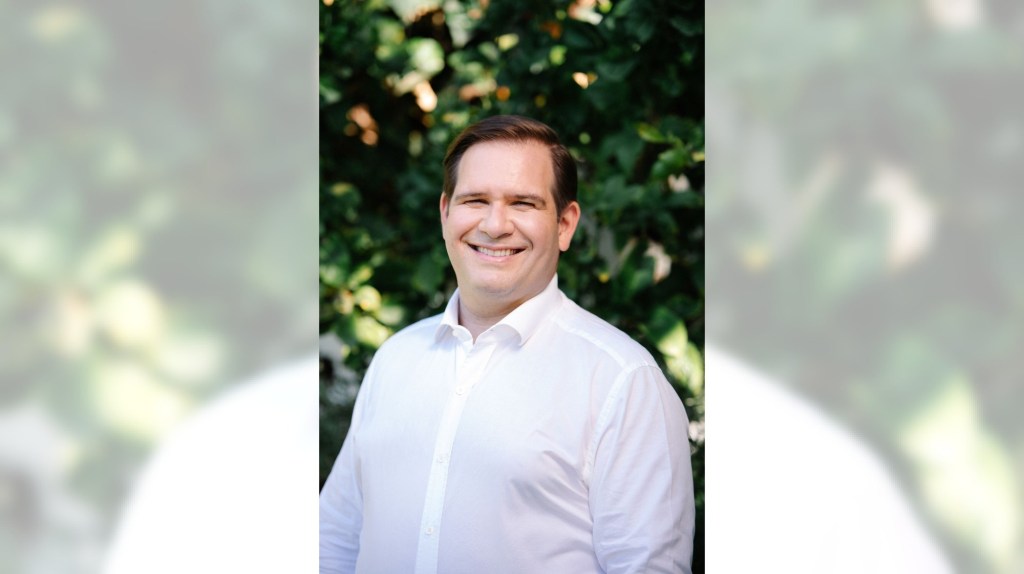
Ahead of the June primary election, the Southern California News Group compiled a list of questions to pose to the candidates who wish to represent you. You can find the full questionnaire below. Questionnaires may have been edited for spelling, grammar, length and, in some instances, to remove hate speech and offensive language.
Name: Zach Sokoloff
Current job title: Senior Vice President – Asset Management
Age: 37
Incumbent: No
Other political positions held: None. However, I am an appointed delegate to the California Democratic Party by Rep. Ted Lieu and previously served as a tenant representative on a local rent stabilization commission.
City where you reside: Los Angeles
Campaign website or social media: zachforcontroller.com
Los Angeles has faced ongoing structural budget challenges, including rising liability costs and revenue uncertainty. What steps would you take to improve the city’s long-term financial stability? (Please answer in 200 words or less.)
Los Angeles faces a structural, billion-dollar budget deficit. It would be impossible and imprudent to close that gap through cost-cutting alone, which would jeopardize city services for our most vulnerable communities. There are certainly areas of wasteful spending to investigate and improve (see below), but it is equally important to identify new sources of revenue to help put our city on a sounder financial footing.
I would appoint a chief revenue officer, who would work across departments to stimulate economic activity. This includes making it easier, faster and cheaper to start a business as well as supporting industries vital to the LA economy. One example is film and television production. I have seen firsthand how the city has allowed Hollywood to wither — putting thousands of Angelenos out of work and hurting small businesses that rely on active studio lots. These divestments not only deprive LA of much-needed tax revenue but also depress household-level spending.
I also believe the controller can highlight policies that hinder LA’s future growth. One such example is homelessness’s disproportionate impact on Downtown LA. The sub-market produces significant business and hotel tax revenue, and failure to reinvigorate our CBD limits the city’s ability to flourish.
How would you prioritize audits and other oversight to ensure city departments and programs are operating effectively and using public funds responsibly? (Please answer in 200 words or less.)
I believe that audits ought to be prioritized based on the scale of a department’s budget or the scale of the policy crisis intended to be addressed. As controller, this would include both departmental audits as well as proactive involvement in monitoring major capital projects to ensure the city acts as a true fiduciary of Angelenos’ investments in the future of LA.
However, it is important not to simply view the controller’s work as being comprised of audits. The controller can conduct or commission studies to inform the city about priority policy initiatives. I would consider utilizing this authority to quantify the budgetary impact that ineffective drug addiction treatment policies play in exacerbating our homelessness crisis. Another authority within the controller’s office is performing contract compliance reports, which are particularly useful in evaluating vendors that participate in large capital projects. These are two examples of valuable work product the controller can furnish that fall outside the scope of a traditional departmental audit.
Ultimately, though, an audit or a report is just the start. Information without impact will not rebuild Angelenos’ trust in city government. And that — making City Hall work for all Angelenos — is how my office will judge its success.
The city controller has conducted audits and oversight of homelessness programs and spending. What role should the office play in ensuring transparency and accountability in the city’s response to homelessness? (Please answer in 200 words or less.)
The homelessness crisis is first and foremost a humanitarian crisis, but it also represents a fiscal crisis for the city of LA. When LAHSA spends billions of dollars with little to show for its efforts, we not only continue to see street homelessness and public disorder, but we also deplete our budget of much-needed resources for other city services. As controller, I will conduct comprehensive audits of Proposition HHH, Measure A and Measure ULA to determine how money is being spent and whether they are delivering results. Prior controllers published multiple audits exposing the cost to build or buy homeless housing, but that has abated under the incumbent.
Beyond audits of these programs, I would conduct studies and work with policymakers to rethink our approach to solving our homelessness crisis. Housing First is insufficient to address the root causes of homelessness, which often entail drug addiction and mental illness. State dollars can only be used to construct “drug-tolerant” housing, so the city must prioritize “recovery housing” options that provide effective treatment to the unhoused and put them on a path to leading a healthy, self-directed life. We cannot keep throwing good money after bad.
Some proposals have called for expanding the city controller’s authority to conduct audits and oversee city programs. Do you support changes to strengthen the office’s powers? Why or why not? And if so, what reforms would you pursue? (Please answer in 200 words or less.)
I believe the controller’s chartered authority is capacious enough to accommodate significantly greater activity than the incumbent is currently producing. The incumbent has conducted fewer than 50 audits and reports during his tenure, which compares to more than 200 reports and audits conducted during his predecessor’s first term. Put simply, the incumbent should focus more on what he can do rather than complain about what he can’t do.
I recently appeared at the Charter Reform Commission to advocate against setting a fixed, minimum budget for the controller’s office. I did so for two reasons. First, I believe floors often become ceilings. There may be years when the controller requires a greater share of the budget and others when it requires less. If the controller consistently produces quality work and generates a positive ROI on its budget, I believe it will be rewarded with additional resources. Second, I think setting arbitrary minimums hamstring future budget-makers and hurts Angelenos.
However, I also publicly advocated for maintaining the independence and core functions of the city controller. It is critical that taxpayers have a strong watchdog, and concentrating these responsibilities under the mayor and City Council would deprive Angelenos of an important fiscal advocate.
How should the city controller work with the mayor, City Council and city departments to ensure financial oversight while maintaining the office’s independence? (Please limit your answer to 200 words or less.)
The controller is neither legislative nor executive. To effectuate change, it must work in partnership to solve problems. My approach would balance accountability with collaboration. I do not believe that accountability requires antagonism, nor do I believe that collaboration requires acquiescence. I will not shy away from delivering hard truths, but I will put aside performative politics in favor of finding common ground and delivering results to Angelenos.
In particular, I would seek out a constructive working relationship with the CAO. As the office within City Hall most directly involved in setting the budget, I think it is critical that the controller build trust and maintain an active dialogue to ensure proactive involvement in major financial decision-making.
One way to accomplish this is by appointing a chief economist in the controller’s office, which is borrowed from San Francisco. This individual could both produce prospective economic impact reports to evaluate the tradeoffs of a specific policy as well as analyze the performance of existing policy to determine whether its implementation aligns with its intentions. This structure would allow the controller to contribute substantively to policy and budget discussions while also maintaining its office’s independence and promoting taxpayers’ best interests.
Frederick Reardon, CA-36 candidate, 2026 primary election questionnaire
Claire Ragge Anderson, CA-36 candidate, 2026 primary election questionnaire
Ted Lieu, CA-36 candidate, 2026 primary election questionnaire
Mike Cargile, CA-35 candidate, 2026 primary election questionnaire
Norma Torres, CA-35 candidate, 2026 primary election questionnaire