
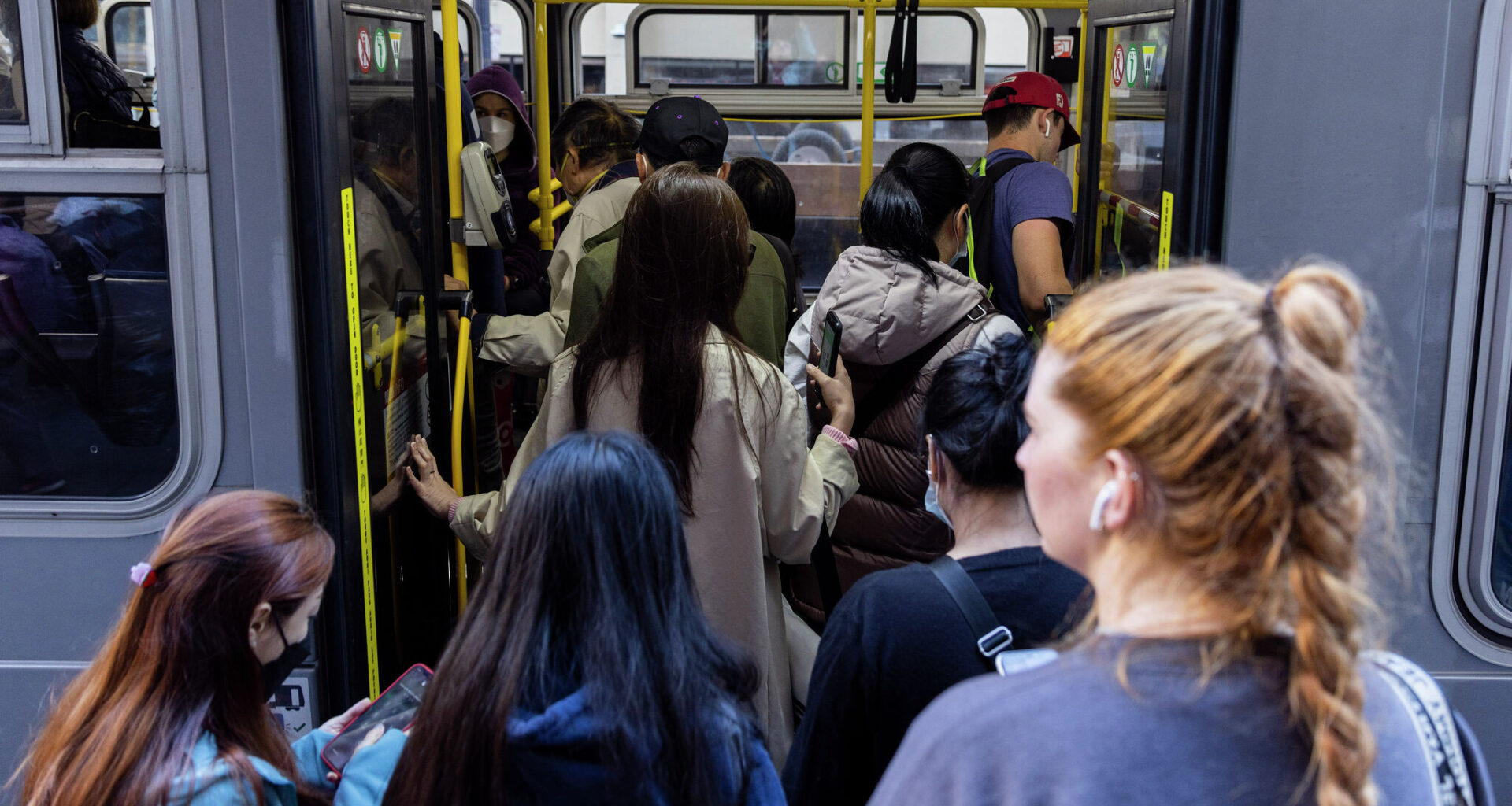
The staffing spree is part of broader effort to instill consequence culture — or rather, a “culture of visible payment” — on San Francisco’s transit system. And the timing is key. With a deficit looming, city leaders are relying on voters to approve two taxes for transit on the November ballot. To make that case, they need to show that transportation agencies run efficiently, and do everything in their power to maximize revenue. Meaning: Fare cheats will not be tolerated.
To convey that message, officials at the San Francisco Municipal Transportation Agency must overcome the findings of a March report by the urban planning think tank SPUR. It showed that, as of 2024, Muni’s rate of fare revenue per passenger was less than half what it was in 2015, plummeting from $283 million to $97 million. The stark disparity seemed to validate perceptions that Muni is overrun by scofflaws.
But officials at the transit agency have started to stanch the bleeding. This fiscal year they project that fare revenues will tick back up to $128 million. Mayor Daniel Lurie struck an optimistic tone.
“We know that Muni is facing serious financial challenges — but we’re not standing still,” Lurie said in a statement. He touted the “strong, clear approach to fare compliance across Muni that will help generate critical revenue and strengthen trust between riders and the system.”
An additional 17 inspectors will boost compliance enforcement by 30% at SFMTA, from 59 staffers to 76. Their task will be daunting, given that about 500,000 people ride the city’s buses and trains each weekday. (The inspectors will not patrol cable cars.)
Though the workforce size remains modest, SFMTA director of transportation Julie Kirschbaum is confident that a heightened uniformed presence will “help significantly in our work to curb fare evasion,” while strengthening the social contract at Muni. People are more likely to tap a payment device if they fear being stopped and potentially handed a $134 citation.
Apart from the focus on enforcement, SFMTA may create a fare-tagging mechanism for people on youth or low-income discount programs, who currently don’t have to tap in. Agency employees may be issued Clipper cards and asked to present them at fare boxes, instead of just flashing the badge that allows them to ride for free.
Such changes aren’t only about demonstrating good fare etiquette; they also help Muni with data collection, a spokesperson said. After all, it’s easier to improve service when agency planners know how many people are riding, and on what lines.
As Muni leans into heavier enforcement, the agency is trying other strategies as well, such as a public education campaign with the obvious warning that $2.85 Muni fare is cheaper than a $134 fine. At some point, the agency may also consider BART-style “station hardening,” installing gates that are taller and sturdier.
Yet Muni will never be quite as fortressed as BART. Back-door boarding, which helps buses run faster, is definitely here to stay. Riders who deem Muni worthy of their tax dollars must learn to trust one another.