
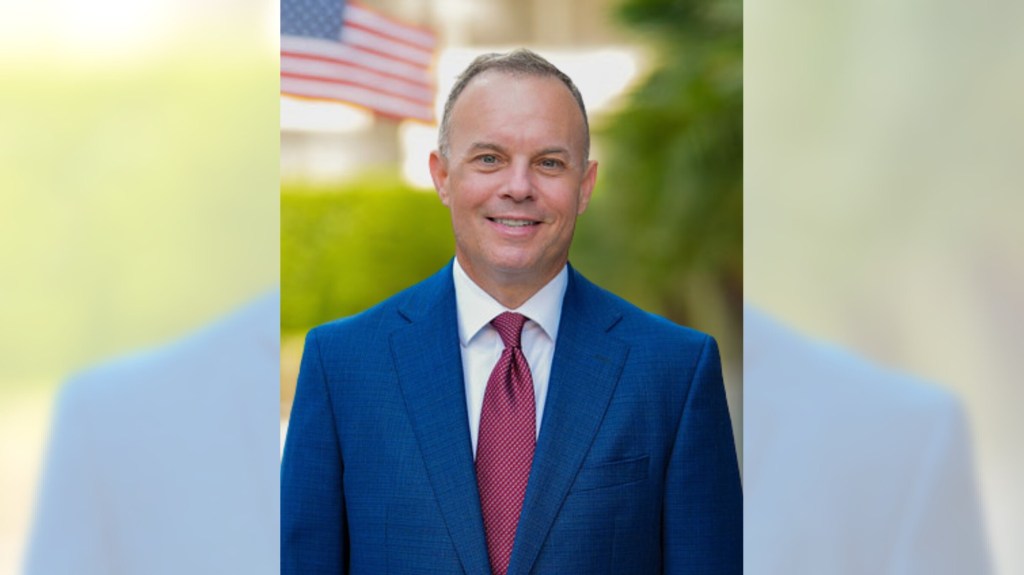
Ahead of the June primary election, the Southern California News Group compiled a list of questions to pose to the candidates who wish to represent you. You can find the full questionnaire below. Questionnaires may have been edited for spelling, grammar, length and, in some instances, to remove hate speech and offensive language.
Name: Robert Mestman
Current job title: Senior Deputy District Attorney
Age: 56
Incumbent: No
Other political positions held: None
City where you reside: Huntington Beach
Campaign website or social media: mestman4judge.com
What do you consider to be your judicial philosophy? (Please answer in 200 words or less.)
My judicial philosophy focuses on four things:
1. Fairness and impartiality: A judge must remain fair and impartial at all times and not show bias for or against a litigant, attorney, witness or other party to a proceeding.
2. Respect for the rule of law: A judge must follow the law, regardless of the judge’s personal opinions or views.
3. Competence and hard work: A judge must be knowledgeable about the law and any legal issues that may arise. A judge must work hard to maintain judicial competence and understand the legal and factual issues of each case.
4. Dignity: A judge must be courteous and show all parties to a case, as well as court staff, dignity and respect.
How do you think your personal experience — legal or otherwise — would inform your decisions as a judge? (Please answer in 200 words or less.)
I have been a prosecutor for more than 24 years and have a breadth of experience handling the most complex and serious cases. As a Special Assistant U.S. Attorney, I targeted public corruption. I also have management-level experience as the supervisor of the Sexual Assault Unit and Science & Technology Unit, as well as having formed Orange County’s first Conviction Integrity Unit.
I have received commendations from the FBI, Mothers Against Drunk Driving (MADD) and the California District Attorneys Association. I have also been actively involved in public safety advocacy and have drafted multiple public safety-related bills. I have volunteered for local school truancy boards, gang reduction efforts, and high school mock trial competitions. And I come from a diverse family, my father having immigrated from South America and my wife being a Vietnamese refugee.
These life experiences – professional and personal – would certainly play a role in informing my decisions as a judge. As a prosecutor, I have fought hard for the people of Orange County in the pursuit of justice, and also worked to ensure fairness for all and integrity of the judicial process. As a judge, I plan to continue these efforts with the utmost professionalism.
How would you approach situations where you have judicial discretion within the law? (Please answer in 200 words or less.)
A judge uses his or her judicial discretion on a daily basis. That judicial discretion must be used prudently and within the confines of the law. A judge’s life experiences – personal and professional – as well as judgment, would certainly play a role in exercising that discretion.
And of course, the use of judicial discretion is not unlimited; discretion must be used legally, complying with guidelines that may be established by legal precedent, rules of court and/or Judicial Council practices. Each situation/case is unique and must be evaluated on a case-by-case basis. People’s lives or livelihoods may be at stake, as well as the protection of our communities. Exercising judicial discretion is one of the most important functions of a judge’s duties. That is why it is so important to elect judges with the requisite experience, judgment, and temperament to exercise discretion in a common-sense manner to protect public safety while ensuring due process for all.
How would you weigh your own personal beliefs against the law, should they conflict? (Please answer in 200 words or less.)
A judge’s personal beliefs should not affect his or her rulings. Politics – and bias of any kind – must be avoided. As a career prosecutor, my job has always been to seek justice, not simply get a conviction. Whether it is reviewing reports to decide what charges to file, determining what an appropriate offer in a case is, or conducting a post-conviction review, I have always pursued justice with the highest ethical standard, without regard to politics, personal biases or other outside influence.
In my role forming Orange County’s first Conviction Integrity Unit, my job was to review old cases in an unbiased manner to determine whether a person was wrongfully convicted. I also implemented the DA’s Race Blind Charging system, to ensure that bias — including potential implicit bias — was removed from a prosecutor’s charging decision.
And as a public corruption prosecutor, politics played no role in my decision-making; the facts and the law are what governed my investigations and prosecutions.
As an existing member of the legal community, how would you handle potential claims of misconduct against local attorneys, law firms or law enforcement organizations? (Please limit your answer to 200 words or less.)
Claims of misconduct by members of the legal profession or law enforcement must be taken seriously and investigated by proper authorities. Investigations must be independent and transparent (as much as permissible) while ensuring due process. Criminal conduct should be investigated/prosecuted by the District Attorney or the Department of Justice. Non-criminal conduct should be referred to licensing authorities such as the State Bar or the Commission on Peace Officer Standards and Training (POST). There must be accountability and due process, and everyone should have access to justice.
What is your philosophy on judicial activism and a judge’s potential role in shaping or setting public policy? (Please limit your answer to 200 words or less.)
It is not a judge’s role to shape or set public policy. A judge’s role is to interpret and apply the law given the facts of a case. In certain situations, a judge may rule that a law is unconstitutional or is being applied in an unlawful manner, but a judge should only make such a ruling based on constitutional jurisprudence and/or legal precedent, and only after a careful review of the circumstances of a particular case. Judicial officers as a group may advocate on public policy through the California Judges Association, but individual judges should generally not be involved in shaping or setting public policy through rulings on particular cases.
Mike Schaefer, CA-48 candidate, 2026 primary election questionnaire
Brandon Riker, CA-48 candidate, 2026 primary election questionnaire
Ferguson Porter, CA-48 candidate, 2026 primary election questionnaire
Derrick Michael Reid, CA-47 candidate, 2026 primary election questionnaire
Jim Desmond, CA-48 candidate, 2026 primary election questionnaire