
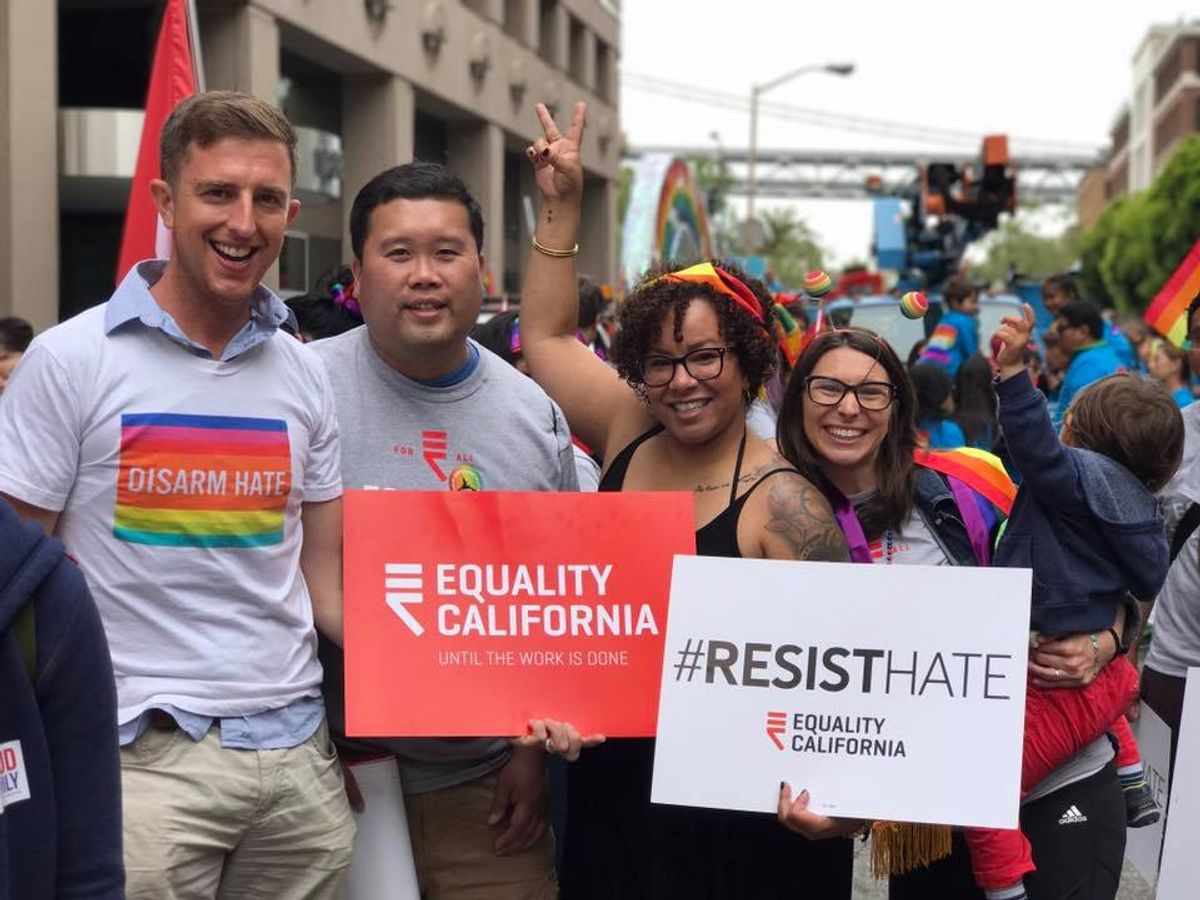
“A lot of school board meetings were totally overrun by anti-LGBTQ activists and specifically anti-trans organizers who would just say some of the most horrific things,” Arendse said. “A lot of school board trustees just simply were not prepared to deal with that level of vitriol in a school board meeting.”
In response, Equality California, which has received support from California’s Stop the Hate Program, has worked with school districts to manage disruptions and protect students, while expanding education and training efforts. The organization has trained more than 5,000 health and human service providers on inclusivity and cultural competency.
Matt Pennon, who has overseen diversity, equity and inclusion programs at both the County and City of San Luis Obispo, said those trainings have had a measurable impact.
“The resounding feedback was ‘Wow, I actually did get something from this,’” Pennon said.
“Even the folks that maybe don’t fully agree said they developed a better sense of respect,” he added. “This is about really highlighting the differences between all of us as humans and how those differences are actually strengths.”
More recently, Equality California has raised concerns about federal policy shifts affecting transgender healthcare access.
“We’re talking access to mental health supports and basic healthcare that everybody deserves that is being blocked just because people are trans or non-binary,” Arendse said.
At the same time, advocates are revisiting past victories to ensure they are protected. After the fall of Roe v. Wade, Equality California moved to safeguard marriage equality at the state level.
“When Roe fell, we knew we had to codify these things into law, because we can’t just rely on a Supreme Court case to protect our rights,” Arendse said.
The organization sponsored a constitutional amendment to enshrine marriage equality into California law. Proposition 3 passed in 2024 with more than 62% voter support.
For Equality California, the arc of progress requires constant attention.