
The county is facing significant cuts to federal Medicaid and food assistance funding stemming from President Donald Trump’s H.R. 1 bill, which is expected to amount to more than $1 billion in annual revenue losses for Santa Clara County in the coming years.
The state has also this year shifted the requirements and funding model for mental health and behavioral health programs after the passage of Proposition 1 by voters in 2024, which Williams said “has really turned the fiscal world in behavioral health upside down.”
On top of federal and state funding challenges, the county, like many other organizations and households, has also seen rising costs for labor, goods, services and utilities, while property tax revenue has not kept pace.
The biggest way the county is coping with the cuts is through the emergency injection of $337 million expected to be provided by a new sales tax approved by 57% of voters last year, called Measure A. The measure increases sales tax across the county by five-eighths of a cent for every one dollar spent, and is in place for five years.
Williams and his staff recommended putting all of the Measure A money for the current budget year into Santa Clara Valley Healthcare, the county’s public hospital and clinic system, to help lessen the blow from Medicaid cuts enacted by Trump and the Republican-controlled Congress.
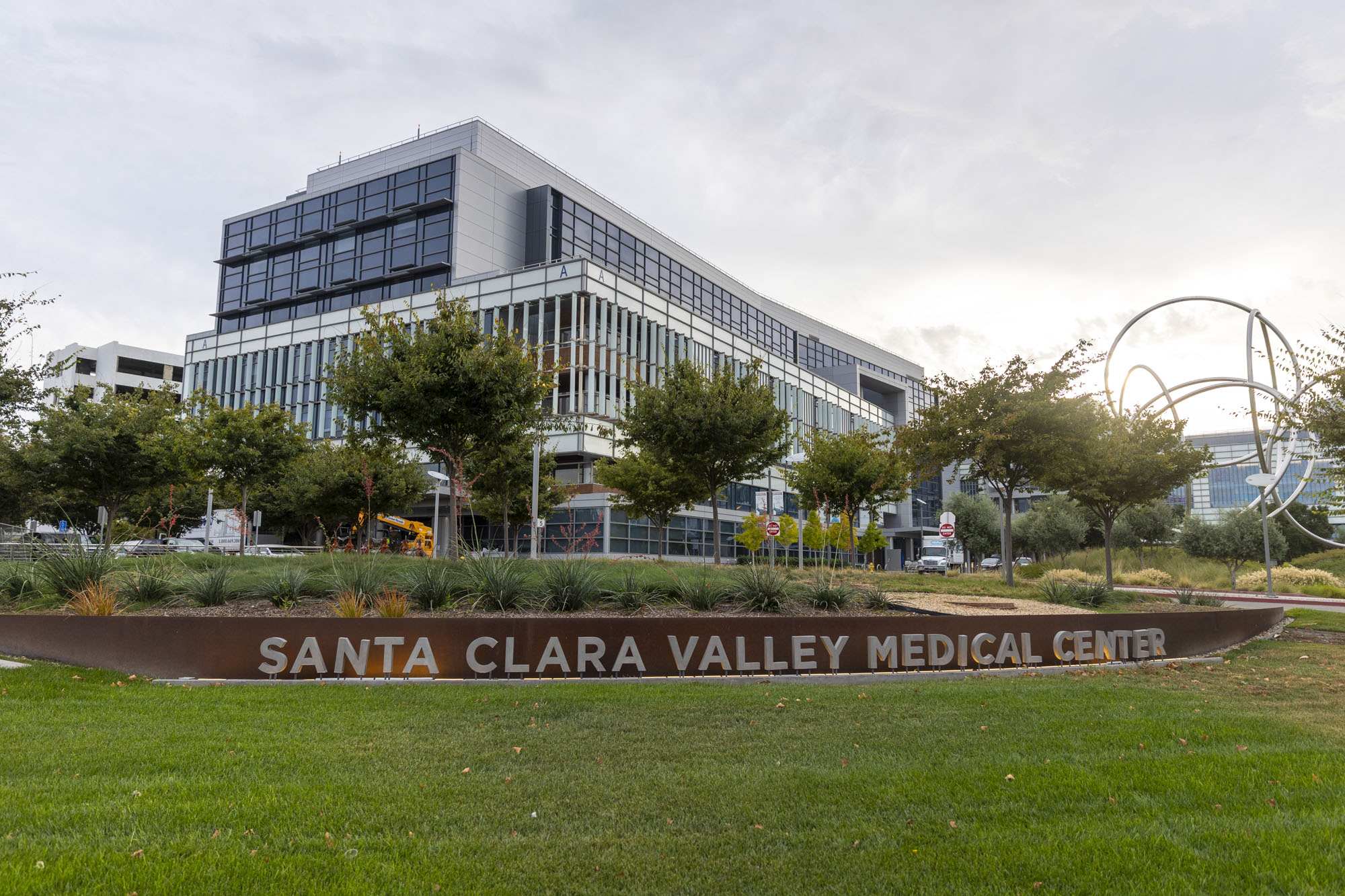 Santa Clara Valley Medical Center stands on 751 South Bascom Avenue in San José on Sept. 29, 2025. (Tâm Vũ/KQED)
County supervisors also previously approved nearly $200 million in budget cuts in February during the mid-year budget review, including cutting roughly 365 positions that were largely vacant and focused on the county’s healthcare system.
While planning for 655 cuts, the county is simultaneously considering adding 191 positions, especially in areas that are growing but aren’t reliant on federal funds, like parks and libraries, for a net cut of 464 positions, Williams said.
Two county-run behavioral health clinics are expected to be closed, but Williams said the services will be transitioned to other facilities or community organizations that provide services for the county already.
Ellenberg said the idea of consolidating clinics on its face doesn’t worry her too much, so long as people who need those services aren’t challenged to find them elsewhere nearby.
But she added that in general, the on-the-ground impacts from broad budget recommendations to alter contracts and leases and reduce positions is where she will focus as supervisors go through budget workshops and reviews next week.
“There are many aspects of it that are not yet clear to me, particularly around impact… I need to understand how that impacts particular populations, especially the very high-need and vulnerable residents that the county serves,” Ellenberg said.
 Santa Clara County Supervisor Susan Ellenberg, speaks during an event celebrating the opening of Vermont House, a new residential treatment facility in San José for people leaving jail with mental health needs. (Joseph Geha/KQED)
Williams said the county has been aiming to preserve or expand services for those in most need across the county. He pointed to plans for new “satellite clinics in high-need communities,” as well as the planned opening of the county’s behavioral health pavilion on the campus of Santa Clara Valley Medical Center later this year.
The pavilion will include the first child and adolescent inpatient psychiatric unit in the South Bay, Williams said, and will be staffed by transferring positions from elsewhere in the county.
“We’re continuing to expand in critical areas and areas with significant community demand where there’s significant need. We haven’t taken our eye off the ball,” he said.
Williams said the county has “moved mountains” to preserve critical services in the face of unprecedented cuts, and said voters have stepped up at an important time. But he called directly on the governor and legislature to help counties across the state.
“We need to see a forceful, clear and unequivocal response at the state level to what’s happening with H.R. 1,” he said. “There’s no way our county or any other can do this alone.”
The county’s Board of Supervisors will hold three consecutive budget workshops May 11-13, and will hold three more sessions to adopt a final budget in mid-June.
The county is not the only government facing down budget deficits, as South Bay cities look for ways to close their gaps while maintaining critical services.
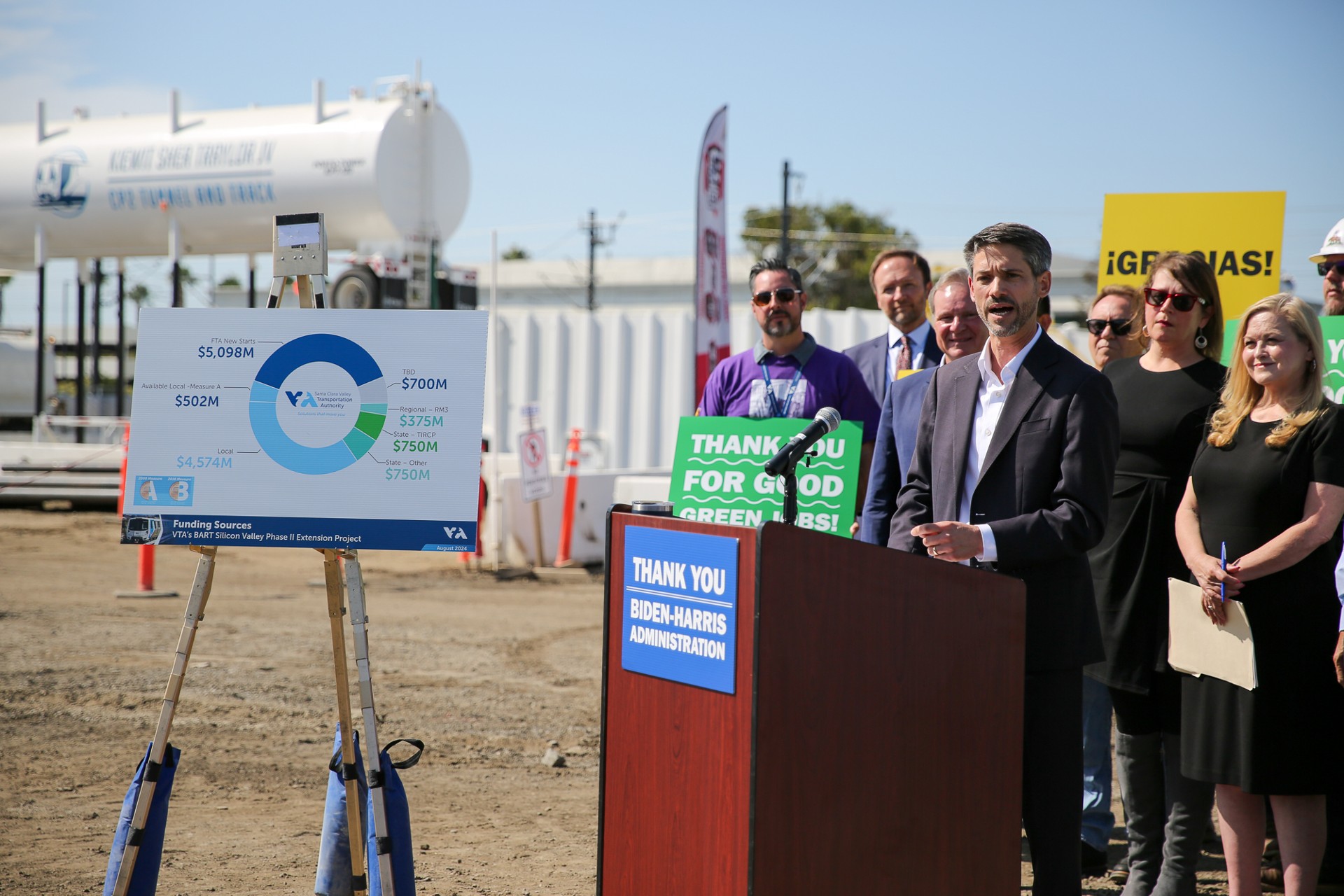 San José Mayor Matt Mahan speaks during a gathering in Santa Clara on Aug. 2, 2024, to announce a nearly $5.1 billion funding commitment from federal transit officials toward the VTA BART Silicon Valley Phase II extension project. (Joseph Geha/KQED)
San José, whose Mayor Matt Mahan heavily touted his work to spend more of the city’s affordable housing funds on more than 1,000 new interim shelter spaces for people who are homeless last year, is now working to cut $50 million out of its budget.
The city’s current proposal from City Manager Jennifer Maguire would cut support for interim housing operations by $1.25 million in the coming budget year and significantly reduce it by $14.2 million in the budget for 2027-2028, officials said this week.
Williams said the coming years for Santa Clara County could be even more difficult, and he is concerned about changes to the “social compact” in the country.
“We’re one United States, and there are deep interrelationships between federal, state and local governments that all operate together to help take care of communities across the country,” Williams said. “We’re witnessing a complete reordering of that fabric, not just fiscally, but in terms of policy and the politics of this whole country.”