
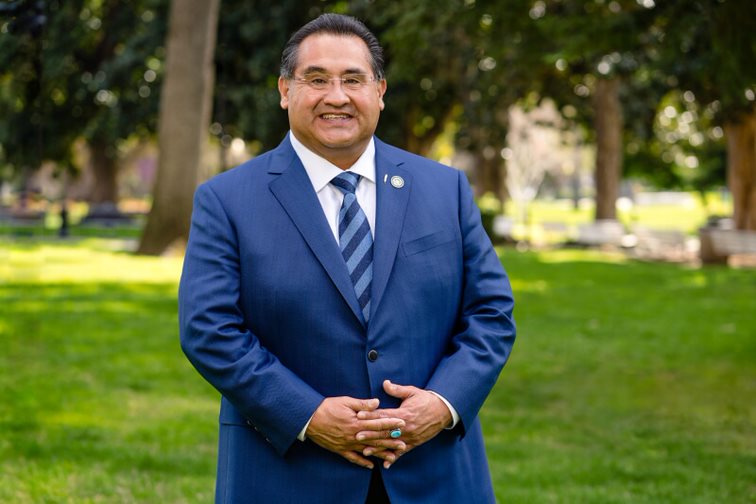
Ahead of the June primary election, the Southern California News Group compiled a list of questions to pose to the candidates who wish to represent you. You can find the full questionnaire below. Questionnaires may have been edited for spelling, grammar, length and, in some instances, to remove hate speech and offensive language.
Name: James C. Ramos
Current job title: Assemblymember
Political party affiliation: Democratic
Incumbent: Yes
Other political positions held: San Bernardino Community College Board of Trustee and Member of the San Bernardino County Board of Supervisors
City where you reside: Highland
Campaign website or social media: jamesramos.org/
Do you believe balancing the state budget should rely more on spending cuts, new revenue streams or a combination? Tell us how you would propose tackling California’s projected budget deficit. (Please answer in 250 words or less.)
California must live within its means by spending responsibly and ensuring programs deliver results. Before considering new revenues, we must get our fiscal house in order—building reserves and prioritizing high-impact investments in education, public safety, behavioral health, housing and workforce development. Increasing the state’s revenue streams is also important. This is why I have dedicated a significant portion of my legislative portfolio to work on legislation that promotes California entrepreneurship, streamlines business regulations and ensures economic strength and effectiveness.
As a member of the Budget Committee, I work on California’s complex budget to ensure it remains focused on delivering sound decisions that impact everyday families positively.
For you, what’s a non-starter when talking about budget cuts? Why? (Please answer in 250 words or less.)
I believe that protecting public safety, fire prevention, and Prop. 36, which ensures stiffer penalties for retail theft, should continue to be funded at appropriate levels that ensure the safety and public well-being of all Californians. The budget process is an opportunity to hear from the public and understand what’s working, what isn’t, and where improvements are needed.
We have a responsibility to be fiscally responsible while making thoughtful decisions that prioritize the programs people rely on every day. That means improving efficiency, ensuring accountability, and directing resources where they have the greatest impact.
Before reducing any program, I want a clear understanding of the immediate and long-term impacts on our communities and businesses.
What are the top three most pressing issues facing the state, and what would you propose, as a state legislator, to address them? (Please answer in 250 words or less.)
Affordability, public safety, and reducing homelessness are my top priorities. I’ve worked to reduce bureaucracy, cut unnecessary regulations, and support programs that help everyday people and lower the cost of living.
I will continue to focus on attracting investment, expanding job opportunities through education and apprenticeships, and supporting small businesses so more families can thrive.
Public safety remains essential—I will ensure our public safety partners have the resources needed to keep our communities safe.
In addition, services for mental health and education funding are vital for a well-rounded and thriving society. I believe legislation that strengthens and promotes these essentials is significant in reducing California and the Inland Empire’s homelessness problem.
What specific policy would you champion in the statehouse to improve the cost of living for residents? Would you see this having an immediate impact on Californians or would it take some time? (Please answer in 250 words or less.)
When I ran for State Assembly, I committed to delivering common-sense solutions that reduce the cost of living and improve everyday life. I remain focused on supporting veterans, families, seniors, and small businesses across our community.
My bill, AB 53, signed into law through the budget, allows veterans to exclude up to $20,000 of military retirement income from state taxes, helping lower the cost of living and put more money back in their pockets.
I will continue fighting for policies that reduce costs and cut unnecessary regulations so our neighborhoods can thrive.
There have been numerous efforts made in the state legislature to curtail federal immigration enforcement in California, from prohibitions on agents wearing masks to banning federal officers from future employment in a public agency. Do you see any area where the state could better protect its residents from the federal government’s widespread immigration crackdown? Would you prefer the state work more hand-in-hand with the federal government on immigration? Where does the role as a state legislator fall into your beliefs here? (Please answer in 250 words or less.)
Everyone should be treated with dignity and respect. Our community should feel safe to go to church, school, and public areas. However, we must have a balanced approach when it comes to addressing the federal immigration enforcement in our state. Some proposals have gone too far and are unenforceable, while proposals I have supported are truly aimed at making our communities feel safe while allowing the federal government to perform its duties with minimal disruption. I also believe there is a separation of our local law enforcement’s public safety duties and those of the federal government, and my priority is to continue to provide our local law enforcement with the resources and support they need to protect our communities.
I support legislation that does not generalize or undermine the integrity of law enforcement professionals who serve honorably.
Health care costs — like in many other areas — are continuing to rise. What policies, specifically, would you support or like to champion that could lower premiums or out-of-pocket expenses? (Please answer in 250 words or less.)
I believe that it is important to protect overall health care and lower costs where possible. Policies that threaten the safety net and the healthcare system of vulnerable Californians are not the answer; however, policies that focus on prevention and intervention are my priority.
Would you support expanding state health care programs to ensure more residents — including those who are not citizens — are covered? How would you propose the state fund such an expansion? Or, how would you propose the people who cannot afford health care still get the necessary care they need without expanding state programs? (Please answer in 250 words or less.)
I have supported legislation that is inclusive of populations who are often underserved. Additionally, I have worked with the Budget Subcommittee on Health to encourage funding that goes towards health care services for those underserved and vulnerable populations. In 2021, I successfully had AB 2112 signed into law, which established the first-ever Office of Suicide Prevention in the state. These resources that the Office provides to everyone in the state of California are essential in the overall health and wellness of the state’s population. Wrap-around services are vital when addressing the overall quality of life for an individual.
As part of combating homelessness, elected officials often talk about the need to prevent people from losing their homes in the first place. What policies or programs should the state adopt to make housing more affordable for renters and homeowners? What do you propose the state do to incentivize housing development and expedite such projects? (Please answer in 250 words or less.)
As a County Supervisor, we were able to prioritize helping veterans get off the streets and into housing. As a member of the Legislature, I have continued to focus on these solutions. I support removing regulatory barriers to increase housing production and have backed legislation to cut red tape and streamline development. Government should incentivize housing and not stand in the way of innovative solutions. Increasing supply and lowering costs will make housing more affordable. I have also supported audits to ensure that our homeless youth get the services they so desperately need.
No one entity, no one source of funding, is adequate to solve our growing, behaviorally ill, and unsheltered population. We need to leverage local, state, and community resources to deal with this issue.
An example of my efforts to leverage resources in our region to create solutions is my 2023 bill that allowed Patton State Hospital, a facility listed as state surplus property, to contract with a nonprofit corporation or local government to provide housing and mental health services to the Inland Empire’s homeless population.
Gov. Gavin Newsom signed a law in 2023 authorizing state energy regulators to penalize oil companies making excessive profits. But the California Energy Commission put off imposing the penalties last year after two oil refineries, which represent nearly a fifth of California’s refining capacity, said they would shut down operations. Those announcements prompted many to be concerned about soaring gas prices. What do you think of the commission’s decision? And how would you, as a state legislator, propose balancing California’s climate goals with protecting consumers from high gas prices at the pump? (Please answer in 250 words or less.)
As a state legislator, I support a business and regulatory environment that encourages investment and infrastructure while balancing environmental and public health considerations. Striking this balance is key to driving economic growth, creating good-paying jobs, and ensuring long-term sustainability while prioritizing energy reliability and affordability for California consumers. California’s climate leadership cannot come at the cost of destabilizing our energy markets and burdening those least able to bear it.
In 2024, voters approved Proposition 36 to increase penalties for certain drug and retail theft crimes and make available a drug treatment option for some who plead guilty to felony drug possession. Would you, as a legislator, demand that more funding for behavioral health treatments be included in the budget? How would you ensure that money is used properly? (Please answer in 250 words or less.)
I supported Prop. 36 when it was on the ballot and have been a long-time champion for increased behavioral health resources and access to such services. As Chair of the Assembly Budget Committee overseeing public safety funding, I do support more funding to help ensure that Prop. 36 works. The voters were clear that they wanted to see a crackdown on retail theft. Now we need to provide the resources to get people the treatment they need. I have been a strong proponent of policies that ensure accountability for crimes, provide pathways to rehabilitation, and prioritize funding for programs with proven outcomes and accountability.
What role should the state play in ensuring hospitals and doctors are providing gender-affirming care to LGBTQ+ residents? Similarly, what role do you believe the state could play should other states adopt policies that restrict that care? (Please answer in 250 words or less.)
I believe everyone deserves to be treated with dignity and respect, and decisions about care should be made between a patient and their doctor. In the case of minors, any care should be age-appropriate and coordinated with their parent and/or guardian.
Governments around the world are increasingly considering an age ban or other restrictions on social media use among young people, citing mental health and other concerns. Do you believe it’s the state’s responsibility to regulate social media use? Why or why not? And what specific restrictions or safeguards would you propose as a state lawmaker? (Please answer in 250 words or less.)
As a parent and grandparent, I understand the importance of protecting our children and ensuring they are exposed to age-appropriate content. I also recognize that bad actors use social media to prey on them, which is why I’ve championed legislation to combat fentanyl trafficking and hold those responsible accountable. In 2023, I proudly authored AB 680, to prohibit large social media platforms from using a design, algorithm, or feature that the platform knows or should have known causes a child user to incur specified harms.
We have a responsibility to keep our children safe and ensure they can thrive.
Artificial intelligence has become a ubiquitous part of our lives. Yet public concerns remain that there aren’t enough regulations governing when or how AI should be used, and that the technology would replace jobs and leave too many Californians unemployed. How specifically would you balance such concerns with the desire to foster innovation and have California remain a leader in this space? (Please answer in 250 words or less.)
While artificial intelligence offers many benefits, we must continue to invest in workforce development. I strongly support apprenticeships and training programs that build a skilled and forward-looking workforce to strengthen our communities.
Statistically, violent crime rates in California is on the decline, but still, residents are not feeling safe or at ease in their communities. How do you see your role in the state legislature in addressing the underlying issues that make Californians feel unsafe in their own neighborhoods? (Please answer in 250 words or less.)
I strongly support law enforcement and know that safe communities are essential for families and businesses to thrive. I have a proven record of advancing policies and funding that support public safety and ensure that officers have the resources they need to succeed.
What’s a hidden talent you have? (Please answer in 250 words or less.)
One of my passions and great joys is sharing culture with youth and California students. I believe sharing culture fosters understanding and inspires curiosity.
Carolyn Daniels, AD-44 candidate, 2026 primary election questionnaire
Nick Schultz, AD-44 candidate, 2026 primary election questionnaire
Celeste Rodriguez, AD-43 candidate, 2026 primary election questionnaire
Rocky Rhodes, AD-42 candidate, 2026 primary election questionnaire
Ted Nordblum, AD-42 candidate, 2026 primary election questionnaire