
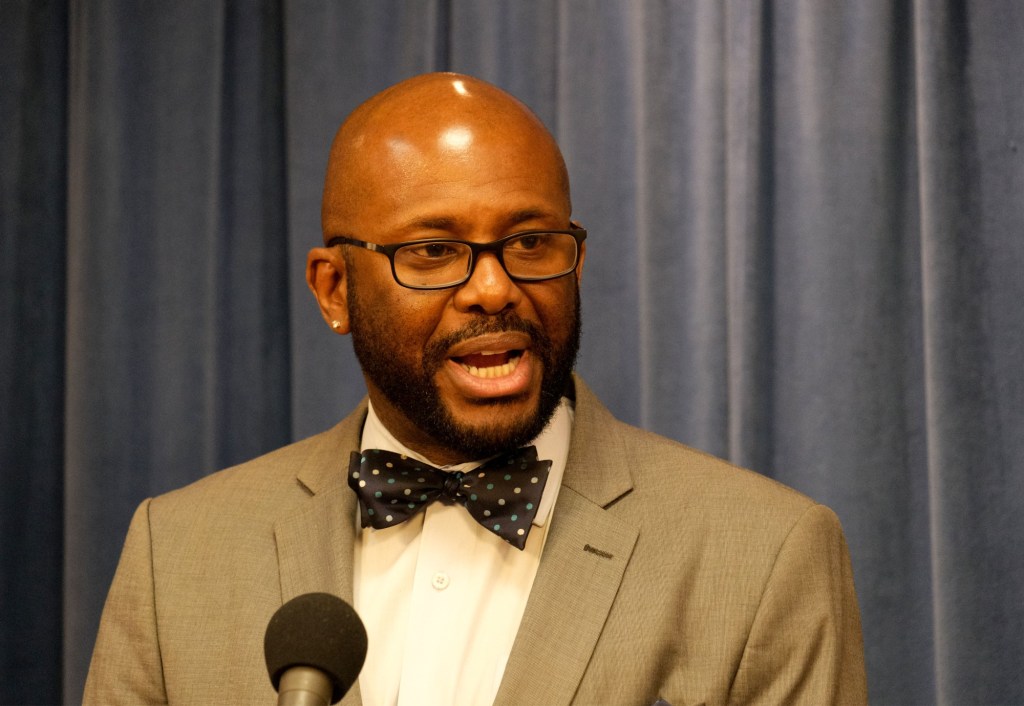
Ahead of the June primary election, the Southern California News Group compiled a list of questions to pose to the candidates who wish to represent you. You can find the full questionnaire below. Questionnaires may have been edited for spelling, grammar, length and, in some instances, to remove hate speech and offensive language.
Name: Mike Gipson
Current job title: Assemblymember
Political party affiliation: Democratic
Incumbent: No
Other political positions held: Carson City Council, State Assembly
City where you reside: Carson
Campaign website or social media: mikegipson.net
How can the Board of Equalization be a better steward of California’s property tax system? What reforms would you recommend implementing on Day One, if you could? (Please answer in 250 words or less.)
On the Board of Equalization, I’ll ensure the institution is a better steward of California’s property tax system by increasing audits and oversight to identify and close tax loopholes used by insurance companies, utilities, big businesses and the super-rich who are rigging the system for themselves.
One of the reforms that I’d implement is restoring some of its prior authority, which guarantees transparency and accountability to taxpayers. There is currently no accountability or transparency when making decisions that are not in the best interest of taxpayers, where taxpayers cannot interface with those who make decisions on tax matters, and cannot meet with taxpayers face-to-face, and hear their grievances.
Given that the BOE oversees 58 different county assessors, what specific actions would you take to ensure property tax assessments are uniform and fair across the board? (Please answer in 250 words or less.)
As a member of the BOE, I would establish a committee to review and report on best practices across California’s 58 county assessors, and work to unify efforts to ensure property tax assessments are fair and uniform across the board.
How would you ensure that small business owners and homeowners have the same “seat at the table” as the utility and insurance companies that frequently appear before this board? (Please answer in 250 words or less.)
On the Board of Equalization, I will be committed to leveling the playing field so that the interests of small business owners and homeowners are prioritized the same way as big utility and insurance companies by making participation more accessible and transparent. This can start with the Board expanding outreach across the state—hosting regular workshops, plain-language guides, and virtual town halls so homeowners and small businesses understand how to engage in hearings and appeals. Additionally, it could formalize public input by reserving agenda time for small taxpayer testimony and creating advisory panels made up of homeowners, renters, and small business owners.
How could the BOE help taxpayers better understand how their property taxes are being calculated? (Please answer in 250 words or less.)
As a member of the BOE, I will fight to make the property tax process more transparent, accessible, and standardized across counties. First, by developing a clear, plain-language statewide guide explaining key components—assessed value, Proposition 13 limits, reassessments, exemptions, and local tax rates—paired with real-world examples.
Second, the Board could require counties to provide itemized property tax breakdowns on bills and online portals, showing exactly how each charge is derived. Interactive calculators would allow taxpayers to input their property details and see step-by-step estimates of their taxes.
And lastly, expanding public outreach—through webinars, multilingual materials, and partnerships with community organizations—would help reach homeowners and renters alike. The Board could also create short explainer videos and FAQs addressing common misconceptions.
In your opinion, how could the BOE be balancing the need for more tax revenue while ensuring taxpayers are not burdened with unfair or over-the-top assessments? (Please answer in 250 words or less.)
I believe the BOE needs to be incredibly aggressive in pursuing tax collections from delinquent payers, particularly those with a tremendous amount of wealth who are robbing our state coffers at a time when we face tremendous budgetary insecurity. As a member of the BOE, I’ll be steadfastly committed to enacting successful tax collection operations from delinquent payers. I also believe that the BOE should have more of a direct role in increasing or decreasing taxes. If we had that authority, I’d fight to increase taxes on the wealthiest Californians and close corporate loopholes, while working to reduce the tax burden on middle and working-class families.
How would you tackle appeals from large corporations (such as insurance companies) to ensure they are not receiving unfair tax breaks compared to the average citizen? (Please answer in 250 words or less.)
On the Board of Equalization, I’m committed to ensuring big corporations pay their fair share, protecting taxpayers, and increasing transparency at the BOE to ensure our state has the resources we need to provide for the safety, security, and prosperity of all Californians. This includes increasing audits and oversight to identify and close tax loopholes used by insurance companies, utilities, big businesses and the super-rich who are rigging the system for themselves.
This may not be a role all voters are familiar with. How would you describe the job to those who do not know, in your own words? (Please answer in 250 words or less.)
The State Board of Equalization is primarily responsible for administering the state’s property tax system and certain state taxes and fees. Its core duties include setting statewide property tax assessment standards, ensuring uniformity and fairness in how property is assessed across California’s 58 counties, and hearing appeals related to property tax assessments and BOE-administered taxes. The Board also provides guidance and oversight to county assessors to promote consistent application of property tax laws.
In addition, the BOE administers several specialized tax programs, including taxes on insurance premiums, alcoholic beverages, and certain fuel and environmental fees, and it reviews and approves county assessment rolls. The BOE also plays a quasi-judicial role by adjudicating taxpayer appeals and disputes, and it serves an educational function by offering training and resources to assessors and tax professionals. While I am not a fan of recent reforms curtailing the Board’s responsibilities, these roles are intended to protect taxpayers’ rights while ensuring that state and local governments receive the revenue needed to fund public services.
What in your background has prepared you best, in your opinion, to take on this role? (Please answer in 250 words or less.)
At a time of great uncertainty, when our district confronts a second Trump administration after two years of steep deficits and the aftermath of the most devastating fires this region has ever seen, our state must provide effective leaders who will be diligent watchdogs of California’s tax system. In the coming years, California must have the resources needed to keep our residents afloat, including responding to wildfires and other disasters. That’s why I decided to run for the Board of Equalization, because California needs experienced, forward-thinking leaders at the helm.
Throughout my career in the State Assembly, as a councilmember and working as a staffer inside the Board of Equalization, I have been a committed champion for my constituents in providing resources and funding for important programs in communities that have been historically underserved. As the longest-serving Assembly Democratic Caucus Chair in California history, I helped lead our state through significant budget shortfalls, while always protecting working families and our most vulnerable communities. Currently, I serve as Chair of the Assembly Revenue and Taxation Committee, where I lead policy discussions on revenue and taxation in California on a weekly basis, managing our revenue and protecting our state budget.
I am the only candidate who has the wide-ranging experience needed for this role. Not only have I been a public servant for over two decades, but I’ve also worked directly inside the Board of Equalization and seen the inside machinations of how it works.
What’s a hidden talent you have? (Please answer in 250 words or less.)
I enjoy horseback riding.