
Long Beach has officially backed Measure ER, the proposed temporary half-cent countywide sales tax intended to stabilize and protect critical healthcare services as cuts to Medi-Cal by Congress and President Donald Trump’s administration persist.
Mayor Rex Richardson and council members were split on showing support for Measure ER during the Tuesday, May 5, meeting. Ultimately, the panel passed a resolution supporting the healthcare funding measure with a 5-3 vote.
“I’m bringing this forward because this is an incredibly important moment that’s happening in our community right now,” Richardson said during the meeting. “Based on HR 1 challenges with Medi-Cal, we’re seeing real pressure be placed on our clinics in our communities and our public health department.”
Cuts and changes from House Resolution 1, often called the “One Big Beautiful Bill,” which was approved in July, will reduce LA County healthcare funding by $2.4 billion over the next three years, remove hundreds of thousands of low-income residents from federal health coverage, and reduce funding to countywide health services and public health services.
The proposed measure would last five years and help meet those financial gaps across the region, officials said. Measure ER was placed on the June 2 primary ballot by the Los Angeles County Board of Supervisors in response to the significant federal cuts to Medi-Cal funding.
If approved by voters, the county measure is estimated to generate about $1 billion annually to help offset the public health and community-level impacts of federal cuts and sustain the county’s healthcare safety net to continue serving the needs of the public, according to the staff report.
The measure would increase LA County’s sales tax rate from 9.75% to 10.25%.
Measure ER would help prevent public hospitals, emergency rooms and community health clinics from closing; sustain access to primary care, mental health services and reproductive healthcare; maintain disease surveillance, vaccination programs and public health response systems; support the healthcare workforce, including doctors, nurses, paramedics and other frontline providers; and strengthen regional disaster preparedness and emergency response capacity, according to the staff report.
Without this funding, the staff report says, healthcare providers across the county anticipate significant and harmful service reductions, layoffs and facility closures that would significantly impact access to care, particularly for seniors, low-income residents, families and those who rely on Medi-Cal.
About 39% of LA County residents are enrolled in Medi-Cal, and projections indicate that more than 1 million individuals could lose coverage because of federal policy changes in the coming years, according to the staff report. These impacts will be felt across all communities, including in Long Beach, where access to affordable healthcare, emergency services and public health programs remains a critical priority.
“We know that our entire region does not have enough acute care and emergency rooms to sustain this challenge,” Richardson said. “Even the cities surrounding Long Beach count on their clinics, and when these clinics are impacted and closed down, it will create a dire situation at our local emergency rooms in Long Beach and across our region.
“We also know that we are a city with a public health department, one of only three in the entire state,” the mayor added. “The challenges with HR 1 and the reduced funding and uncertainty from the federal government has placed additional strain, uniquely, on the city of Long Beach.”
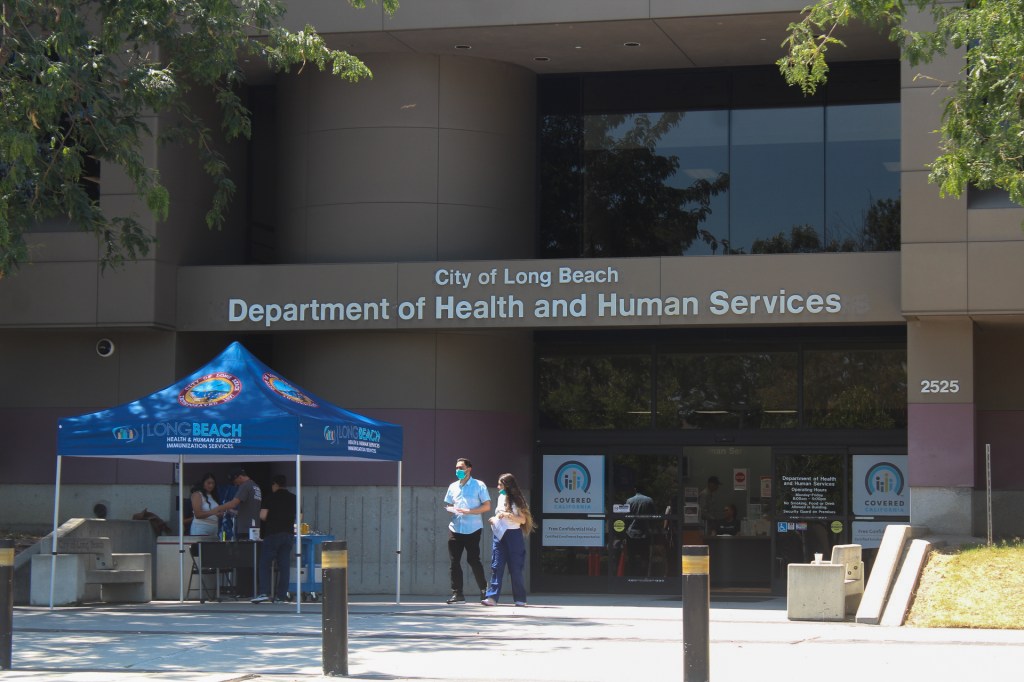
The recent federal funding reductions have already had measurable impacts on public health services in Long Beach, city officials said. The city lost $1.3 million in federal funding, for example, which led to mobile HIV/STI testing, outreach and prevention services being discontinued — reducing access to care for vulnerable populations in Long Beach.
The loss of roughly $900,000 in annual federal nutrition funding also forced the closure of the Healthy Active Long Beach program, which had served more than 30,000 residents each year with nutrition education and chronic disease prevention services, according to the staff report.
Federal funding supports a wide range of local services, including public health programs, housing initiatives, youth services and infrastructure investments, and the city’s general fund cannot absorb the full cost of these losses if cuts continue, officials said.
The Health and Human Services Department has experienced a net loss of about $18 million in federal funding becauseof fiscal policy shifts at the national level, according to the staff report. This has impacted 44 staff positions in the health department, which the city is unable to replace with local funding, and the department is anticipating even greater funding impacts because of additional reductions in state-level funding and the rolling costs of healthcare services.
“If this measure passes, there is a dedicated allocation for the city of Long Beach and the city of Pasadena,” Richardson said. “There is a $10 million allocation annually in this fund dedicated to these two cities that will be divided proportionally by population – so, Long Beach will receive about $8 million and Pasadena will receive about $2 million every year.
“That will go a long way to help improve and protect and block the cuts in our health department,” the mayor added, “but most importantly, the families in Long Beach.”
Around 120,000 families and residents in Long Beach depend on Medi-Cal, Richardson said. Measure ER would provide an opportunity to protect the healthcare infrastructure that Long Beach residents rely on, while ensuring that funding raised locally remains within Los Angeles County to support services.
“It is quite a monumental ask, given that we know that families are hurting,” Eighth District Councilmember Tunua Thrash-Ntuk said. “They’re managing razor-thin budgets, gas prices, grocery prices, sustained inflation, but the collapse of our healthcare system and clinics severely impacts our ability to ensure our community’s well-being and our economy in the long run. Supporting (Measure) ER is necessary, and it’s necessary to stabilize our healthcare safety net.”
Supporters of Measure ER include St. John’s Community Health, SEIU Local 721, California Community Foundation, Los Angeles County Medical Association and the Planned Parenthood Advocacy Project. Key opponents include the California Contract Cities Association, LA County Taxpayers Association, LA County Supervisor Kathryn Barger, and various cities and local officials.
The majority of Long Beach leaders agreed that showing support for Measure ER represents a timely and necessary regional response to an emerging healthcare funding crisis. Some council members, however, did not support the city taking a position on the measure, and wanted to leave it in the hands of the voters to decide, while also finding other ways to save resources beyond a sales tax increase.
“I understand the importance of these services, but not on the back of taxpayers,” Second District Councilmember Cindy Allen said. “I understand how important and vital these services are, but again, folks are struggling to put food on their table, and to ask them to pay another half a cent tax increase – they just can’t. They just can’t afford it.”
Councilmembers Mary Zendejas, Megan Kerr, Roberto Uranga, Tunua Thrash-Ntuk and Joni Ricks-Oddie voted in favor of supporting Measure ER, while Allen, and fellow Councilmembers Kristina Duggan and Daryl Supernaw opposed doing so.