
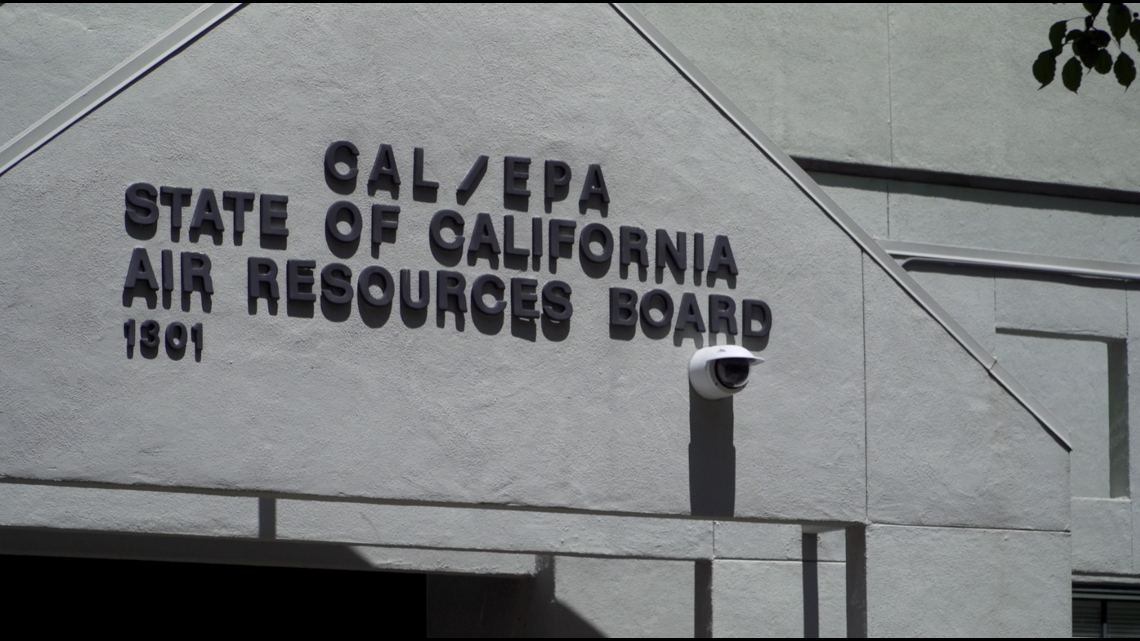
SACRAMENTO, Calif. — California’s cap-and-invest climate program is facing continued scrutiny as state regulators weigh changes they say could help stabilize fuel prices and support refineries while keeping California on track to meet its climate goals.
The California Air Resources Board, known as CARB, spent hours Wednesday hearing public comment on proposed amendments to the program.
“We support this cap-and-invest package, specifically the manufacturing decarbonization incentive,” said Christian Theuer of Heirloom, during public comment. “Without MDI enabled investment, CA cannot meet our 2030 or 2045 net zero targets.”
Others opposed the proposal.
“We strongly oppose the MDI which would divert billions of dollars from climate investments and electric bill relief to big oil,” said Kjellen Belcher of Earthjustice.
The cap-and-invest program allows major polluters, including gas refineries, to buy credits — known as allowances — that let them continue operating. Revenue from those allowances is collected by the state and can be returned to consumers through rebates on expenses such as energy bills.
CARB Chair, Lauren Sanchez, said the proposed amendments are intended to support existing refineries while still meeting the state’s climate targets. The discussion comes after two California refineries announced plans to close in the past year: Valero in Benicia and Phillips 66 in Los Angeles.
“The first proposed change is additional support for the industrial sector to comply with the program, so that should lower costs,” Sanchez said. “The second is a new feature in the market called the manufacturing decarbonization incentive (MDI). A lot of discussion on that. That would essentially provide additional support to facilities to fund some of the critical upgrades we need them to be doing to achieve our climate goals and lower their pollution.”
The incentives proposed by CARB would provide $4 billion to major polluters through 2030. What happens after that remains unclear.
The CEO of the Western States Petroleum Association said the amendments could help the industry in the short term, but long-term certainty is still a concern.
“Our companies are planning 10, 15, 20 years out so only giving them that you know until 2029 certainty really doesn’t drive the investments to the state,” Jodie Muller said. “It’s tough. We really appreciate market-based programs. We have supported market-based programs in the past. We continue to support them in concept, but they have to be designed right.”
Sanchez said CARB would closely monitor the program if the incentives are approved.
“We will immediately begin the very comprehensive monitoring, evaluation and assessment of the program and make sure that we are able to propose any tweaks that are needed to make sure that we’re balancing our goals,” Sanchez said.
She also said companies that fail to follow the rules would have to return the money.
Still, some lawmakers questioned whether the proposal would actually lower costs for Californians.
“How is it exactly that we are going to give additional allowance to industry and then that is somehow going to actually lower costs for consumers?” said Sen. Catherine Blakespear (D-Encinitas).
Sanchez defended the proposal, saying, “These amendments will lower electric bills and will ensure no additional gas price increase.”
A final decision on the amendments is expected by May 28. The public comment period ended earlier this week.
WATCH ALSO: Oil refineries and State legislators dispute over proposed solution to CA rising gas prices
ABC10: Watch, Download, Read












1
/
12