
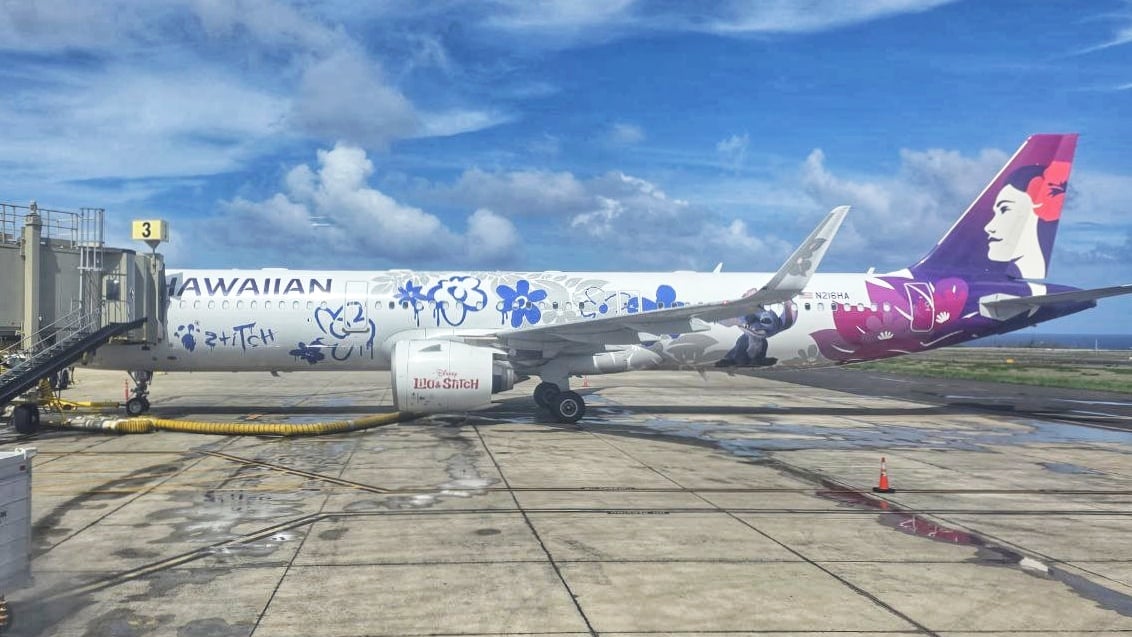
It was a routine arrival from Honolulu that nearly turned disastrous over Long Beach. A Hawaiian Airlines A321neo and a small Cessna 172 came dangerously close to colliding in 2023, according to a National Transportation Safety Board report released this week. The two aircraft, one inbound from Hawaii and one coming from Santa Barbara, crossed flight paths at the intersection of two active runways just moments before landing.
What happened.
The incident occurred on October 26, 2023, when Hawaiian Airlines Flight 70 from Honolulu was cleared to land on runway 30 at Long Beach. At almost the same time, a private Cessna 172 was cleared to land on runway 26L, which crosses runway 30.
In theory, a staggered operation of this kind is safe when timing and communication are tightly managed. But according to the NTSB’s final report, both planes ended up over the same point at nearly the exact moment. The Cessna turned late on its final leg, while the A321 was already established on its final approach. The two aircraft passed in close proximity over the runway intersection before both landing safely.
The human factor.
Investigators say the cause was not due to weather, equipment, or visibility. Instead, it was an ATC distraction. The tower’s local controller had been assigned three jobs at once: local control, local assist, and ground control. As the Hawaiian flight and the Cessna approached from different directions, the controller was simultaneously fielding radio calls from aircraft on the ground requesting gate pushback and was on the phone with the FAA’s Traffic Management Unit to clear a flight departure.
The NTSB described it as a breakdown in task prioritization. The controller, overwhelmed by the simultaneous responsibilities, lost situational awareness of the arriving aircraft. This lapse violated the FAA’s air traffic control handbook, which instructs controllers to prioritize airborne separation above all else.
Oversight failure compounded the risk.
The Controller-in-Charge at the Long Beach tower later admitted he should have handled the phone coordination himself so the working controller could focus on live traffic. He also failed to monitor radio frequencies as required by local standard operating procedures. The NTSB found that the “ineffective oversight” directly contributed to the near collision.
The agency’s report was direct: “The local controller’s poor judgment in prioritization of ground traffic ahead of airborne traffic… led to a loss of situational awareness resulting in a near midair collision.” Thankfully no injuries or aircraft damage occurred, but this stands as a reminder of how thin the margin can be when such human attention fails.
Conditions that night.
Both aircraft were flying in clear, calm conditions under visual flight rules, using Long Beach’s intersecting runways 30 and 26L. The Cessna belonged to Pacific Air Flight School, based in Long Beach. The Hawaiian A321, registered N216HA, was built in 2018 and is one of the A321neo fleet that routinely flies between the West Coast and Hawaii.
What else did investigators find?
The NTSB cited multiple “personnel issues” in its findings, including task overload and forgotten actions by ATC. It noted that in the three minutes leading up to the incident, the controller handled several unrelated requests while two aircraft converged. The board classified the event as a Class 4 investigation. That means investigators were not dispatched to the scene but reconstructed the incident from recordings, interviews, and radar information.
The report said that the tower’s procedure that night was inconsistent with both FAA and local safety guidance. It also noted a comment from the Controller-in-Charge that he “should have been a second set of eyes” for the local controller.
Why this story matters now.
The NTSB released its final report on October 28, 2025, nearly two years after the incident. That delay is not unusual as it follows extensive analysis of data, radio transcripts, and interviews. The findings, however, still resonate. Air traffic controller workload and multitasking continue to be cited in other recent tower incidents nationwide.
For travelers flying between Hawaii and the mainland, this case serves as a reminder that even routine arrivals rely heavily on human vigilance. Long Beach, though smaller than Los Angeles International, handles a complex mix of airline and other aircraft flights including training. The combination of intersecting runways and multitasking controllers leaves little room for error.
What Hawaiian Airlines said.
Hawaiian Airlines has not been cited for any error whatsoever in this incident, and the flight crew’s actions were not questioned in the report. The A321 completed a normal landing. The NTSB placed responsibility entirely on tower procedures and supervision, finding no other evidence.
The bottom line.
The NTSB’s conclusion reads: “Poor judgment in prioritization of ground traffic ahead of airborne traffic.” In other words, one controller was doing too much at once, and two aircraft almost paid the price. A few seconds or one missed cue can separate a close call from a catastrophe.
BOH photo of Hawaiian A321neo at Honolulu Airport.
Report_OPS24LA004_193314_10_30_2025-12_13_42-PM
Get Breaking Hawaii Travel News