

Their case has gained notoriety in part because it was one of the most severe prosecutions connected with protest-related activity over the Gaza war across college campuses in 2024. While thousands were arrested, few of the cases saw felony charges filed, and many of the lesser charges were eventually dropped.
Five of the original 12 went to trial, and in February, a deadlocked jury pushed the case to a mistrial. Defense attorneys, including Deputy Public Defender Avi Singh, filed the request to recuse Rosen shortly after.
German Gonzalez, one of the defendants in the trial, said immediately after the decision Thursday that he was very happy about the outcome. “I think given the ways that we’ve seen the district attorney try to really trade this prosecution for a campaign fund, it’s not a question of monetization, it’s a question, to a certain degree, of corruption,” he said.
“I’m very grateful for Judge Paul’s ruling,” he said. “I tried to keep a calm and composed expression, but I was definitely very nervous because the experience of the prosecution from this district attorney’s office has been quite difficult.”
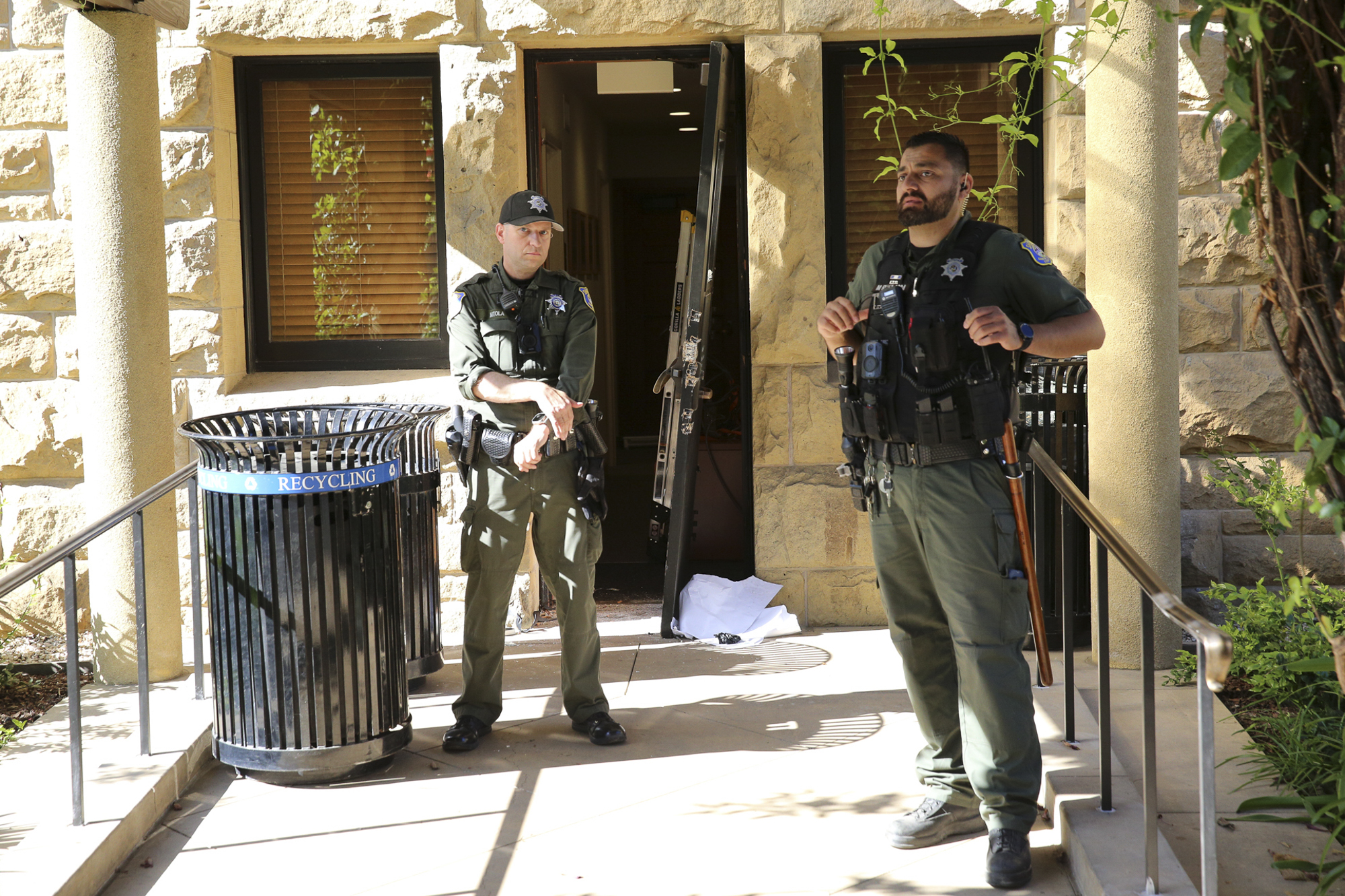 Santa Clara County Sheriff’s Office Deputies stand guard outside Building 10 at Stanford University, where pro-Palestinian protesters broke into the university president’s office and occupied it before being arrested on June 5, 2024. (Joseph Geha/KQED)
When recusal motions are considered in local courts, the state’s Attorney General’s office represents the DA. Attorney General Rob Bonta’s office argued in filings that the defense’s “claims are meritless, and recusal is not required.”
Paul’s decision orders the Attorney General to take over the case. The AG’s office could still appeal Thursday’s decision.
The new trial for the protesters is currently scheduled for May 11, but could be delayed due to potential appeals.