
California Senate Democrats seek billions in new revenue for healthcare services, but where Assembly Democrats and Gov. Newsom stand remain to be seen.
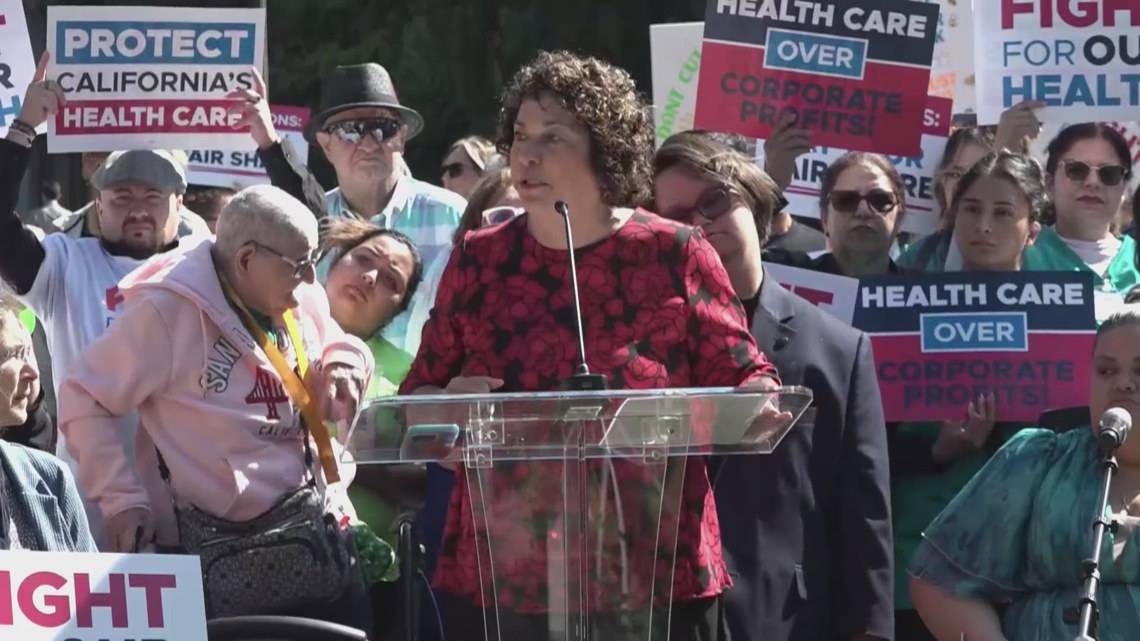
SACRAMENTO, Calif. — Healthcare and disability rights advocates rallied outside the California Capitol on Thursday to support Senate Democrats’ proposed budget plan aimed at helping offset anticipated federal healthcare cuts expected to begin in 2027.
Advocates applauded a proposal in the plan that would generate new revenue to help cover healthcare and social service costs. They are now urging the Assembly and Gov. Gavin Newsom to adopt similar measures.
“Disabled Californians are not disposable. Our life matters,” one speaker said during the rally.
The push comes as California legislators prepare for several rounds of budget negotiations. The Senate, Assembly and governor each have separate proposals. Newsom released his initial budget proposal in January, while his May budget revise is expected next week. Newsom, in conjunction with the Legislature, must approve a final budget in June.
Advocates and Democratic lawmakers said the proposal is intended to help blunt the impact of an anticipated $1 trillion reduction to Medicaid over the next decade under the so-called federal “Big Beautiful Bill.”
“While we cannot blame the California Legislature or the governor for these massive cuts to healthcare, it is now up to them to protect disabled Californians and others in our community,” Judy Mark of Disability Voices United said.
Multiple reports show that, because of the proposed cuts and new eligibility requirements, two million to three million Californians could lose Medi-Cal coverage — the Medicaid for Californians.
“These are huge corporations who don’t provide healthcare to their workers and instead have them go on Medi-Cal and food stamps using our taxpayer dollars,” Mark said.
Under the Senate Democrats’ proposal, the state would create what’s called a “Fair Share Contribution” plan. The proposal would require the top 1% to 2% of corporations that do not provide employee healthcare coverage to instead pay the state and contribute toward the cost of Medi-Cal coverage for workers.
Senate Democrats said the plan could generate an additional $5 billion to $8 billion in revenue.
The budget details that 42% of Medi-Cal enrollees are full-time workers not enrolled in their company’s healthcare plan, often due to wages being low enough to qualify for the state program. This means such healthcare costs are being covered by California taxpayers.
“I need my colleagues in the Assembly to hear you loud and clear. I need my governor to hear you loud and clear,” state Sen. Caroline Menjivar, a Democrat representing the San Fernando Valley, said. “That we need to find revenue for this because we are not going to cut our way out of it.”
Newsom’s office did not respond to multiple requests for comment on his reaction to the proposal and whether his revised May budget proposal will include similar measures or safeguards federal safety net program cuts.
Assembly Democrats, in their budget proposal released late Thursday afternoon, said they would be open to considering the Senate proposal if Congress does not reverse the federal cuts.
“You don’t know what it’s like to apply for these programs, you don’t know what it’s like to be born disabled and every year have to defend your right to get the same care that you got last year. And the year before that. And the year before that. It is frustrating,” Brittanie Hernandez-Wilson of the Hand-in-Hand Domestic Employers Network said.
Hernandez-Wilson voiced her frustrations of having to pay out of pocket for an in-home service provider, as she’s not eligible for Medi-Cal due to working full time.
Republican state Sen. Roger Niello, vice chair of the Senate Budget Committee, opposed the proposal, saying “The majority party’s ‘Fair Share Contribution’ proposal flatly contradicts their own warnings and my concern about affordability. The governor and the legislative leadership created this deficit with unchecked spending, and it’s on them to offer real solutions. Especially in light of the Legislative Analyst’s Office’s revenue update, increasing taxes will only further fracture California’s long‑term budget stability as families and businesses inevitably adjust and pull back.”
Under Newsom’s initial 2026-27 budget proposal released in January, the state announced it would absorb administrative costs tied to new eligibility requirements for healthcare and food assistance programs under HR-1. But to the disappointment of many advocates, the proposal did not include a backup plan for increased caseloads or benefits.
“Really look at not just one-time solutions but long-term sustainable revenue solutions,” said Melissa Cedillo of Health Access California, on the need to make up for the new gap in California’s budget.
On one-time solutions, there’s a proposed billionaire’s tax ballot initiative seeking to offset federal funding cuts through a one-time tax on California billionaires.
More from ABC10: Why tonight’s California governor debate could reshape the race
ABC10: Watch, Download, Read












1
/
12