
Angel Island State Park, located between San Francisco and Tiburon, is one of the Bay Area’s most scenic destinations, with its sloping hiking trails and expansive vistas of the Bay. It’s also a historic landmark; the site served as an immigration station in the early 20th century, screening immigrants, primarily from China and Japan, who were sometimes detained for months in crowded barracks on the island. On a recent Tuesday in April, it became a classroom for 100 eighth graders from Oakland’s Frick United Academy of Language.
They came on this trip with Oakland Goes Outdoors, a local nonprofit organization that has partnered with Oakland Unified School District since 2018 to bring students out of the classroom and into the outdoors, on camping trips and hikes, for sailing expeditions and rock climbing. The trips are designed to connect students with nature, help them build stronger relationships with their peers and teachers, and introduce new places and skills that can sometimes seem inaccessible for youth from low-income neighborhoods.
Many OUSD schools, especially those in the flatlands, aren’t located where students can easily get to a park or a trail — though an effort is underway by OUSD to transform school yards by adding more trees and green space. But the pandemic prompted a renewed interest in using the outdoors as a classroom.
“Our student population does not have the same access to the outdoors that other parts of Oakland has,” said Justin Hinojosa, Frick’s community school manager. “It’s particularly important that we do this through school, because that gives them a chance to get to some of these locations that are relatively close but they’ve not been able to explore.”
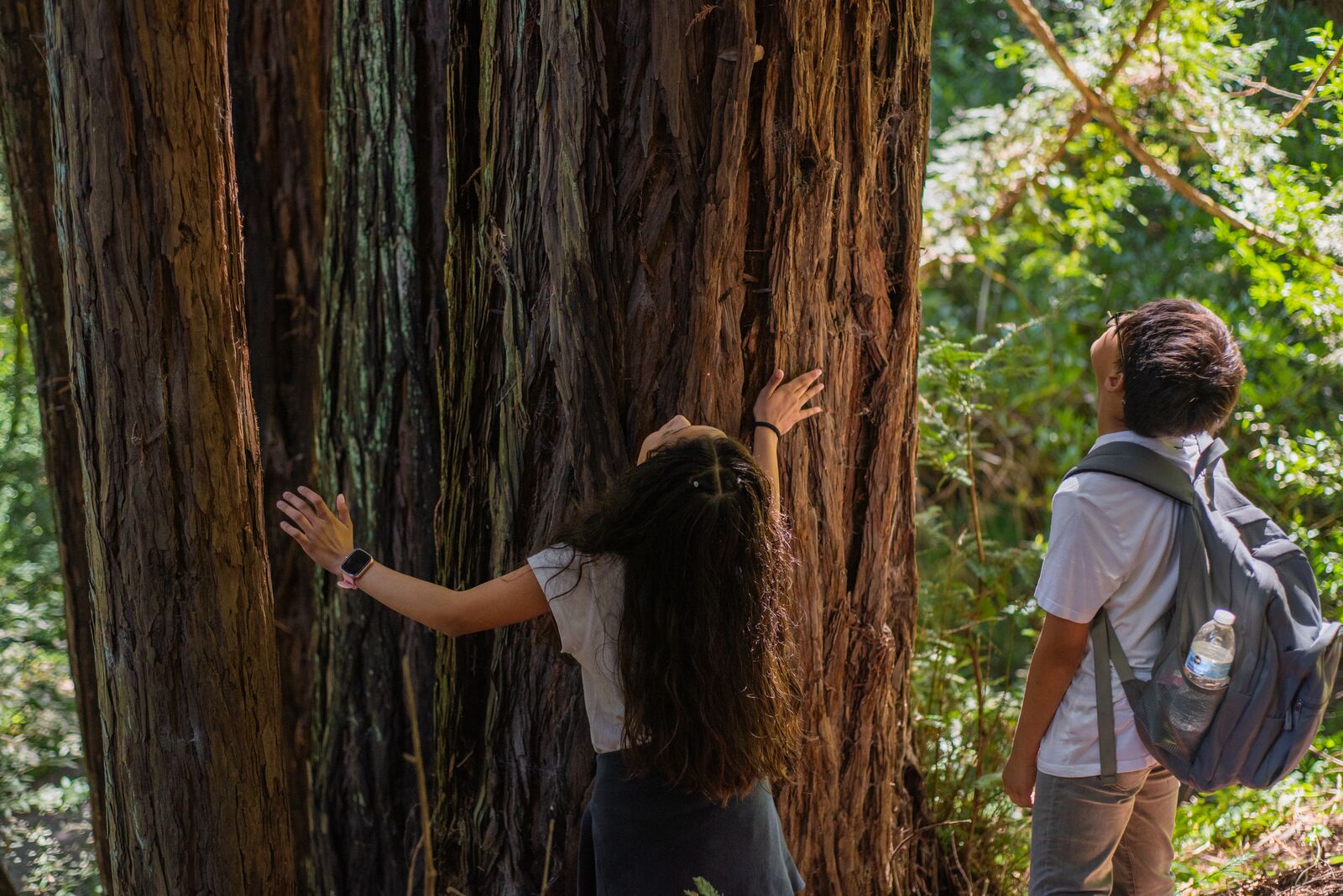 Frick United sixth graders Rosy and Osvaldo try to measure the width and height of a redwood tree at Reinhardt Redwood Regional Park during a field trip organized by Oakland Goes Outdoors, April 23, 2026. Credit: Ximena Natera for The Oaklandside
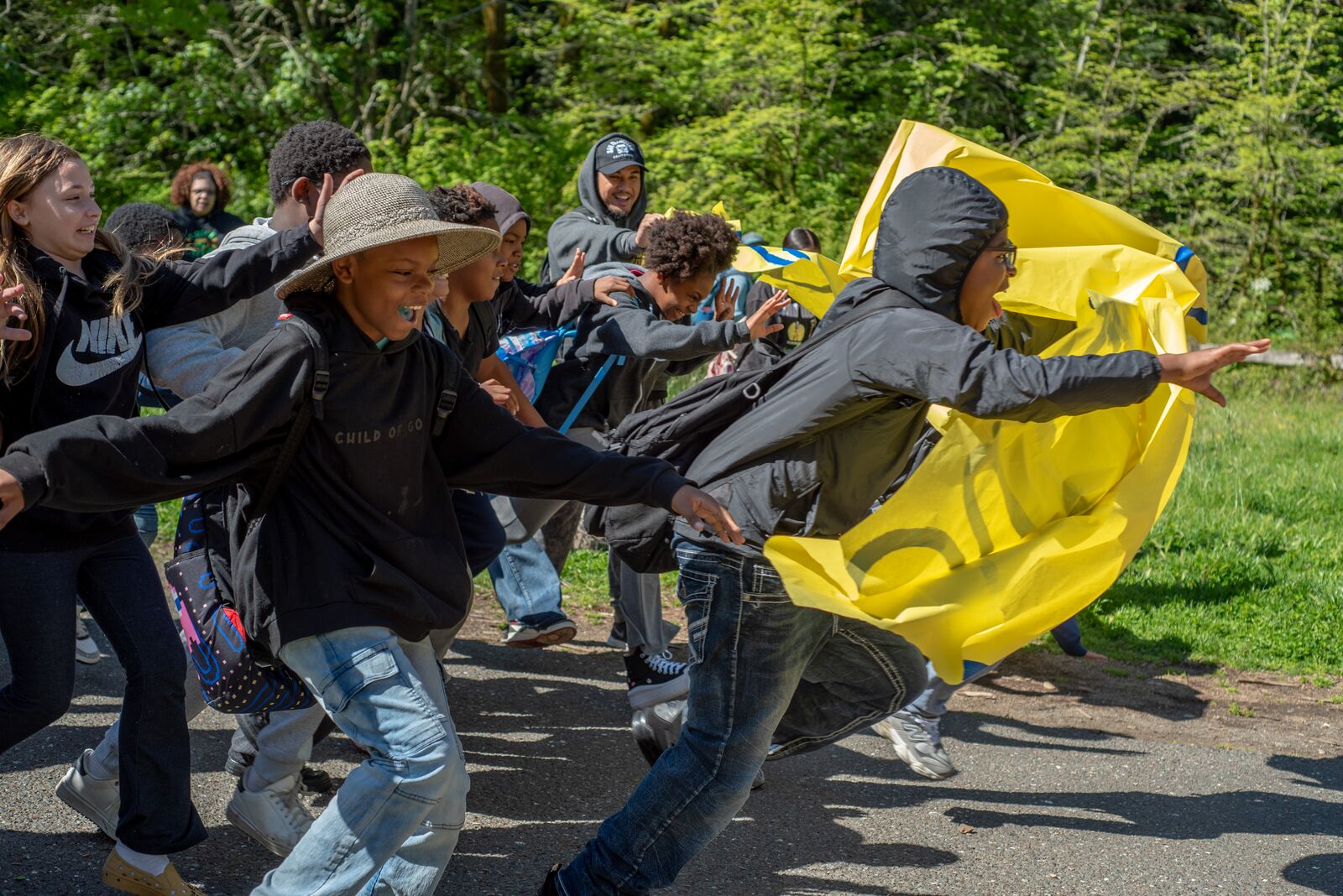 Frick students run through a banner celebrating the 1,000th OUSD field trip through Oakland Goes Outdoors at Reinhardt Regional Park. Credit: Ximena Natera for The Oaklandside
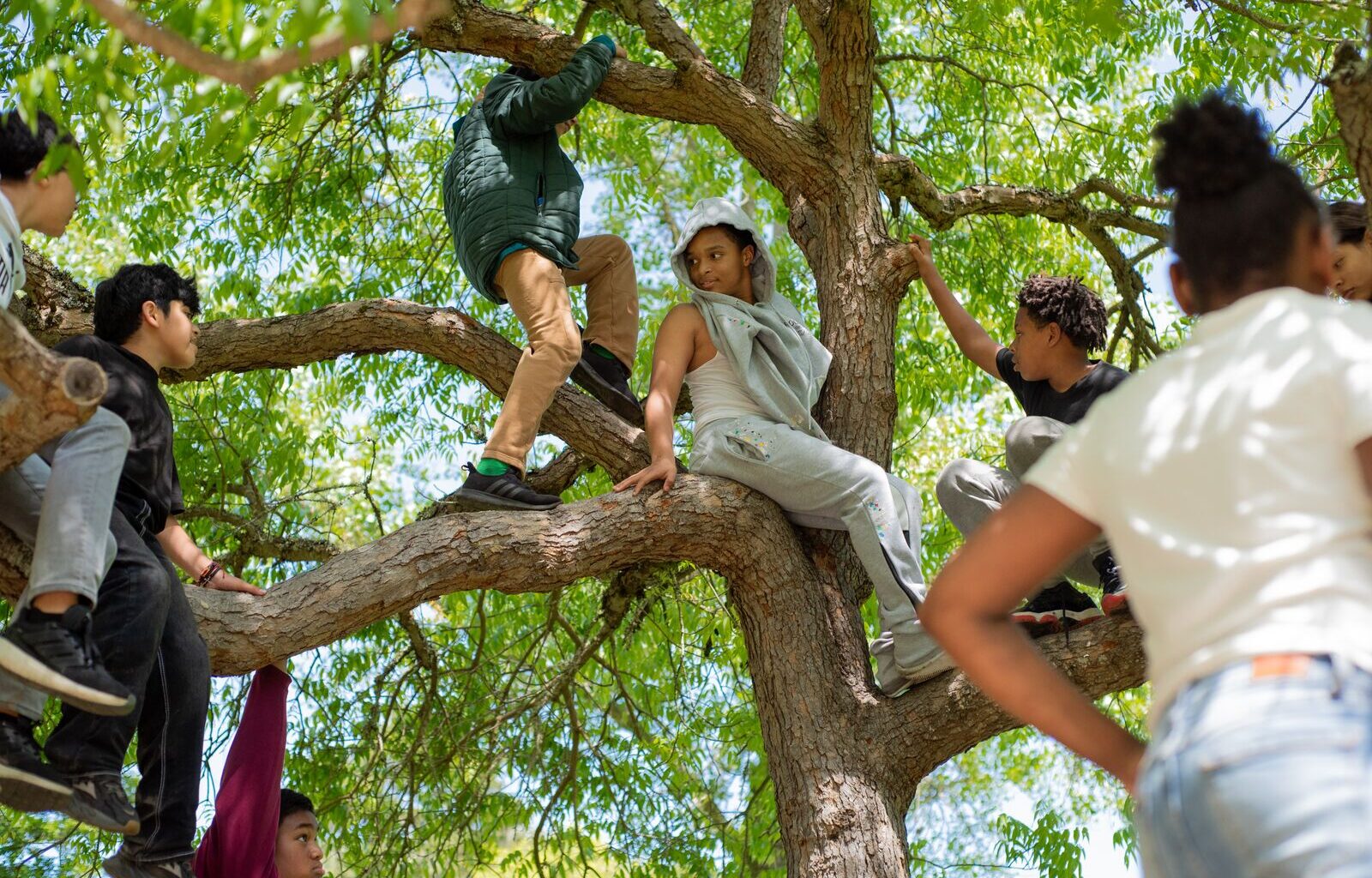
This year, Oakland Goes Outdoors completed its 1,000th trip with OUSD, a trail walk with Frick sixth graders in Reinhardt Redwood Regional Park in the Oakland hills. There, students went on hikes, learned about native plants and animals and did team-building activities. The kids had fun, climbing trees or plucking flowers to put in their hair.
In its eighth year, Oakland Goes Outdoors brought more than 5,000 students from 22 schools on excursions around the Bay Area — as far north as Shasta County and as far south as Catalina Island. Other trips have included treks at Golden Gate National Recreation Area, Point Reyes National Seashore, and Sibley Volcanic Regional Preserve.
“We live in a place that is so biodiversely rich, and many of the things our students are learning about are accessible, in theory, in their backyard,” Kaitlin Levenstrong, the executive director of Oakland Goes Outdoors, told The Oaklandside. “Accessibility is what becomes the challenge, because there are real barriers — whether it’s transportation getting to these places, feeling comfortable or welcome in these spaces, or feeling confident that you have the skills to be in these spaces.”
Oakland Goes Outdoors primarily focuses on the middle school years as a pivotal moment when, staffers said, students are open to exploring new interests and forming new habits. And getting kids out of the classroom and into nature also gets them off screens.
“Middle schoolers are at this point in their lives where they’re trying to define who they are and figure out the world,” said Jessica Oya, the program coordinator for Oakland Goes Outdoors. “These feelings of loneliness and isolation that start at that age with phone use and technology can be mitigated even for just a short period of time.”
A chance for students to expand their worldview
On the ferry ride from San Francisco, Frick eighth graders crowded on the boat’s outdoor deck, taking snapshots of landmarks like the Golden Gate Bridge, Alcatraz Island, and the San Francisco skyline. Once on Angel Island, a California State Parks worker asked the group how many had been there before. Only a few students raised their hands.
Oakland Goes Outdoors encourages schools to integrate classroom lessons with real-world experiences. Following its time as an immigration station, Angel Island briefly served as a site for the incarceration of Japanese Americans during World War II. So ahead of the Angel Island trip, Frick’s eighth graders read “Farewell to Manzanar,” a 1973 memoir by Japanese American writer Jeanne Wakatsuki chronicling her experiences in a detention camp.
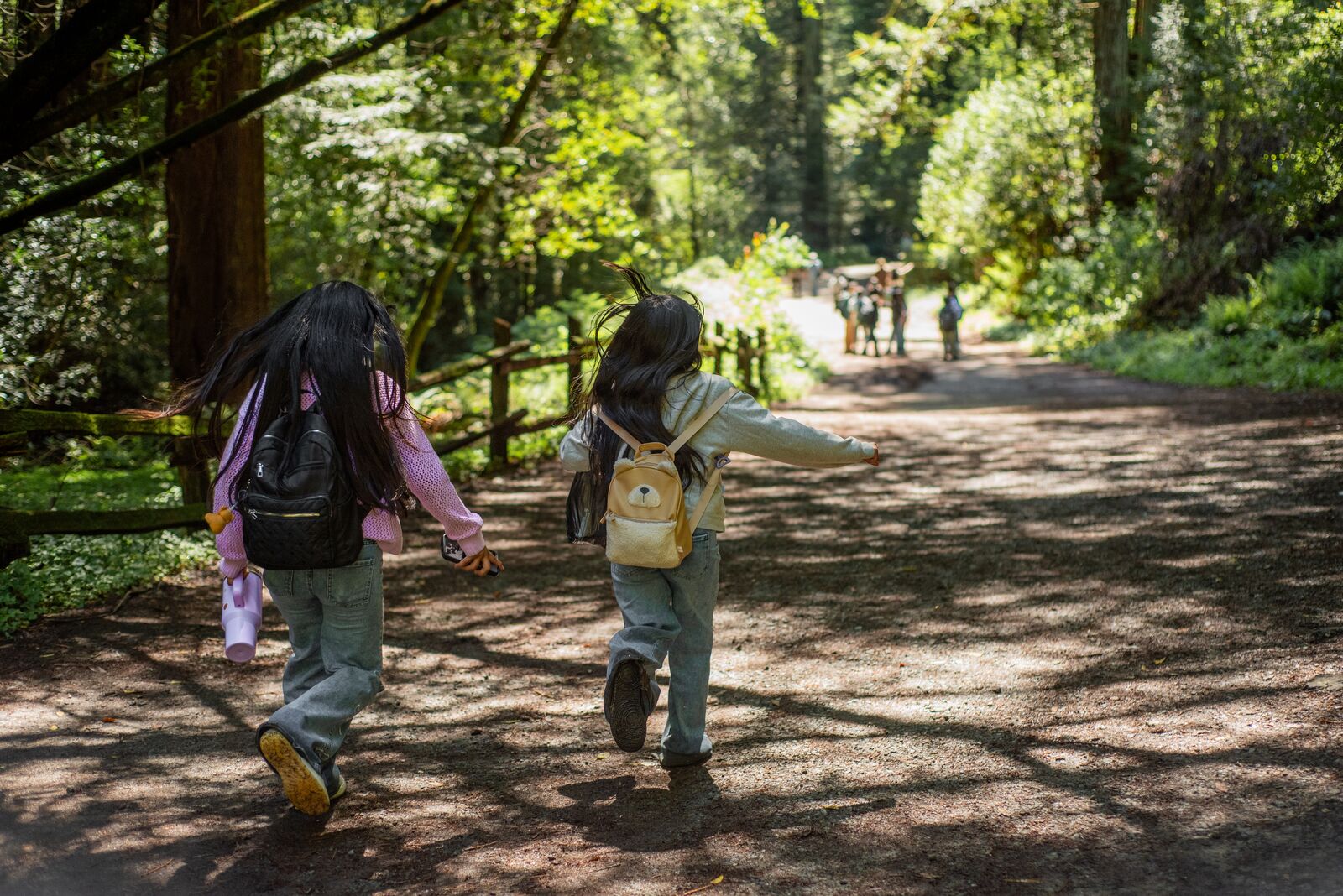 Two sixth graders from Frick United jog down a trail at Reinhardt Redwood Regional Park. Credit: Ximena Natera for The Oaklandside
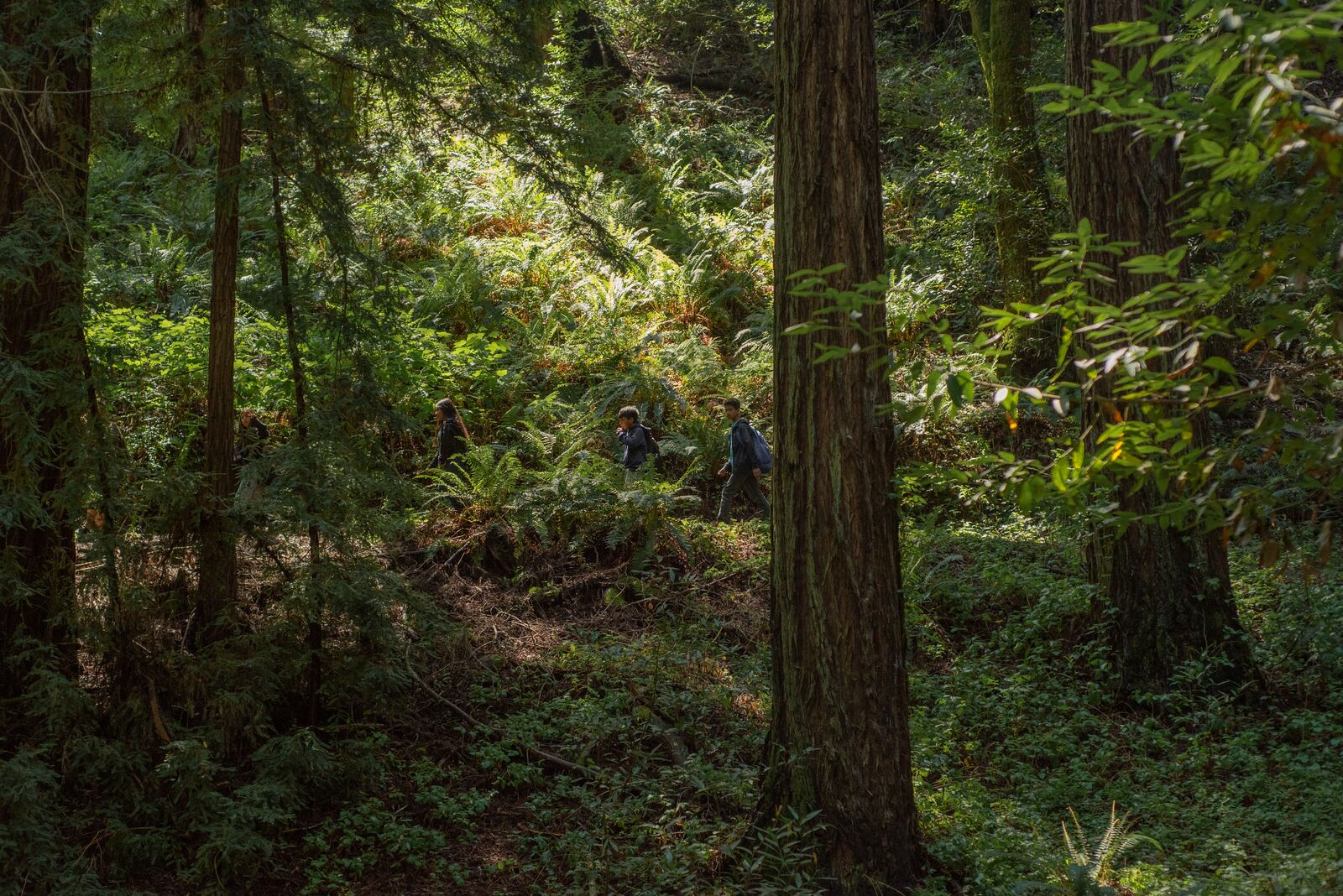 Students hike a short loop inside the park. Credit: Ximena Natera for The Oaklandside
During the trip, students got a chance to tour the detention barracks where thousands of immigrants had been held. Poems engraved into the walls by immigrants about being held there are still visible. The Parks employee invited students to reflect on similarities between the past and the present.
“It’s a very clear reminder that history is always repeating itself,” said one student, Irving Martinez, who had been walking around taking pictures with a camera hanging from his neck. “We’ve learned time and time again that this shouldn’t be happening. People are just people, and we should all treat each other fairly.”
Ella Every-Wortman, an eighth grade English teacher at Frick, said that the trip gave students the opportunity to visualize immigration detention centers and empathize with the people who were held there. She added that she’d seen students come away from the annual trip feeling more peaceful, after being awed by the park’s beauty.
“The chance to expand their worldview a little bit is amazing,” Every-Wortman said. “The chance for them to have that interaction with nature and experience a different environment is something that they all end up really enjoying. I always want to use it as an opportunity for a last bonding experience, commemorating their time at Frick.”
‘We care for what we care about’
The leaders of Oakland Goes Outdoors hope eventually to expand to all OUSD schools and grades, so that every student in OUSD can go on at least one nature trip each year. Clifford Hong, OUSD’s middle schools superintendent, added that he also wants these trips to serve as a way to introduce students to the consequences of climate change.
“If we want to propel this mission of having a beautiful world that can be sustained where everybody thrives, students being able to experience nature and experience it with others is key for them to embrace that vision,” he told The Oaklandside.
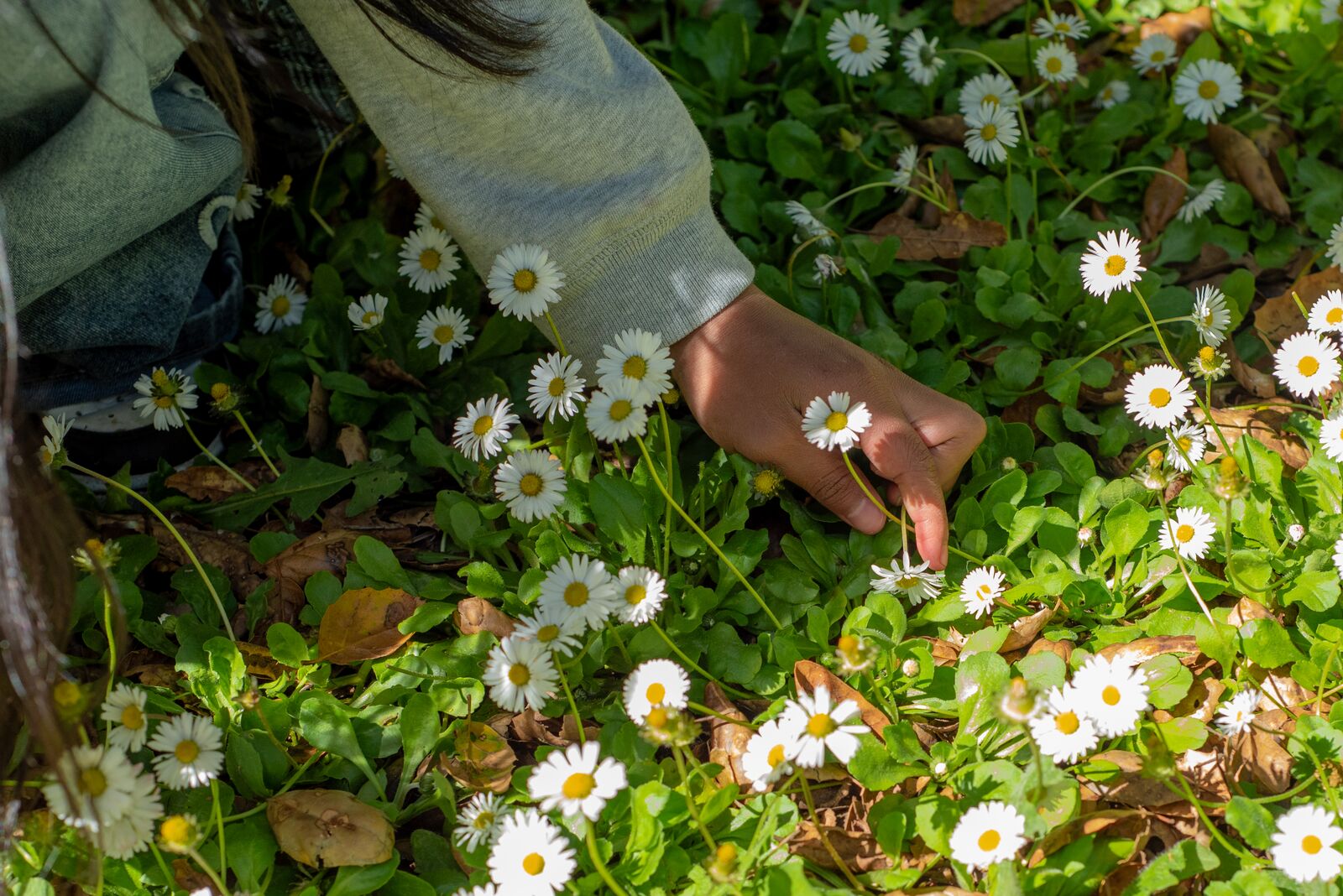 Griselda, a sixth grade student at Frick United, picks daisies during a short hike at Redwood Regional Park in Oakland, April 23, 2026. Credit: Ximena Natera for The Oaklandside
Expanding the program will require consistent funding.
Individual school sites sometimes contribute financial support for the trips if they can, but in most cases Oakland Goes Outdoors covers the costs of the trips, gear, transportation, and park admission. Since its founding in 2018, the organization has been funded primarily by the Kathryn and Robert Riddell Fund, and the group is now looking to expand its donor base, Levenstrong, the executive director, said.
Oakland Goes Outdoors is part of a statewide coalition advocating for outdoor learning. The coalition is currently campaigning for the passage of Assembly Bill 2158, the Outdoor Learning and Environmental Literacy Act — introduced by Rep. Josh Hoover as part of a package of bills promoting youth mental health — which would require the state to provide guidance for K-12 outdoor education and establish a three-year outdoor learning pilot with funding. That bill was approved by the assembly’s education committee last month and is now headed to the appropriations committee.
“There’s this idea that we care for what we care about, and this program is really intended to have our young people build stronger connections to the natural environment that surrounds us here in the Bay Area,” Levenstrong said.
“*” indicates required fields