
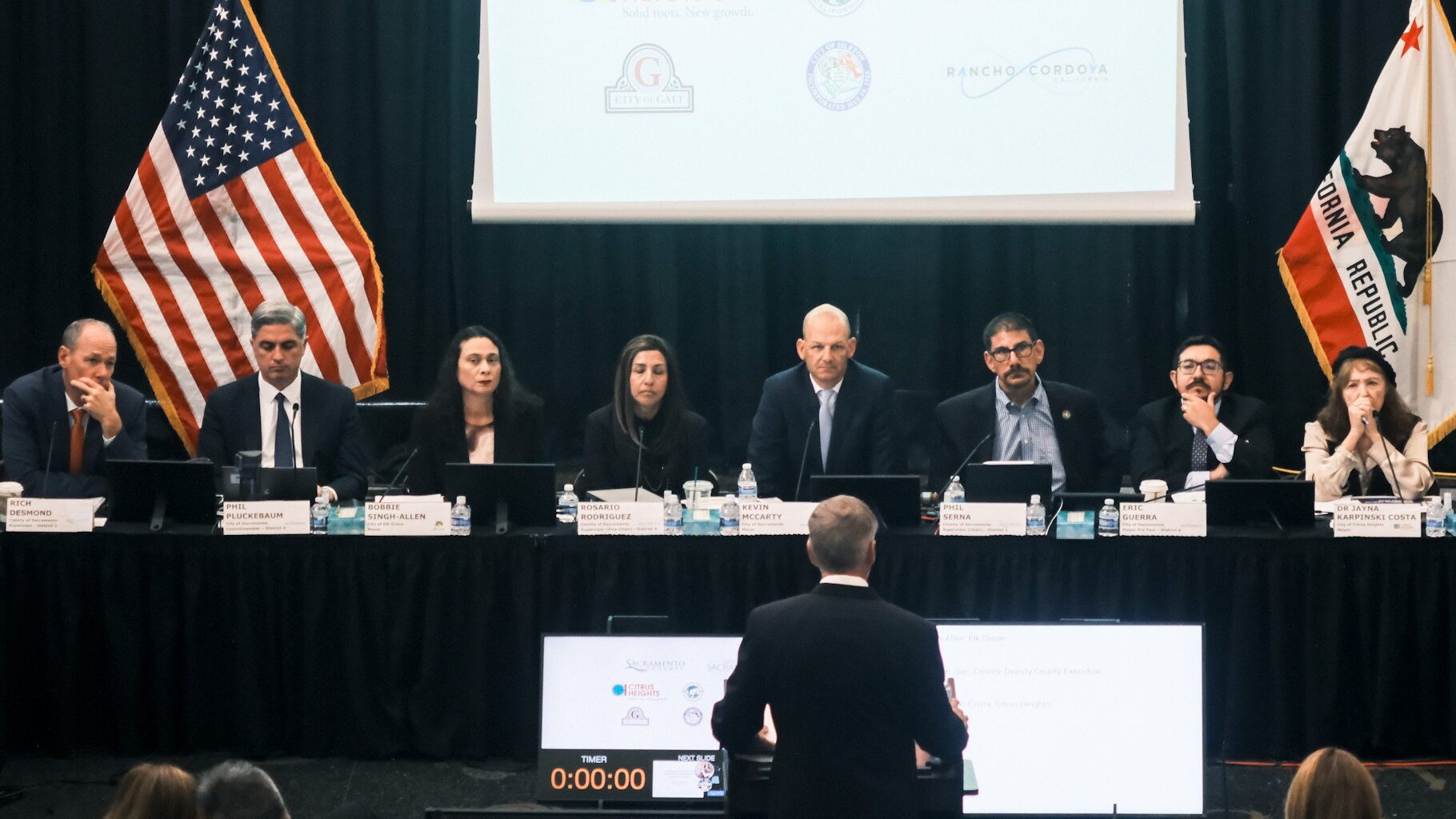
Sacramento city and county leaders, along with over 200 attendees, gathered for a seven-hour meeting at the Sacramento Public Library Tuesday to discuss how they can unify their homelessness strategies, but the plans for what’s next aren’t exactly clear.
Ultimately, the majority of officials expressed interest in having regular meetings, potentially every month, to update one another on strategies and challenges. Elected leaders from the cities of Sacramento, Elk Grove, Rancho Cordova, Folsom and Sacramento County all participated in the rare collaborative meeting.
They acknowledged that better collaboration between specifically the city of Sacramento and the county will be critical at a time of shrinking state and federal funds.
The group of electeds also requested that staff from both the county and other jurisdictions bring back more comprehensive data to compare and contrast what initiatives are working, where and why.
Sacramento City Councilmember Caity Maple said she wants a new shared governing body to cut through bureaucracy so agencies can respond fast as winter approaches.
“This is urgent. I hope that whatever we decide to do, whatever that may look like, is something that we can move quickly towards,” Maple said. “It’s a challenge in government.”
Maple acknowledged it took about six months to coordinate this week’s joint gathering.
The meeting largely discussed the status of homelessness service efforts around the county.
Officials said some strides were being made: more people are getting into shelter, with Sacramento on track to build interim tiny home villages for unhoused seniors. Also, some jurisdictions are partnering with outside agencies like Habitat for Humanity to up their housing stock.
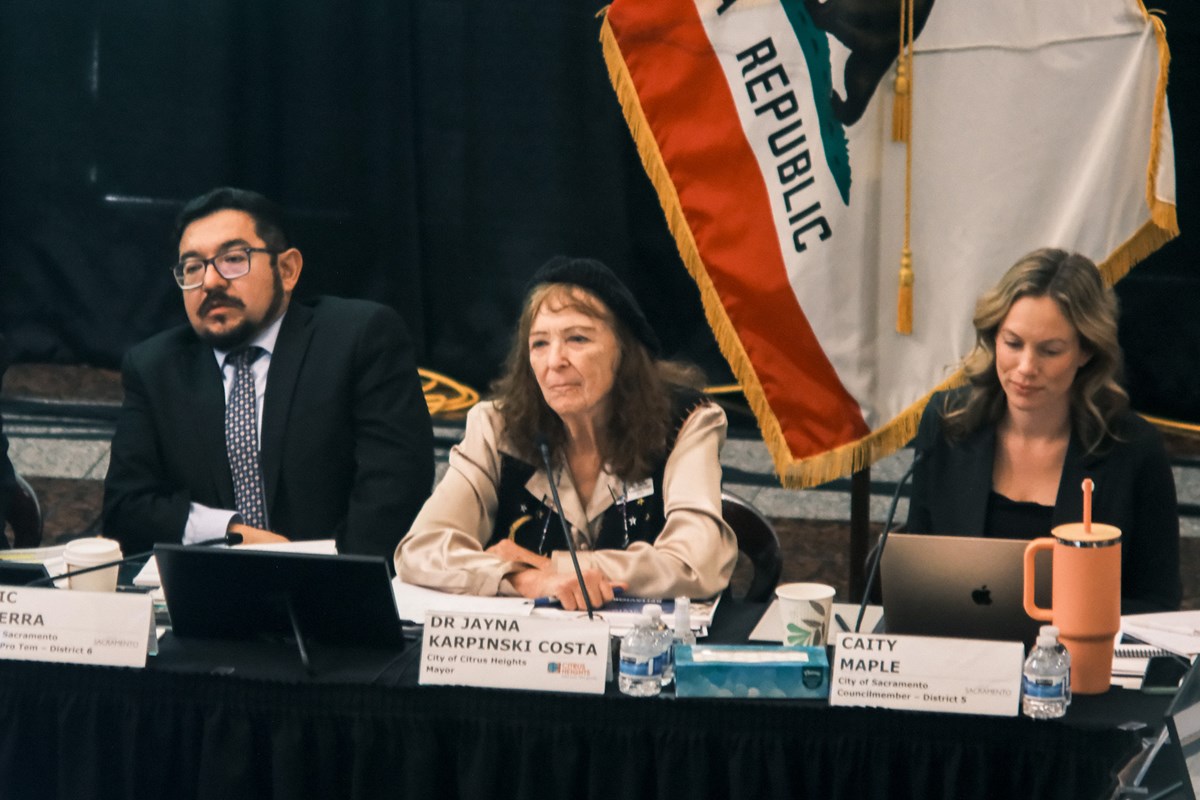 (From left to right) Sacramento City Councilmember Eric Guerra, Citrus Heights Mayor Dr. Jayna Karpinski Costa and Sacramento City Councilmember Caity Maple at a joint meeting on homelessness. Oct. 28, 2025.Ruth Finch/CapRadio
Challenges to achieving goals
Alex Visotzky, policy fellow from the National Alliance to End Homelessness, explained some of the problems on the state and federal level.
According to his presentation, the federal government is responsible for helping fund rental assistance vouchers and providing large amounts of funding to Continuum of Care Programs. Those are usually community-run homelessness assistance programs.
Visotzky explained that the White House budget proposal for next fiscal year proposed “deep” cuts to rental assistance programs nationwide and the complete elimination of some programs and grants.
In response, Sacramento Mayor Kevin McCarty said regardless of the financials, the region needs to be smarter about coordination so that resources are used appropriately.
He also emphasized that the city of Sacramento is in a $60 million budget deficit.
“It’s unfortunate that we have to do more with less,” McCarty added. “We don’t want to do that, we don’t want to brag about it, but that’s the reality.”
On the whole, the region spent $418 million on homelessness services, according to the county presentation. Their presentation indicated that 66% of that money came from Sacramento County while the city of Sacramento spent 19%.
Public frustration
Some residents who attended the meeting expressed frustration during a public comment period. They said they wanted quicker action and also supported greater cooperation amongst the layers of local government – noting that silos create cracks in support systems.
Shannon Shaw, Vice President of Programs and Development of One Community Health, said the narrative that unhoused people are refusing service is untrue.
“We can not blame the burdens of broken systems on the backs of our vulnerable population,” she said.
Another commentator, Herman Barahona with the Sacramento Environmental Justice Coalition, spoke on behalf of two residents who were evicted from Camp Resolution after the city shut down the self-governed homeless community in August of 2024.
Barahona said the couple was not offered alternate shelter and later died in a motel room their doctor was paying for.
“I hope that this effort begins to see the dignity that needs to be given respectfully, to all of our folks,” he said.
Outside of commenters, some on the dais discussed the complexities of combatting homelessness that they felt didn’t get enough emphasis in usual conversation.
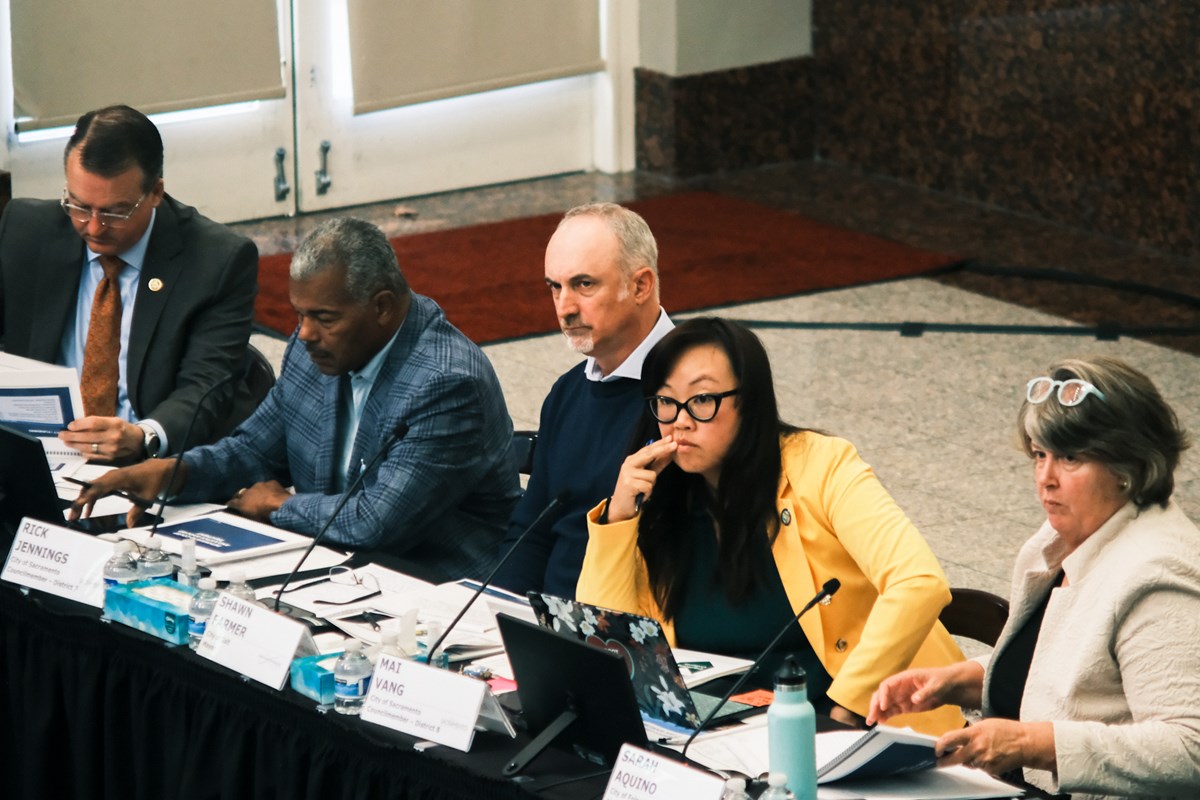 (From left to right) Sacramento City Councilmember Rick Jennings, Galt Mayor Shawn Farmer, Sacramento City Councilmember Mai Vang and Folsom Mayor Sarah Aquino at a joint meeting on homelessness. Oct. 28, 2025.Ruth Finch/CapRadio
Prevention
Sacramento District 2 City Councilmember Roger Dickinson, who represents North Sacramento, spoke at length at the meeting about the power of prevention. He told his fellow electeds that his district represents approximately 30% of the entire county’s population.
“What that means is that District 2 of the city of Sacramento is the most significantly affected of any part of the county in terms of the impact of homelessness,” Dickinson said.
He emphasized that preventing people from entering homelessness is a must.
“We are never going to build our way out of homelessness. We have to get to the front end of the equation,” Dickinson said. “We have to prevent people who are at risk of becoming homeless ending up in that condition. And by the way, it’s a lot less expensive than it is to help people on the street when they’re there.”
Some of his colleagues seemed to agree: Galt Mayor Shawn Farmer and Sacramento Council Member Mai Vang echoed Dickinson’s statement.
More housing
The 20 officials and hundreds of attendees sat through numerous presentations from different agencies, such as the county’s Behavioral Health Department.
Ryan Quist, the County Behavioral Health Director, detailed how treatment works for unhoused people that are legally incapable of helping themselves for reasons that span from mental illness to substance dependency.
After the presentation, Sacramento Mayor McCarty asked Quist what tools the department needs to help those people get shelter.
“To be very direct, we need housing,” Quist said. “Our service providers report everyday that they are having the hardest time finding locations for people to be housed. They’ll have them in services, help them with their substance use, and then where do we put them when they come out of residential treatment?”
Throughout the meeting, many officials agreed that more housing options, regardless of whether it is newly-constructed or not, is one of the top priorities for anyone experiencing homelessness.
Farmer, the mayor of Galt, noted building affordable housing is overly complicated and the word “affordable” has essentially become a buzzword.
“It’s like pulling teeth to get anybody to build affordable housing in Galt,” Farmer said.
Collaboration hopes
Though the meeting largely outlined challenges and frustrations, it also highlighted some progress. Notably, it pointed out that the Sacramento region was the only major city in California to have a 29% decrease in homelessness during its most recent point-in-time count.
Smaller municipalities in the county are also making some headway.
City staff from Elk Grove said their homeless outreach team has had a 70% success rate in getting people help.
Folsom Mayor Sarah Aquino asked what contributed to this success rate.
Elk Grove City staff member Sarah Bontrager clarified that much of their work involves mental health services and can be done because of the city’s smaller and more manageable homeless population.
“We don’t just see them as a number. These are individuals that we know by name, we know their individual needs,” Elk Grove Mayor Singh-Allen responded.
Through a shared governing process, most elected leaders said they felt hearing about progress and different approaches to similar issues in neighboring jurisdictions was a fruitful practice they wanted to continue.
Sacramento County Supervisor Patrick Hume said there’s no one simple solution to the region’s vexing problem.
“We need more housing, period,” he said. “But in addition to that we need facilities, we need the capacity, we need the bandwidth and we need the legislative ability to be more efficient, effective with our administration of mental and behavioral health services.”