
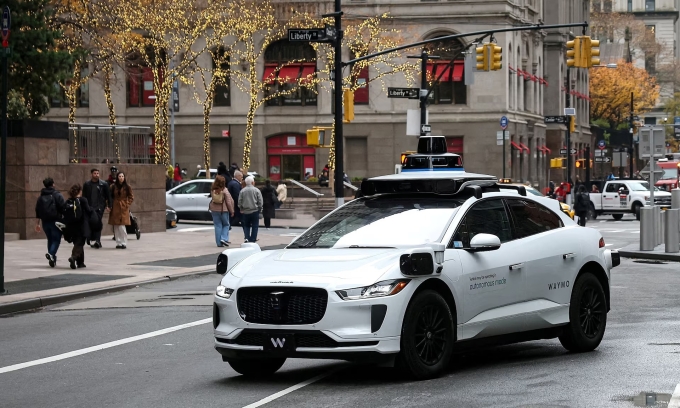
Di Jin booked the Waymo on April 27 to travel from his home in Sunnyvale to the airport for a business trip, NBC Bay Area first reported. A driverless Jaguar I-Pace took him to the terminal without incident. When Jin got out and pressed the trunk-release button, nothing happened. Moments later, the car drove off with his bag inside.
“I pressed the trunk open button, try to get my luggage, but it doesn’t do anything, and it drives away immediately,” Jin told NBC Bay Area.
He said he called Waymo customer service straight away and was told the vehicle could not be turned around because it was already on its way back to the company’s depot. Jin boarded his flight without his suitcase, a change of clothes, or the work notes he had packed for the trip.
Later that day, Waymo emailed to say the bag had been recovered. The complication was that the depot is in San Francisco, more than an hour from the airport in light traffic, and the company initially refused to pay shipping. As an alternative, Waymo offered him two complimentary robotaxi rides so he could collect the suitcase himself.
Jin rejected both options. He told NBC Bay Area he was unwilling to spend more than two hours of his time fixing a problem caused by a malfunction that was not his fault.
A Waymo representative called him on Friday and agreed to ship the luggage. The company separately confirmed to TechSpot on May 6 that it had waived the shipping fee.
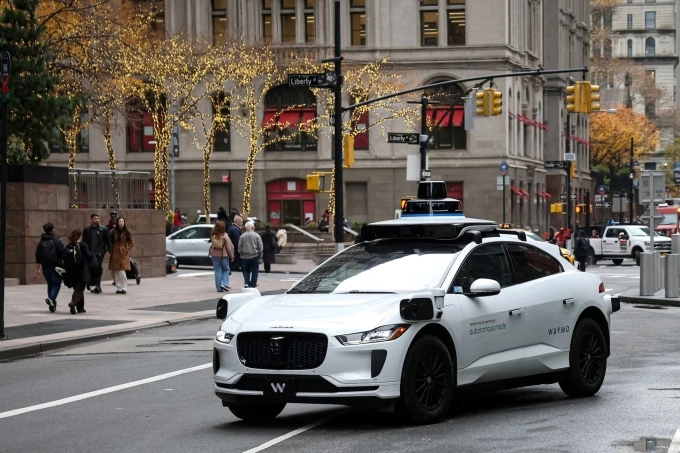
Waymo driverless taxi drives in lower Manhattan in New York City, U.S., Nov. 26, 2025. Photo by Reuters
Waymo’s published policy states that passengers can open the trunk by pressing the physical release button on the outside of the vehicle or by tapping “open trunk” in the Waymo app, and that the trunk is designed to open automatically when a passenger exits at the destination.
The company told TechSpot a third option exists through the in-car display. None of those mechanisms worked for Jin, and with no human driver present, he had no way to tell the car he had not yet retrieved his bag.
The episode is not the first of its kind. NBC Bay Area reported in April 2025 on a San Francisco tennis coach whose expensive equipment was carried off in the trunk of a driverless Waymo, in similar circumstances.
Waymo’s terms of service state that the company is not responsible for items left in the vehicle after a trip ends and does not offer reimbursement for lost items.
San Jose Mineta International Airport became the first commercial airport in California to offer Waymo rides to paying passengers when the service launched in November 2025, according to the airport’s announcement. Waymo now operates in roughly a dozen U.S. cities and has said it intends to expand to about 20 more in the coming years.