
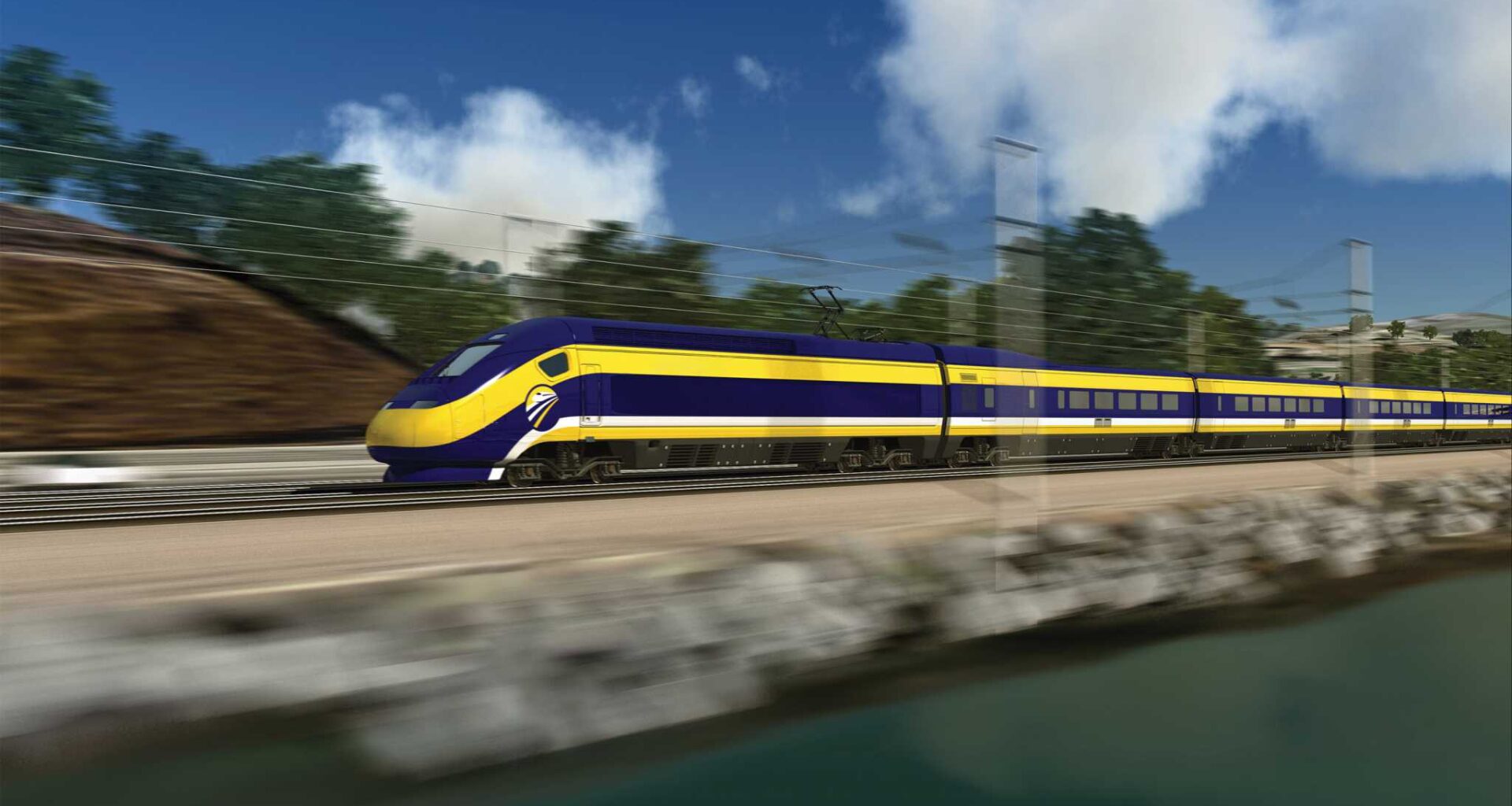
Gov. Gavin Newsom has appointed two new board directors to oversee California’s high-speed rail project, both former top officials in San Francisco City Hall.
Joining the High-Speed Rail Authority Board are Steve Kawa and Jason Elliott, who each served as chiefs of staff to the late Mayor Ed Lee. Elliott later worked as deputy chief of staff in the governor’s office from 2022 to 2024. The two new directors will replace board Chair Tom Richards and Vice Chair Nancy Miller.
A spokesperson for Newsom characterized the appointees as “two trusted advisors and innovative leaders who combined bring over 50 years of experience navigating large-scale projects through demanding political and fiscal landscapes.” They will be compensated $100 for every day of work.
Ian Choudri, the CEO of High-Speed Rail Authority, praised the departing board members for their leadership and said he looked forward to working with Kawa and Elliott on “advancing track laying, systems installation, electrification, and the expansion of California’s high-speed rail network connecting the state’s major population and economic centers via the Central Valley.”
Richards had worked for 16 years to help deliver the long-gestating bullet train. He was not immediately available for comment on Friday.
Separately, Newsom tapped Joshua Hurlbert of Las Vegas to be the rail authority’s chief technology officer. Hurlbert served in a similar role for Brightline West Trains, a private bullet train system envisioned to connect Las Vegas to greater Los Angeles. Some high-speed rail officials hope to link it with California high-speed rail, forming a network that would whisk business travelers between job centers and send gambling tourists into Sin City. That dream could be decades away.
This week’s leadership shake-up comes at a tense moment for the state’s transportation megaproject, which is under construction in the Central Valley but dogged by financial challenges. Last year, the Trump administration yanked $4 billion in federal funding from the future bullet train line, forcing California to carve a path forward without any help from Washington D.C.
Absent federal support, Choudri is trying to court private equity. He has secured $1 billion in annual bedrock funding from the state and plans to leverage it to draw investment, insisting the train will generate all kinds of revenue once the Merced-to-Bakersfield segment is up and running. But Choudri and Newsom are struggling to build public trust, with the price tag of high-speed rail nearly tripling since 2008, from $45 billion to $126 billion for the entire San Francisco to Los Angeles route.
And political headwinds persist.
“I say this as a friend, you gotta let that train go,” television host Bill Maher told Newsom during a combative interview earlier this month. Newsom parried.
“I had inherited a mess,” the governor said. “We put it back on track.”