
Toward the end of the month, Lawrence Jeffries usually has about $200 left.
The former auto painter lives in subsidized housing in Oakland and, like 179,000 other people in Alameda County, he receives government food assistance payments monthly. With those basic needs covered, he can squeeze by on the little cash he ends up with.
But November will likely be different. The federal government shutdown has held up the Supplemental Nutrition Assistance Program, or SNAP, funding. In California, that means the 5.5 million people whose state-provided debit cards are typically loaded up with CalFresh dollars by the first of the month will have to feed their families some other way if the shutdown doesn’t end or a last-minute stopgap doesn’t materialize.
East Bay restaurants helping SNAP recipients
Several restaurants are offering free or discounted food to CalFresh/SNAP recipients who present their benefits card until the program funds are restored.
Humbowl: 2975 College Ave., Berkeley; Free kids bowl for children 12 years old and younger, or 25% off for any SNAP recipient starting Nov. 1
Malibu’s Burgers: 326 23rd St., Oakland; Free meals for anyone in need
Monster Pho: 360 40th St., Oakland; Choice of free bowl of pho for children 12 years old and younger and 25% off for parents
Puerto Rican Street Cuisine: 1430 23rd Ave., Oakland; Free kid’s meal, empanada with rice or beans, for children 12 years old and younger (limit one per household)
Understory: 3340 International Blvd., Oakland; Free meal or pay-what-you-can for anyone in need
Wahpepah’s Kitchen: 3301 E. 12th St. suite #133; Oakland; Free bison tacos for “elders and young ones”
“I ain’t gonna go hungry,” Jeffries said, explaining that he’ll use his $200 on groceries. “But at the end of the month I’ll be at zero, zero, zero. I’ll have to make some sacrifices.”
He’s also worried about the “chaos” that could ensue in neighborhoods and stores if a large portion of the community goes hungry — especially as the meal-centric holiday season looms.
Jeffries is not alone in his concern about the slashed benefits. Local food banks and pantries have been fielding panicked calls and long lines both in anticipation of the squeeze and as residents are already dealing with furloughs triggered by the federal shutdown and rising grocery costs.
“The intensity of the moment is catching up to us,” said Andrew Crispin, executive director of the Berkeley Food Network. His organization redistributes food it receives from the county food bank and elsewhere to some 30 different programs, and runs its own large pantry on 9th Street in Berkeley.
That pantry has been serving about 700 households each day it’s open, a 30% increase over the past couple of months, Crispin said. Last week saw the longest lines.
Undocumented immigrants especially often rely on pantries like Berkeley’s, since they’re not eligible for SNAP. Now, with the benefits paused, the resources will need to be stretched to serve a broader swath of the population.
Crispin said the network is in a solid position to continue serving residents, though it’s always accepting volunteers. The network expanded its pantry hours this fall to support the greater demand from all corners of the community.
“The folks who are at risk of losing their CalFresh benefits, they’re people you know,” Crispin said. “This is not a community to be othered.”
Like SNAP money, a lot of the food that the network receives from the food bank also comes from the federal government — the U.S. Department of Agriculture, specifically. But that food is sourced far in advance, according to Crispin, so the supply won’t dry out in November.
California is among 22 states that sued the Trump Administration this month, arguing that the USDA has $6 billion in emergency funding available to continue providing SNAP benefits. During previous shutdowns, the government has not paused SNAP.
“Bottom line, the well has run dry,” reads a banner on the USDA website, which blames Senate Democrats for the SNAP cuts. “At this time, there will be no benefits issued November 01.”
A federal judge indicated Thursday that she might order the release of SNAP benefits, but, given that November is two days away, benefits would likely still be delayed.
Alameda County officials, food bank expand aid for November
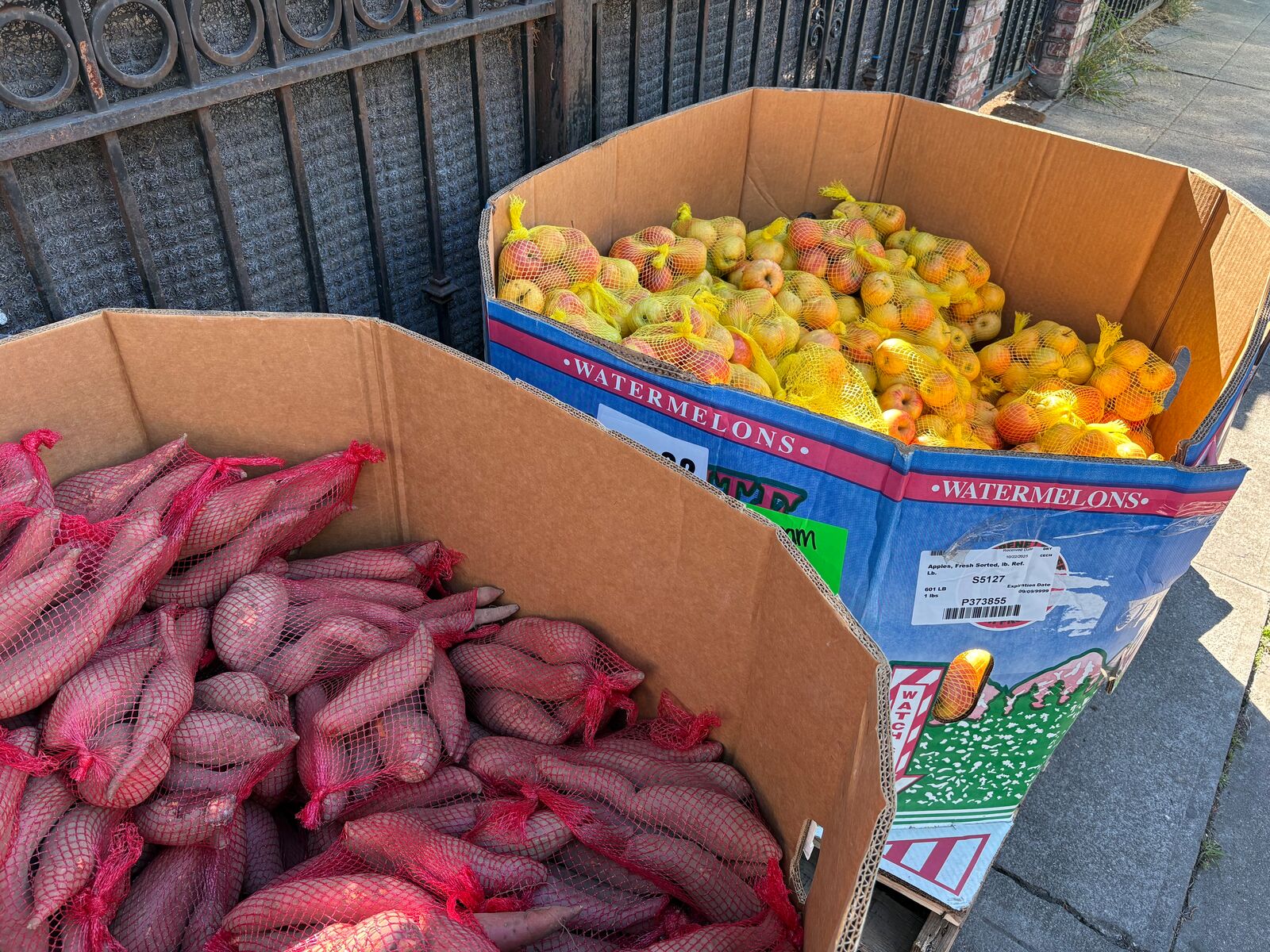 Sweet potatoes and apples were available to CityTeam pantry shoppers this week. Credit: Natalie Orenstein/The Oaklandside
The Alameda County Board of Supervisors voted last week to allocate $10 million toward food assistance in response to the shutdown and other looming cuts to SNAP in Trump’s so-called “Big Beautiful Bill.”
“Shame on the Trump administration for its callous policies, including the government shutdown and cuts to CalFresh, that are devastating our community,” said Supervisor Nikki Fortunato Bas, who spearheaded the vote, in a statement.
Bas told The Oaklandside that her office is also working with Mayor Barbara Lee and Oakland Thrives to seek foundation support to potentially provide gift cards directly to CalFresh recipients whose benefits are delayed. This is an approach San Francisco and Contra Costa County are taking or plan to.
Of the $10 million approved last week, more than $8 million will go to the Alameda County Community Food Bank, a central hub for food assistance in the region, and the rest to meals for seniors.
A spokesperson for the food bank said the exact uses for that money haven’t been determined yet, but that “all of the money that comes directly to us will be spent on food procurement” while “the rest of the funds will be passed through to our partners to support food distribution.”
The state has also freed up food assistance money on a faster timeline, allowing food banks to use their entire yearly allotments upfront. The Alameda County Community Food Bank gets $2.4 million through the state program, and knowing those funds are available in advance has made a big difference for the organization, said spokesperson Cady Osgood-Otis.
The food bank declined another offer from Gov. Gavin Newsom, though — support with food distribution from the state’s National Guard officers. “We already have strong volunteer support and as a community-based org we’re planning to resource from within our own community,” Osgood-Otis said.
Maria Gutierrez is one of five food bank staff who help people enroll in CalFresh. Collectively, they enroll about 125 households a month, she said.
Calls have increased from both people who receive the benefits and those who don’t.
“We have been having to shift our employees to different departments — most of our CalFresh department is working with our helpline,” Gutierrez said. “I just assisted a client yesterday who was very hesitant. Their main concern was, is it even worth applying now?”
The answer is yes, she said. And she reiterated that the food bank services are still operating at full force.
“With everything going on, we have been starting to hear from community members who are desperate, including families with children trying to figure out where their next meal will come from. They can rely on us — we’re here for them,” she said.
People looking for immediate food assistance can find a nearby pantry location on the food bank’s FoodNow website. (Note that we found not all information is up to date, so it is recommended to call ahead to confirm site details before going.)
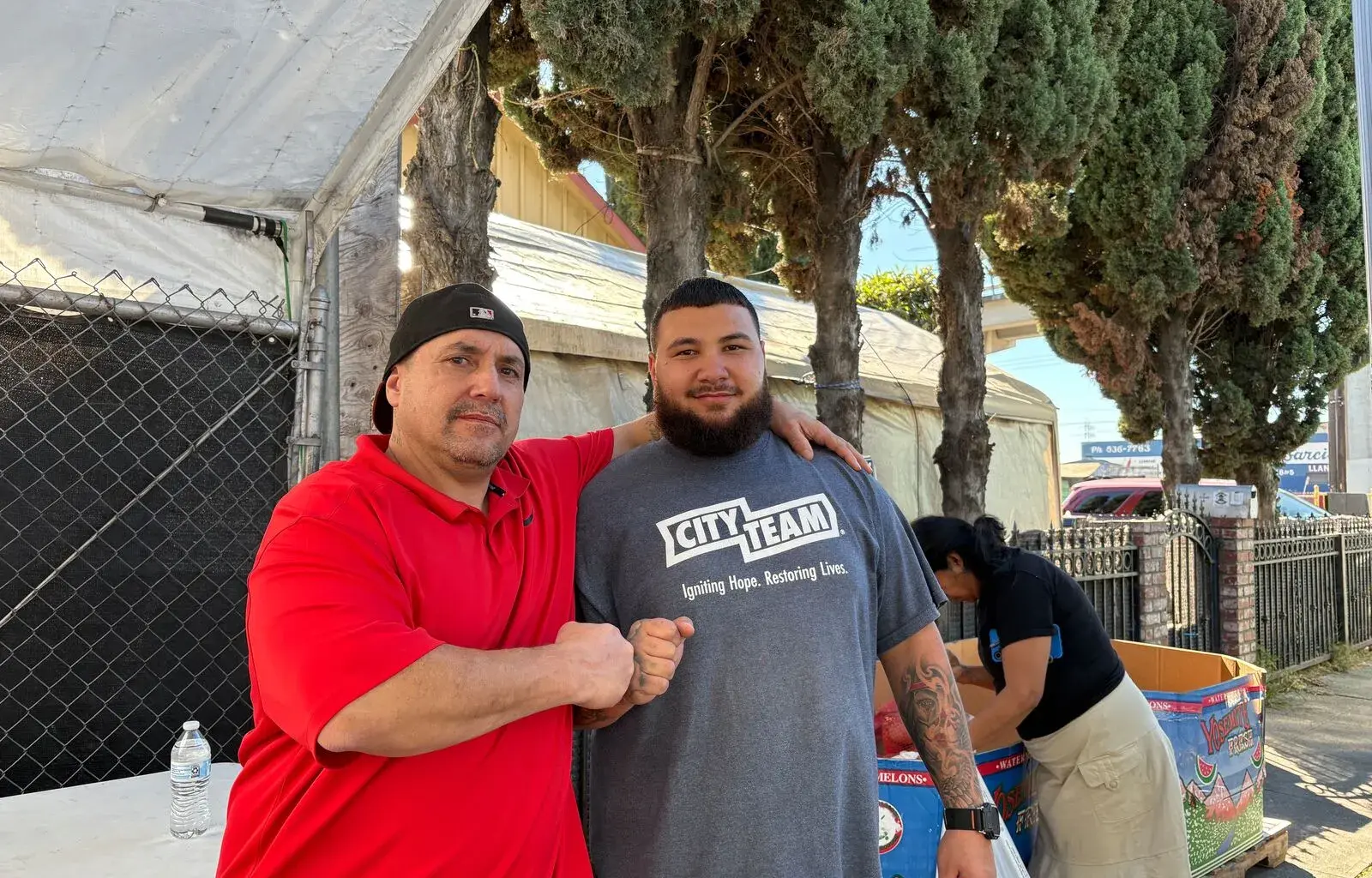
One of the listed pantries, the CityTeam site on 50th Avenue, was in full swing Tuesday.
Staff and volunteers were passing out chicken wings, eggs, oat milk, spaghetti, and bags of apples and sweet potatoes.
Ben Short, coordinator of CityTeam’s 19 roving pantries, said demand hasn’t increased yet, but he “knows it’s coming.” Asked about the shutdown, Short said that his Christian faith drives his work and that he stays out of politics.
Troy Hernandez was helping hand out food Tuesday on 50th Avenue. A SNAP recipient himself, Hernandez got involved with CityTeam after decades of struggling with addiction. Now in his 50s, Hernandez decided to work to get back on his feet a couple of years ago, after he was shot in the stomach.
“I’m taken care of in the program,” said Hernandez, explaining that the SNAP delay won’t be as devastating for him as some others who don’t have that support. “But everybody’s worried about it.”
Over a third of Alameda County families with kids affected
 Children and seniors are hardest-hit by SNAP cuts (file photo). Credit: Estefany Gonzalez for Berkeleyside
In Alameda County, 40% of families with children receive CalFresh benefits. That leaves a lot of kids without a reliable source of food next month.
Another food assistance program for families with children under 5 or pregnancies, WIC, is continuing, however.
Crispin of the Berkeley Food Network said his organization is working with Berkeley Unified to expand home delivery services.
The Oakland Public Education Fund, which supports OUSD, launched a fundraising campaign Thursday to raise money for food for families affected in the district. The fund will work with OUSD to identify families in need, said CEO Alexandria Medina.
The form of the assistance — whether it will be distributed in cash or food items, for example — is still being hashed out, she said. The Ed Fund has experience providing both kinds of support during a previous COVID-19 campaign.
“If kids don’t have food, they’re not learning,” Medina said about the decision to fundraise this month. “That erodes overall health in our community. It’s really scary — that our kids aren’t going to eat is unfathomable to me as a human and a parent.”
Tovin Lapan contributed reporting.
“*” indicates required fields