
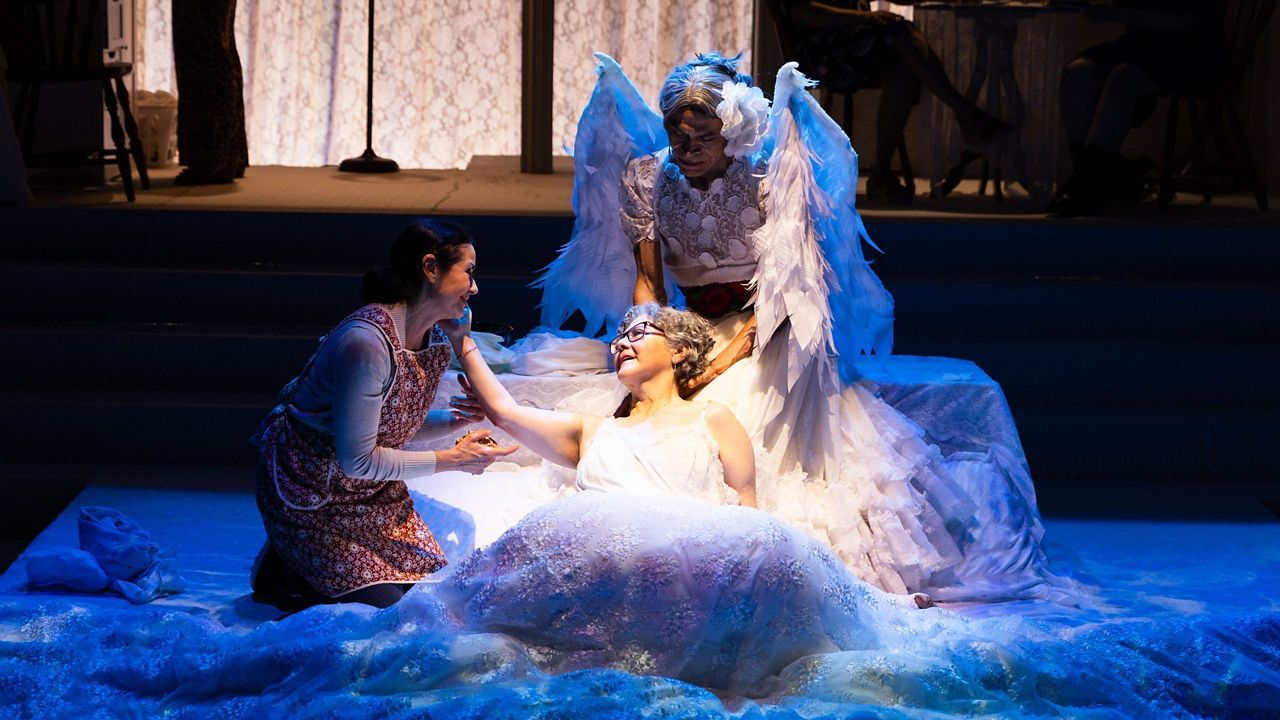
LOS ANGELES — Cradling a baby doll, the character of Mercy drifts in and out of reality. One moment she is a frightened child, the next a doting grandmother.
Mercy has dementia, as did playwright Evelina Fernández’s mother.
“I started writing it before she passed and finished it after she passed,” she said. “But, you know, I was just aware that so many people are dealing with this either with a parent or grandparent.”
What You Need To Know
“The Storyteller of East LA” is a world premiere play by Evelina Fernández being presented by the Latino Theater Company at the Los Angeles Theatre Center downtown
LTC was founded 41 years ago to share authentic stories from the Latino community as well as create a main stage for Latino actors
Addressing themes of aging, memory loss, and immigration enforcement, the dialogue flows seamlessly in both English and Spanish, with translations of both languages projected above the stage
“The Storyteller of East LA” has been extended and runs through May 24
Fernández is one of the five founders of Latino Theater Company, as is Lucy Rodriguez, who plays Mercy and Sal Lopez, who embodies her guardian angel.
“We’ve been together for 41 years,” Lopez said. “Longer than most marriages.”
They formed the company all those years ago to share stories of their community from their perspective, and now run five different spaces at the Los Angeles Theatre Center in downtown LA. When he started his career, Lopez said there were few roles on main stages for Latino actors.
“And that’s what we’ve done for our community,” he explained. “We created the main stage for us, you know, so that we can also be included.”
They also want to make sure their stories are included in the canon of American theater and in their authentic voices. The dialogue in “The Storyteller of East LA” flows seamlessly between English and Spanish, sometimes switching mid-sentence — with translations of both languages appearing above the stage.
“In many Latino households, that’s how we roll,” Rodriguez said. “You know, it’s just back and forth, back and forth, back and forth. And idioms are really important. Sometimes you just don’t… have the words in English, but bam, you know, you can say it in Spanish and everybody gets it.”
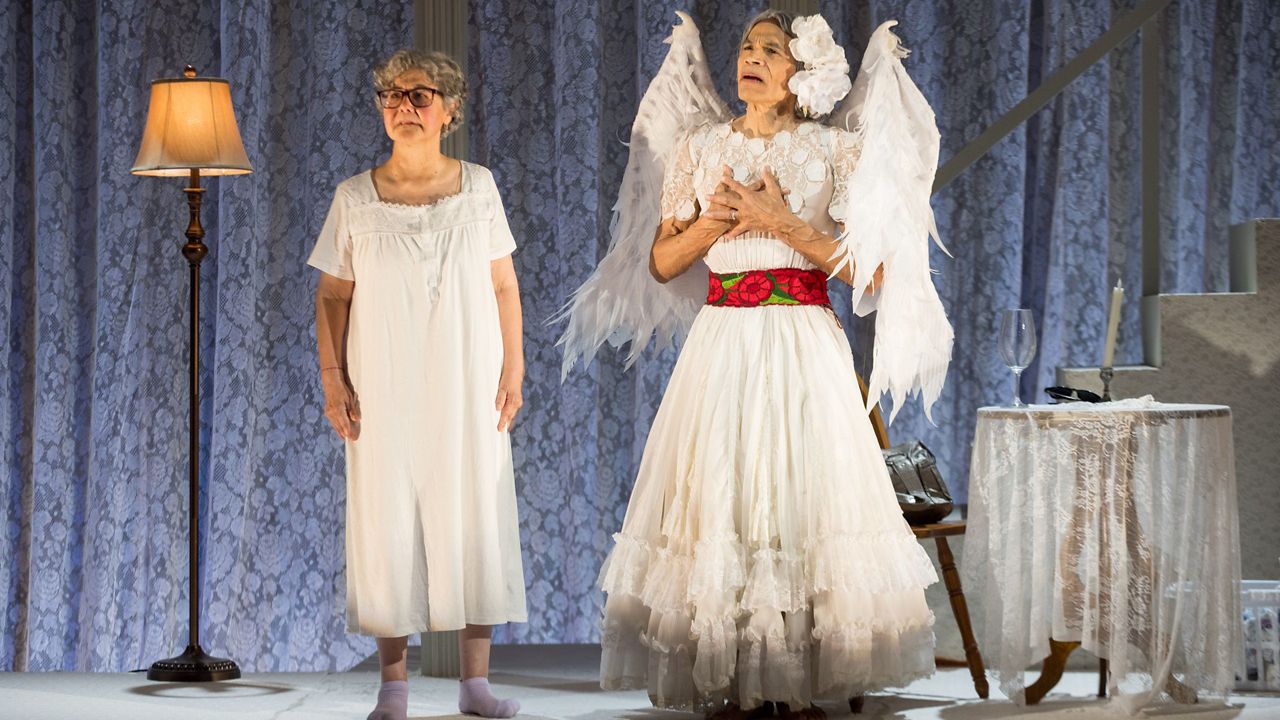
(Image courtesy of Grettel Cortes Photography)
For Rodriguez, playing Mercy is personal. Her older sister is in memory care. But it’s the character of Josefa, the hired caretaker, whose story she’s glad is included.
“I really love that we know her story, that she is a three-dimensional character,” she said. “She has her life; she has her concerns. And she showed up to work. And I think that’s true of so much of this segment of our community. Hardworking work ethic. Show up. And I’m very glad that it’s depicted here.”
Josefa’s concerns are not small ones. She is undocumented, the mother of a child born in the U.S., and her husband has just been detained by ICE. She’s worried and frightened about how family’s future. An unseen character of the nighttime caretaker didn’t come to work the night before — too afraid to leave her house.
In writing the play, Fernández felt it was vital for audiences of all backgrounds to understand the role undocumented workers play in our lives and our economy.
“Whether you’re aware of it or not, you do depend on that workforce, especially in caregiving, especially in the Latino community,” she said. “Many people who are taking care of our loved ones are undocumented. I just wanted to give those people a voice, you know. I just wanted these people to be seen.”
What Fernández hadn’t fully anticipated, though, was how seen audience members would feel.
Every night after performances of “The Storyteller of East LA,” people linger, wanting to share their own experience.
“Oh my God, that’s me. That’s my family. This is my family story,” she said that people tell her after the show. “And, you know, to me, that’s the most important.”
“We have so many stories, so many important and beautiful stories in our community that have never been told,” Fernández continued. “I feel this responsibility to my community to tell as many stories as I can about us and our experience.”