
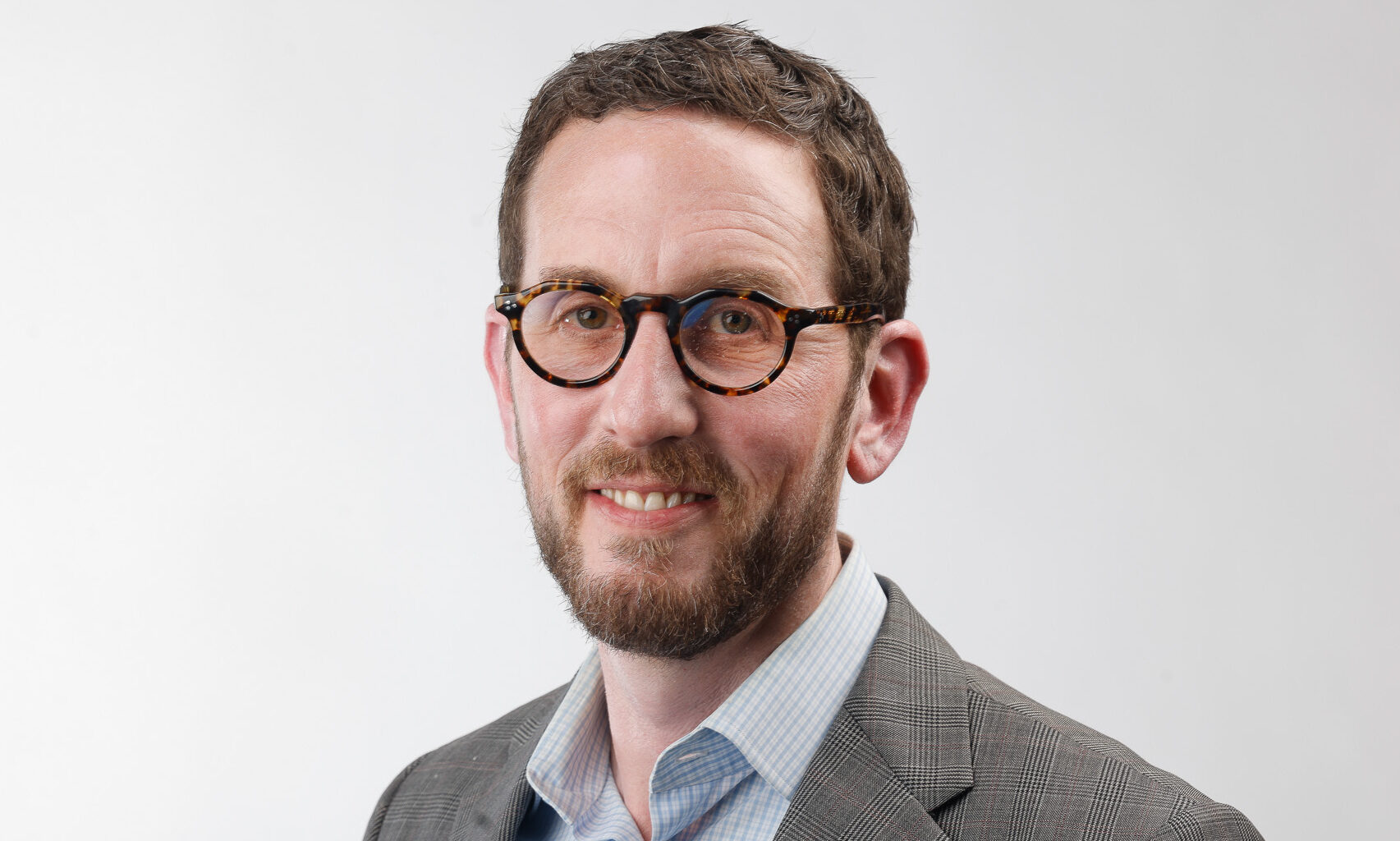
Scott Wiener is an effective legislator who will thoughtfully build on Nancy Pelosi’s legacy as San Francisco’s representative in the House, the editorial board says.
Lea Suzuki/S.F. Chronicle
How do you replace a political icon?
That’s the question San Franciscans face as they weigh the 11 candidates running in the June primary to succeed retiring 20-term Rep. Nancy Pelosi.
Given the crop before them, voters essentially have three paths to choose from:
Article continues below this ad
They can try to thoughtfully build on her legacy, they can select someone who will struggle under its weight or they can burn that legacy to the ground in hopes something better rises from the ashes.
You’ll find the burn-down approach in the platform of tech engineer-turned Democratic political activist Saikat Chakrabarti.
San Francisco Chronicle Logo
Make us a Preferred Source to get more of our news when you search.
Add Preferred Source
It was Chakrabarti who dared to first challenge Pelosi before she officially announced her retirement. He didn’t do so merely to breathe fresh air into an aging Democratic Party; Chakrabarti speaks of reinventing the nation’s economy with policies modeled after the New Deal and fundamentally reshaping the American global order that Pelosi helped to grow and maintain.
Chakrabarti is best known for taking out the No. 4 Democrat in the House, Rep. Joe Crowley, while running the campaign of an unknown 28-year-old candidate named Alexandria Ocasio-Cortez. Chakrabarti is a savvy political thinker — but one with virtually no experience inside government. He served as AOC’s chief of staff for only a few months before exiting in a swirl of controversy.
Article continues below this ad
In our endorsement interview, Chakrabarti told us the “Green New Deal” he helped architect with AOC was a “political strategy” designed to move the Overton window on climate change. It’s hard not to see many of his campaign ideas, such as a federal jobs guarantee and creating a government stockpile of steel and lumber for housing, in the same light — as political messaging and not serious policy solutions.
This editorial board agrees with many of Chakrabarti’s criticisms of establishment Democratic politics and policies, foreign and domestic. But — as we know all too well in San Francisco — talking about radical change and effectuating it are very different beasts.
Unlike Pelosi, who built and presided over a big-tent Democratic coalition that successfully pushed through the Affordable Care Act, Chakrabarti wants to primary centrist Democrats who are insufficiently open to his agenda. Yet he lacks any base of support to launch such an attack; despite Chakrabarti’s repeated invocation of their names in his campaign materials and having worked with them, neither Sen. Bernie Sanders nor AOC has endorsed him.
Sanders, in particular, is not shy about endorsing in San Francisco. Utter silence from the progressives who should be Chakrabarti’s natural political allies speaks volumes.
Article continues below this ad
And while Chakrabarti assured the editorial board that constituent services were among the three prongs of his platform, we couldn’t help but get the sense that he viewed looking out for San Franciscans as little more than a strategic political bullet point.
We have no such questions about Democratic San Francisco Supervisor Connie Chan’s commitment to the city and its residents. Unfortunately, she doesn’t have meaningful ideas to improve their conditions.
Chan is running on a campaign platform of progressive taxation to expand essential services for working people and the vulnerable, touting her fiscal savvy gained from serving as chair of the Board of Supervisors Budget and Appropriations Committee. She supports the proposed California billionaire tax and local efforts to increase taxes on wealthy companies.
Yet when we asked what a more progressive tax regime should look like at the national level — which would be part of her job to figure out in Congress — she stumbled, eventually asserting that we should tax autonomous vehicles to fund transit and impose a levy on AI companies. These are fundamentally local California ideas, not federal ones. And they are emblematic of a candidate not ready to step into Pelosi’s shoes.
Contrast that with state Sen. Scott Wiener, D-San Francisco, who, when asked the same question, immediately rattled off the idea of closing loopholes on margin loans, which the wealthy use to avoid income taxes.
Article continues below this ad
Most rightfully know Wiener, a former San Francisco supervisor, as the primary architect of the movement to increase housing development in California. But his legislative bona fides are far more expansive, including authoring everything from California’s Proposition 3, which protected marriage equality in the state Constitution, to Senate Bill 770, which seeks to create a universal healthcare system in California.
Wiener is not only fluent in virtually all policy arenas, but he also has a nuanced legislative agenda.
Healthcare? Push to restore Affordable Care Act funding in the short term while building momentum for a Medicare-for-all-like national system.
Housing? Provide municipalities with a $10,000-per-unit federal subsidy to defray infrastructure costs and incentivize growth.
Immigration? Dissolve Immigration and Customs Enforcement and move its functions back to the Department of Justice, where they existed before 9/11, while better professionalizing the department by providing it with more autonomy from the president.
Article continues below this ad
Ultimately, San Franciscans must decide if they want the most relentless and effective legislator in California zeroing in on universal healthcare, cheaper housing options, humane immigration policies, protections for the LGBTQ community and preserving democracy from Donald Trump — or if they want vibes.
The choice should be obvious. We endorse Wiener for Congress.
Other candidates we interviewed include former Republican, now Democrat, Marie Hurabiell — founder and executive director of the local advocacy group ConnectedSF. Hurabiell jumped into the race late, she said, because she was motivated by her animus toward the policies of the leading candidates. However, she failed to outline any serious policy platform of her own to counter those of the leading contenders.
The editorial positions of The Chronicle, including election recommendations, represent the consensus of the editorial board, consisting of the publisher, the editorial page editor and staff members of the opinion pages. Its judgments are made independent of the news operation, which covers the news without consideration of our editorial positions.
We also spoke with no party preference candidate Nathan Deer, a biotech scientist with thoughtful views on implementing a national healthcare plan and restoring federal democratic protections; Democrat Omed Hamid, who wants to help revitalize the Democratic party in part by changing its insignia to a giraffe; Republican lawyer David Ganezer, who wants regulations on social media use for kids; and Republican Jingchao Xiong, a delivery driver who blames the failures of California high-speed rail on the inefficiency of American workers.
We were unable to reach Democrats John Buffler, a rocket scientist, small-business owner Keith Freedman and civil rights advocate Gregory M Haynes.
Reach the Chronicle editorial board with a letter to the editor:www.sfchronicle.com/submit-your-opinion.