
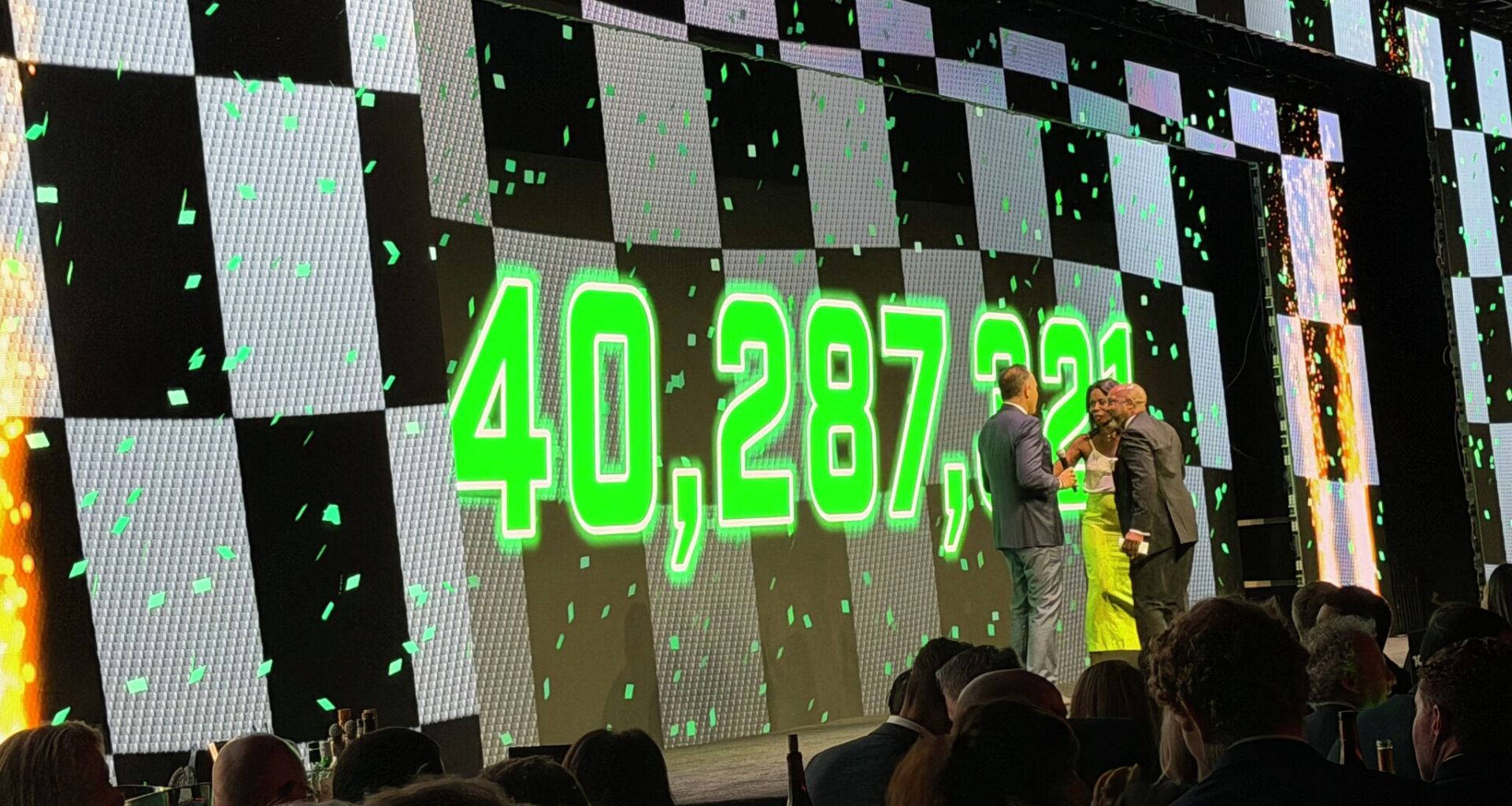
Tipping Point is poised to dedicate about $40.3 million to supporting AI resilience, CEO Sam Cobbs said at the nonprofit’s annual benefit Thursday night.
Courtesy of Max Szabo
Tipping Point Community announced a new maneuver this week in its fight against Bay Area poverty: preparing human workers to survive in an economy powered by artificial intelligence.
Daniel Lurie founded Tipping Point in San Francisco in 2005, leading it for almost two decades before he launched his successful mayoral campaign. The nonprofit has previously concentrated its spending on housing, food and employment programs, raising and donating about half a billion dollars.
Now, Tipping Point is poised to dedicate about $40.3 million to supporting AI resilience, CEO Sam Cobbs said at the nonprofit’s annual benefit Thursday night. That sum includes a $25 million donation from the Sobrato Foundation, the philanthropic arm of the real estate developer that built campuses for Apple and Nvidia under 86-year-old multibillionaire John Sobrato.
Article continues below this ad
“It’s a bit of an evolution for Tipping Point in general,” Cobbs told the Chronicle. “We knew we had to do something to prepare the region for both the opportunity and the disruption that AI was going to bring. You can’t go anywhere in San Francisco without having that conversation.”
The pivot comes a year after Tipping Point celebrated its 20th anniversary, Cobbs said, prompting a reevaluation of how the nonprofit could be most effective in the coming decade.
San Francisco Chronicle Logo
Make us a Preferred Source to get more of our news when you search.
Add Preferred Source
Last summer, Tipping Point pledged to raise more than $1 billion by 2035 in response to President Donald Trump’s federal spending cuts, an ambitious goal that if accomplished would double the amount it raised in the past 20 years.
Leading AI startup Anthropic announced in December that it would partner with Tipping Point and other nonprofits to pilot discounted access to its chatbot, Claude, with 60 grantee organizations. That program was accompanied by a free course, AI Fluency for Nonprofits, designed to help the groups “leverage AI for social good.”
Article continues below this ad
“San Francisco has always been two things at once — a place of enormous possibility, and a place where that possibility isn’t equally shared,” Anthropic President Daniela Amodei said in a statement Thursday. “AI is going to shake things up, and the choices we collectively make about what to do with it will determine who benefits.”
Directing AI tools to nonprofits is one component of Tipping Point’s four-pronged investment approach across the Bay Area. The effort will also provide job training in AI-resilient fields, the company announced, including healthcare, manufacturing, infrastructure and energy.
The nonprofit also seeks to expand access to apprenticeships so workers “can access and advance in quality jobs” and deepen its investment in preparing young people ages 15 to 24 “for a changing labor market” over the next several years, Tipping Point announced in a Friday news release.
Cobbs said AI’s impact on the workforce has already been felt in the mass layoffs sweeping the tech industry. The swiftly evolving technology won’t affect just the job market for coders and programmers, he said, naming paralegals, data analysts and copywriters as examples of positions at risk of being replaced by AI agents.
Meanwhile, the nonprofit contends, poverty in the Bay Area is worsening. A Tipping Point report released last November found that 245,000 Bay Area residents fell into poverty over nine months in 2023, a trend the nonprofit predicted would continue amid federal cuts to direct assistance programs and rising housing costs throughout the region.
Article continues below this ad
Cobbs sees this week’s development as an example of Tipping Point changing tack to meet the moment. One of the company’s first grantees, he noted, was a group that trained people to fix computers for developing tech companies.
“That was the emerging technology at the time, so that is what we did to help people get into those tech spaces. Now, people need different skills,” Cobbs said. “The main thing is to ensure that people have the opportunity to prosper in our region, and everyone gets to take advantage of this amazing technology being built in our backyard.”