
I have been nearly nowhere, but I have seen everything — or at least a representation of everything. Does the difference matter?
This question came to me when I visited San Francisco’s de Young museum a few weeks ago to see its newest exhibit: “Monet and Venice.” A friend and I braved the early April showers and sharp wind to Golden Gate Park, where we entered a large glass door before descending into the de Young’s underbelly as docents welcomed us to the exhibit.
I was struck by the grand display of Claude Monet’s paintings. Dozens of bright, dreamy waterways and cityscapes hung on dark walls, accompanied by museum labels. The exhibit, which wrapped around in a mazelike pattern, took us through a full experience of his creative projects, starting with his earlier paintings of France to the works of his predecessors and contemporaries, and finally to the star of the show: his Venetian series.
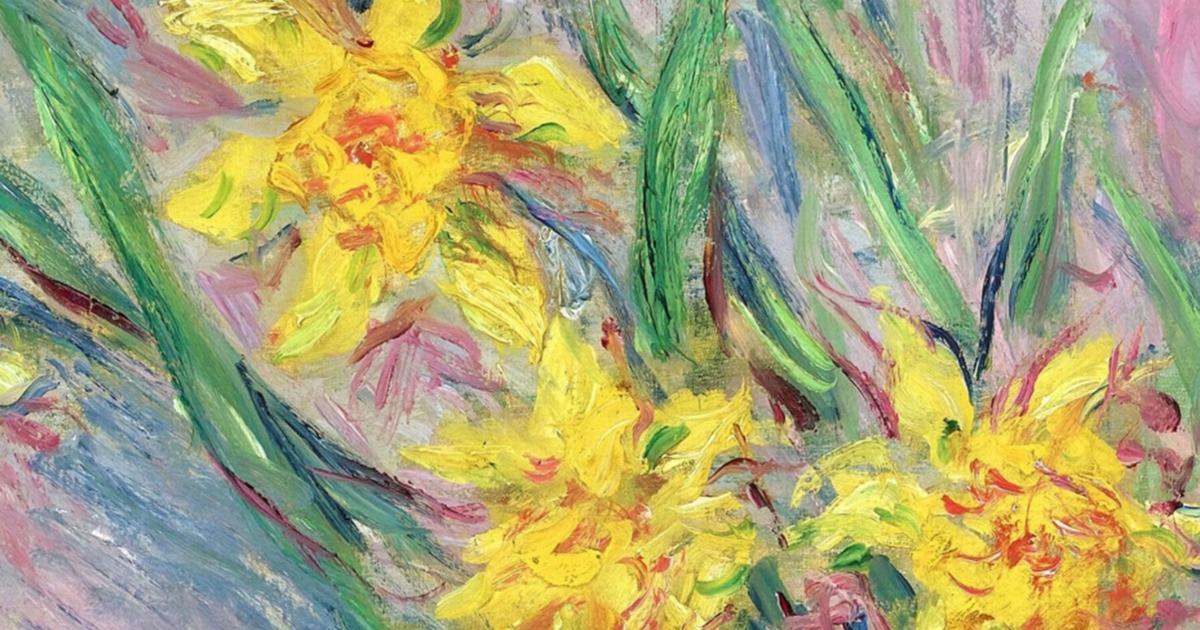
I felt like I was peering into a world I could never access otherwise. One of the reasons I am such a fan of Monet is his style of impressionism. His paintings contain no harsh lines or overly saturated colors, and each one looks seamlessly blended despite the visible brush strokes and dots that build up each scene. In effect, each painting looks plucked from a particularly clear dream, creating a realistic yet uniquely atmospheric rendition of the places Monet saw.
I was wondering about how well these hazy, dreamlike paintings represent Venetian reality when I recalled an essay I had read earlier called “The Decay of Lying” by Oscar Wilde. In this essay, Wilde posits that life is a mirror that reflects realities depicted in art. This idea is summed up in a famous line that you’ve probably heard before: “life imitates art.” Another piece of this essay I found interesting comes after the famed quote, when Wilde writes, “A great artist invents a type, and Life tries to copy it, to reproduce it in a popular form, like an enterprising publisher.”
The idea is a bit abstract, but once it appears in your own life, it’s suddenly everywhere. For example, I am an English major, but I have never been to England. I have never seen what a writer sees when talking about the Tube or Dover’s chalk cliffs, or felt how an artist feels painting the soot of the city as it settles on the River Thames. In all honesty, I am not well-traveled. But I know cities through the eyes of the artists who have mused about them. I understand so many corners of the world as beautiful places, desolate places, fascinating places and mundane places — skylines home to all sorts of life, frozen in paintings and books, photographs and films.
What I mean to say is that I know places I have never been — even places that have never been at all — because of art. But of course, there is nothing like the real thing, and I often wonder how many of my perceptions about the world are accurate, given that I consume so much of it through art.
From Wilde’s point of view, art is no more a reflection of life than it is the essence of reality. There is the artist’s work, and then there is life chasing after it. But is art really a vessel of reality that life tries to capture? At the museum, I stumbled across an informational placard that seemed to pose an answer to this question, one that stuck with me during and after the trip, all the way to the creation of this article.
The placard reads: “(Monet) became increasingly preoccupied with what he called the enveloppe: the ephemeral, colored atmosphere that surrounded and transformed his motifs. As he explained, ‘Other painters paint a bridge, a house, a boat… I want to paint the air in which the bridge, the house, and the boat are to be found — the beauty of the air around them”
As I read the statement, I realized that somehow, more than a century ago, Monet grappled with the question I had been asking myself about whether representations of reality are just as valid as reality itself.
From Monet’s words, I gathered that he believed the purpose of art is to capture how a place is experienced. The enveloppe then becomes another term to describe the feeling of reality. Objectively, Monet paints the bridge, but really, he paints the experience of the bridge. If you were to see the bridge in real life, perhaps it would be essentially the same as seeing the painting. Maybe it doesn’t look the same, but it feels the same. And the feeling is what we take home with us; it is what we remember without needing to look again.
This brings me to the question of whether life imitates art, as it reflects the feeling captured in the reality that art represents. Returning to Wilde’s words, it seems Monet has created a “type” through the enveloppe. In that case, does life attempt to copy the enveloppe? If it does, is it true that life inherently imitates art?
I went home thinking about this. I sounded a little crazy asking my friends if they think life is like an enveloppe. One asked me what I was trying to accomplish by pondering such useless questions — angels on the head of a pin and all that. I’m not really a philosophical person — at least not the type to pretentiously debate random theoretical abstractions. But the concept kept nagging at me. I feel like I see moments of life imitating art all the time, which I think is important because it reminds me how the experience of sharing art, and sharing space with art, brings people together.
For instance, I recently saw a viral video containing images of people recreating Gustav Klimt’s “The Kiss,” a 1909 painting depicting a couple pressed together, their bodies oddly contorted. Here, life literally imitates art. But this happens in more subtle ways, too.
Whenever a friend tells me she posted something specifically for the guy she’s talking to, I think of Gatsby and the green light. A child’s finger reaching for his father’s on BART is almost like Michelangelo’s “The Creation of Adam.” And the story of “Fahrenheit 451” exists all around us, in every person mildly addicted to their screen.
Maybe life imitates art because it is a sort of enveloppe itself. Yes, we experience the important parts of life in set intervals of time — class, work, events. But maybe life really happens in the atmosphere of these moments, in the experience of our realities. Life is what you think about on the bus ride to the grocery store, watching people rotate in and out. Life is the things you see on the walk to class. Life is what you feel just before you fall asleep.
Maybe everything I’m talking about can be summed up in a Tuesday evening I spent watching the sky from the base of the Campanile alongside an assortment of fellow sunset chasers. Clouds puffed over the horizon in a bluish blur, turning the Golden Gate Bridge gray with shadow as the sky blushed just behind it. I saw the scene and thought of Monet’s paintings, that pink-and-blue palette, the airy, blurred quality that made his work look like shadowy dreams. San Francisco was imitating art before my eyes. And though I have been to few places beyond my beloved Bay Area, there I was: engaging in a Monetian experience in a city the artist himself had never seen.