
This year, spring arrived on Mt. Hoo with a mix of happiness and heartbreak.
We are joyful for those seasonal visitors like hooded orioles and black-headed grosbeaks that bring such color and life to our garden.
The youngsters of spring, like coyote pups, newborn squirrels, tiny quail chicks and dozens of little lizards scurrying about always bring happy smiles.
The aerial courtship of red-tailed hawks or the pairing of gentle mourning doves gives us comfort that the cycle of life continues.
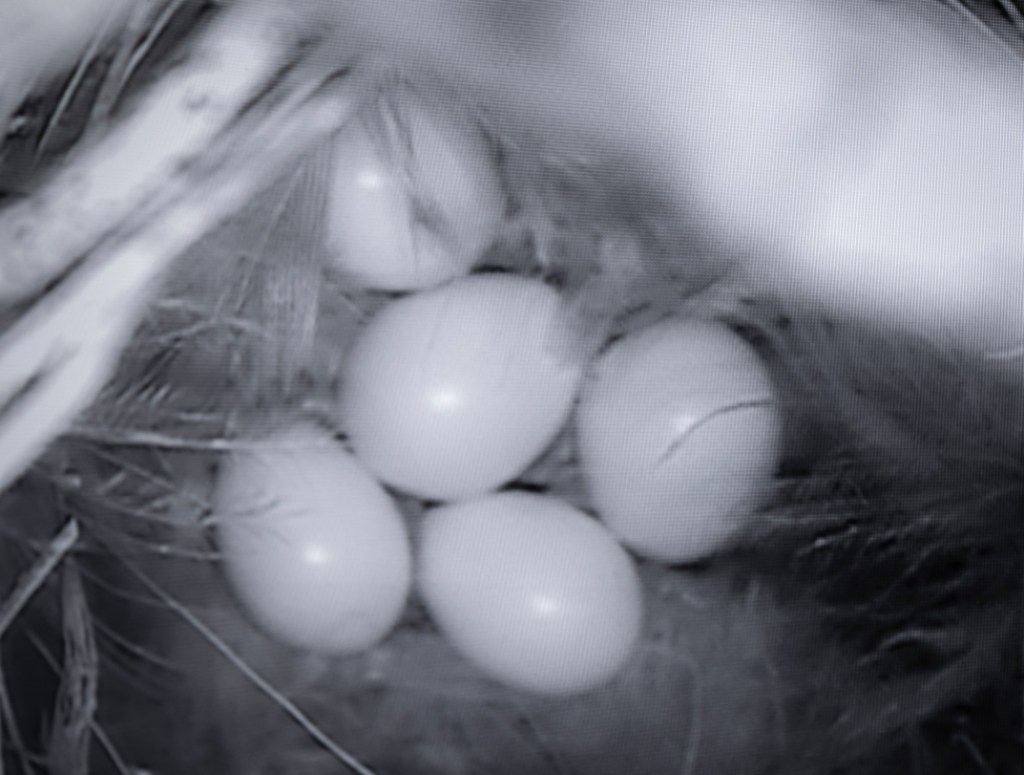
But this year brings heartbreak from what appears to be the failure of the nesting cycle of house wrens in the small nest box just outside our window.
Five eggs were laid, but after 24 days, none have hatched and the female has abandoned the nest.
For nearly 20 years we have enjoyed the nesting cycle of house wrens that begins in early spring with the lilting song of males as they perch on high branches and loudly proclaim their interest in attracting a mate.
In 2018, our interest grew when a tiny camera was installed that allows us to watch the miracle of life unfold inside the 4-inch square nest box.
That year we were awed as a male placed a few twigs in the box to show off his selected nesting site to prospective mates.
Once a female accepted, she completed the nest building and began spending nights inside in early April.
It was a joy to watch her bring in the big timber first, then smaller twigs, grass and finally feathers that would protect the jellybean-sized eggs. She fluffed and formed the perfect cup and spent a few nights inside before the eggs arrived.
The first of seven eggs arrived on April 15, with an additional egg laid each morning. The female wren was dutiful and attentive, rolling the eggs and venturing out less frequently when it was chilly.
Like fretting grandparents, we worried when it was cold or too hot. We discussed putting up a cover of some kind when it rained or a shade fly when days turned unusually warm.
After all, we were new to this but agreed that wrens have been nesting successfully for eons and probably had it figured out.
On May 4 and 5 that first year, all seven eggs had hatched, and both parents were actively engaged in feeding the featherless creatures that looked like a cross between Yoda and a Smurf.
We wondered how seven eggs laid over a week’s time could all hatch at nearly the same time.
A little research told us that incubation does not begin until the eggs reach a certain temperature, which the female controls.
Once all eggs have been laid, she begins warming them by exposing a featherless patch on her belly.
Known as synchronous hatching, this is nature’s way of assuring that chicks hatch at the same time to avoid older, larger chicks dominating the demand for food.
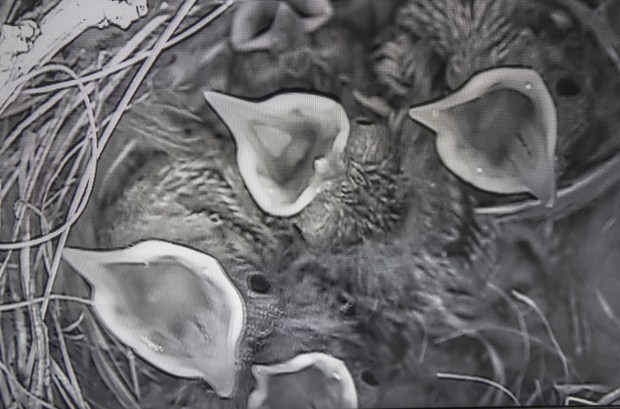 Hungry wren chicks inside the nest last year. (Ernie Cowan / For The San Diego Union-Tribune)
Hatchlings of the same size and age also require similar food, making the feeding process more efficient for adults.
We enjoyed these intimate views as parents fed the chicks, removed the waste sacks they produced and protectively watched over their helpless newborns.
By May 21 that first year, it was total chaos inside the 4-by-4 nest box with constant chattering, flapping of wings and continued demands for food.
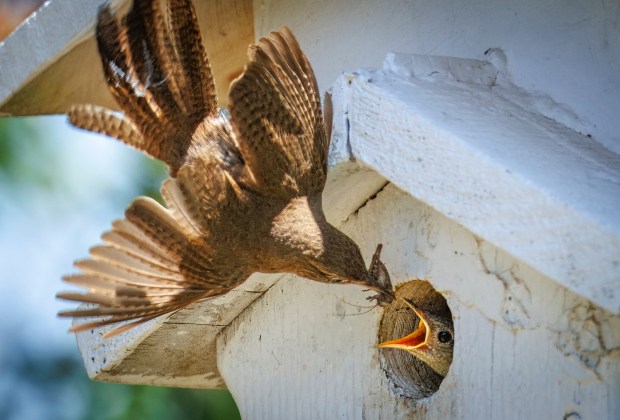 Wren chicks being fed last year. (Ernie Cowan / For The San Diego Union-Tribune)
Imagine, seven chicks and an adult crammed into that small area?
Downy pin feathers had been replaced with real feathers, and parents only brought large caterpillars, spiders and craneflies to the entrance to coax chicks to see what was outside of the nest box.
Early in the morning May 22 there was silence in the nest. Seven chicks had quickly left, taking their songs into the world.
I’ll be honest. It was an incredibly emotional moment for Kati and me.
The annual miracle continued with seven eggs each year.
There was drama in 2020 when an unpaired male raided the nest, and I just happened to be watching as he tossed the seven chicks out of the box.
I dashed outside, picked up the helpless little birds and returned them to the nest. The raider returned a second time and ejected the chicks again.
I again placed them back inside and sat nearby for several hours to shoo the raider away.
Sadly, only three survived the trauma and fledged.
In 2021, there was no wren nesting on Mt. Hoo, but in 2022 there were seven eggs and seven fledglings.
In 2023, only five eggs were laid and four hatched. One hatchling did not survive, but three successfully fledged.
There were seven eggs and six hatchlings in 2024, and last spring we were back to seven eggs; six hatched.
This year has been heartbreaking.
Starting early in March, we heard the joyful song of a male wren singing for a mate.
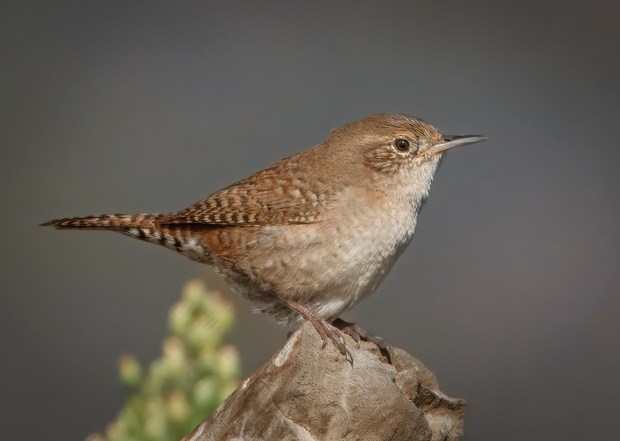 An adult house wren. (Ernie Cowan / For The San Diego Union-Tribune)
On Easter morning, April 5, the first egg arrived followed by one more each day for a total of five.
Typically, wren eggs hatch in 12 to 15 days, but by May 4, none had hatched and the female had abandoned the nest.
We are saddened by this outcome but trust that nature has a plan.
There are several reasons the nest may have been abandoned, including aggression from other wrens, the loss of a mate that would normally help with feeding and protection, or eggs that were not fertilized.
It’s early enough in the season that another wren may adopt the nest box and produce a successful clutch.
Perhaps another spring will bring our little nest box back to life.
Being a grandwrenparent is a special thing.
Cowan is a freelance columnist. Email ernie@packtrain.com or visit erniecowan.substack.com.