
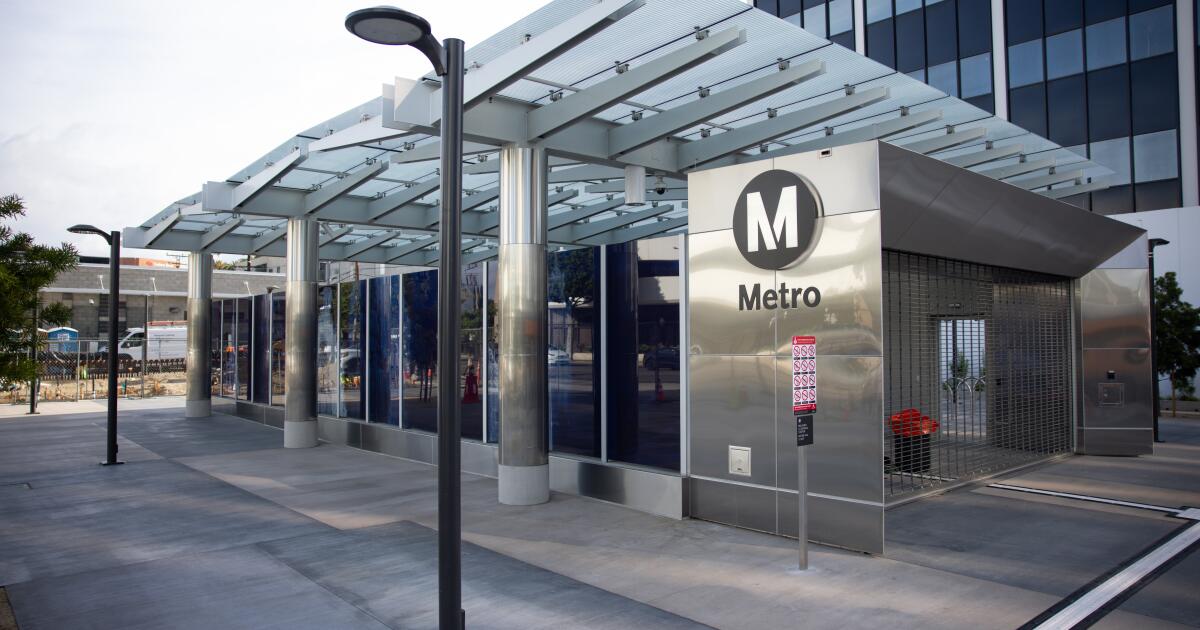
The first phase of Los Angeles’ much-anticipated subway extension under Wilshire Boulevard finally opened, linking Beverly Hills to downtown.
You’re reading the Essential California newsletter
Sign up to start every day with California’s most important stories.
By continuing, you agree to our Terms of Service, which include arbitration and a class action waiver. You agree that we and our third-party vendors may collect and use your information, including through cookies, pixels and similar technologies, for the purposes set forth in our Privacy Policy such as personalizing your experience and ads.
The $9.7-billion D Line extension covers 3.92 miles and includes three new underground stations at Wilshire/La Brea, Wilshire/Fairfax and Wilshire/La Cienega. They offer easy access to several L.A. landmarks, such as the newly reimagined Los Angeles County Museum of Art, the Academy Museum, the Grove and the Beverly Center.
According to Metro, the new subway will significantly reduce travel time. A journey from Union Station to Wilshire/La Cienega that would typically take up to 45 minutes by car will take just 21 minutes.
By fall 2027, the line will stretch nine miles west, ending in Westwood near the UCLA campus.
The Metro project is part of a larger Southern California rail expansion, my colleagues wrote, aimed at creating a viable grid of public transit that connects L.A.’s sprawling communities. If finished in time, it’ll also serve visitors in the city for the 2028 Olympic and Paralympic Games.
Transit experts expect that the high-density area and popular destinations along the D Line extension will immediately draw riders. The jury is still out on whether large numbers of Angelenos are ready to ditch their cars to ride on the subway.
Why luring riders may be a challenge
Despite the success of some Metro lines that have long packed passengers — the A and B Lines saw around 16 million to 17 million weekday riders in 2025 — getting Angelenos out of their cars and onto mass transit will likely be a challenge.
It needs to be “the best way to get around,” said Brian Taylor, a professor of urban planning and public policy at UCLA’s Luskin School of Public Affairs and a research fellow at the university’s Institute of Transportation Studies.
That becomes the case, he told The Times, when the rail line is convenient, timely and consistent, while driving becomes less attractive.
The D Line’s location will afford it some advantages, but location isn’t necessarily enough.
Its trains are supposed to run from 4 a.m. to 12:30 a.m. each day, arriving every 10 minutes most of the day and every 20 minutes in the late-night hours, starting around 9 p.m., according to Metro officials.
Jacob Wasserman, a research program manager at the UCLA Institute of Transportation Studies, told The Times he worried that long wait times, especially during off-peak hours, could deter riders.
“Late at night, you might not need the service you do [in] rush hour,” he said. “But every 20 minutes! You come in, you see the next train is in 19 minutes, you take an Uber.”
Why it took so long to build a subway beneath Wilshire
In 1962, then-Gov. Edmund G. Brown supported local California officials’ plans for a new “Back Bone Route” that would stretch west along L.A.’s most bustling thoroughfare to the sea.
As The Times’ Jenny Jarvie reports, no one back then thought it would take 65 years of political battles, funding struggles and worsening motor traffic for the Wilshire subway actually to open.
But the story of why it took L.A. so long to build a subway beneath Wilshire involves much more than a failure to get state or federal funding.
Over the years, different iterations of the subway project have been blocked by political infighting and local opposition from some neighborhoods.
“It was so hard to get everybody on the same page,” said Ethan Elkind, author of “Railtown: The Fight for the Los Angeles Metro Rail and the Future of the City.” So many corners of the region were competing for rail — or in some cases, as with Hancock Park and the Fairfax District, fighting against rail.
“There was no one who could step in with any power or authority and just make a decision,“ he said. “Eventually, I think we stumbled on the right thing to do, but it’s come at a huge … time delay and very high costs.”
Read more from our coverage of the D Line extension:
Meet four artists behind the public art you’ll see at L.A. Metro’s new D Line stations
The Wilshire subway should be a slam dunk for L.A. But luring riders may be a challenge
Why it took 65 years for L.A. to build its most important rail line
L.A.’s long-awaited subway under Wilshire Boulevard opens, linking Beverly Hills to downtown
Today’s top stories 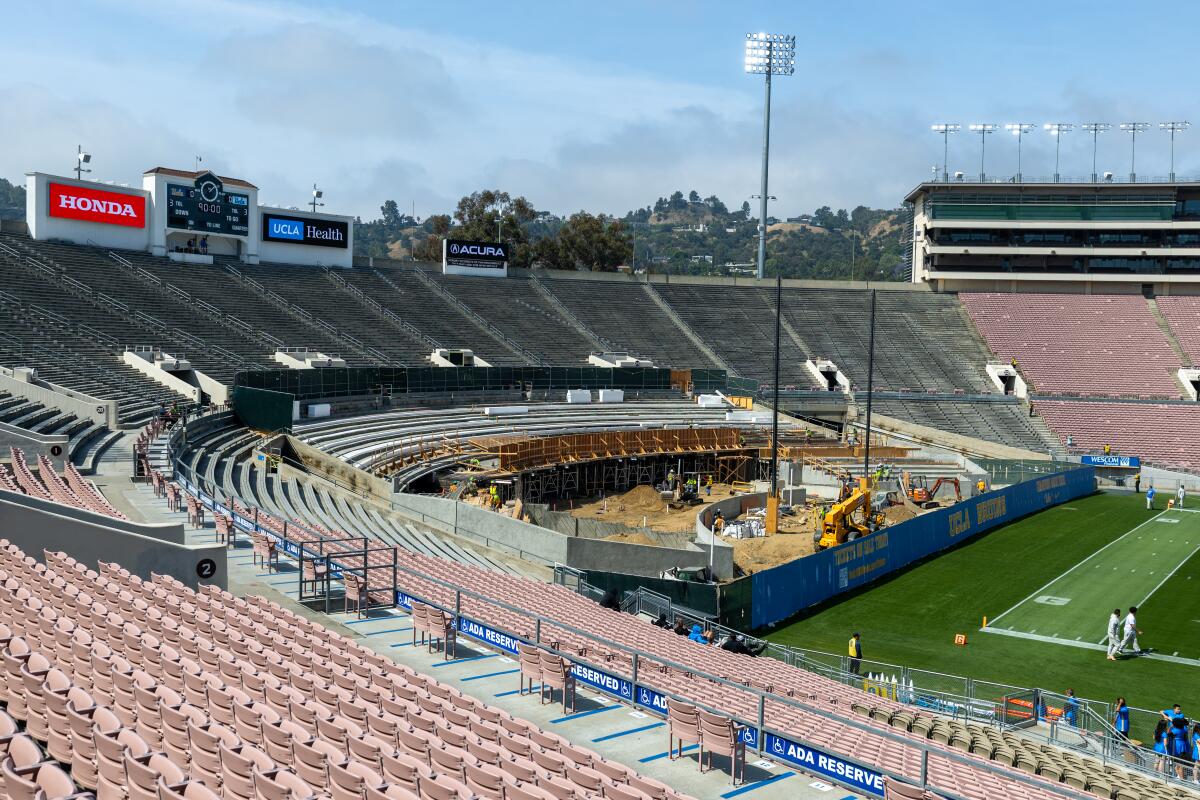
Work is underway at the Rose Bowl on May 2.
(Allen J. Schaben / Los Angeles Times)
Inside the Rose Bowl’s $30-million makeoverThe Rose Bowl is converting 5,000 bench seats into a premium field-level club that will seat more than 1,000 fans, plus luxury amenities including a bar with 360-degree views.UCLA is staying put for next season, ending its flirtation with SoFi Stadium. The renovations are expected to be done in time for the Bruins’ home opener on Sept. 12.The battle for a Southern California congressional districtTwo Republican incumbents are locked in a fierce primary battle for Southern California’s 40th Congressional District after redistricting forced Young Kim and Ken Calvert to compete against each other.Democrats and an independent candidate are seeking to capitalize on voter frustration with partisan gridlock, offering a potential opening in a region that typically leans heavily Republican.California tribes could help run their ancestral redwoods againWhat else is going onCommentary and opinionsThis morning’s must-readOther must-readsFor your downtime 
A mix of regional Iranian breads and pastries.
(Bill Addison / Los Angeles Times)
Going outStaying inA question for you: With three new stations open, will you ride L.A. Metro’s D Line?
We want to know why or why not. Email us at essentialcalifornia@latimes.com, and your response might appear in the newsletter this week.
And finally … your photo of the day 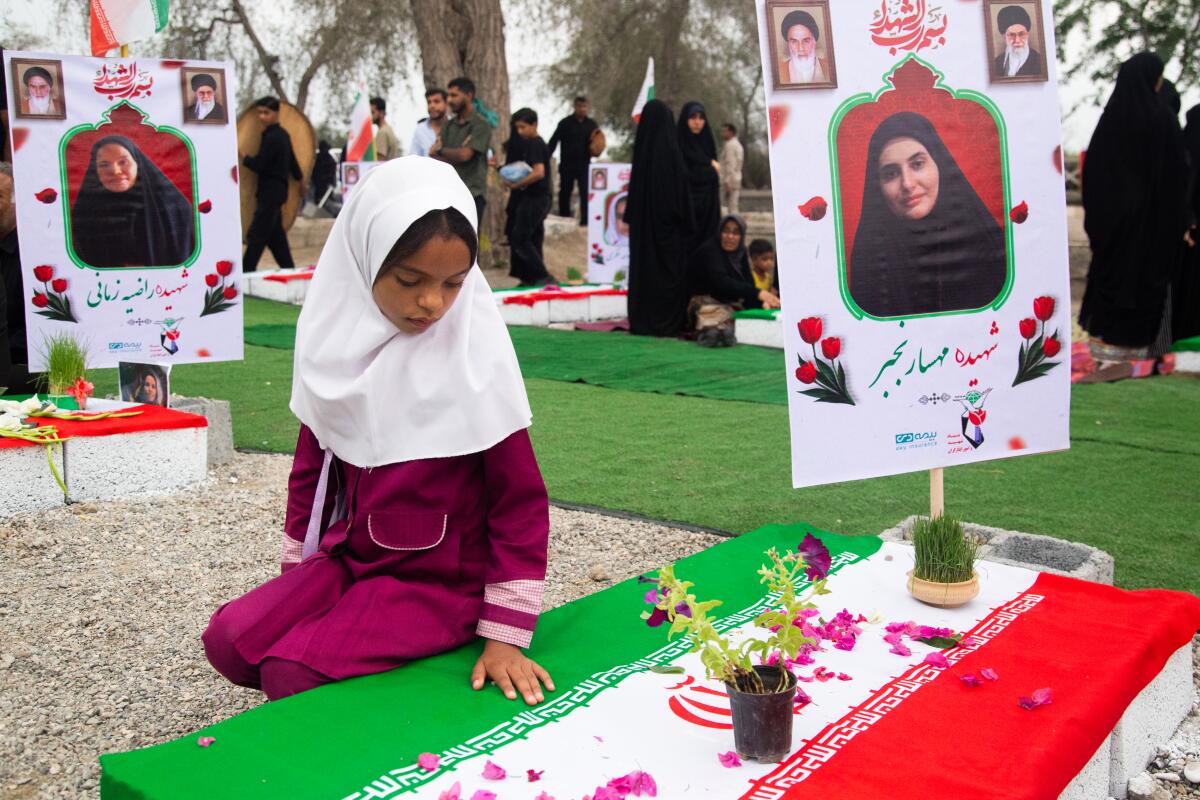
A student sits by the grave of Mahsa Ranjbar, 28, a sixth-grade teacher killed in the missile strike on the Shajareh Tayyebeh Elementary School in Minab, Iran, on Feb. 28.
(Zohreh Saberi / For The Times)
Today’s powerful photo is from Times contributor Zohreh Saberi in Minab, Iran, where a Feb. 28 missile strike on Shajareh Tayyebeh Elementary School killed at least 156 people, including 120 students and 26 teachers.
Iranian families recounted their desperate attempts to find survivors after the school bombing.
Have a great day, from the Essential California team
Jim Rainey, staff reporter
Hugo Martín, assistant editor, Fast Break desk
Kevinisha Walker, multiplatform editor
Andrew Campa, weekend writer
Karim Doumar, head of newsletters
How can we make this newsletter more useful? Send comments to essentialcalifornia@latimes.com. Check our top stories, topics and the latest articles on latimes.com.