
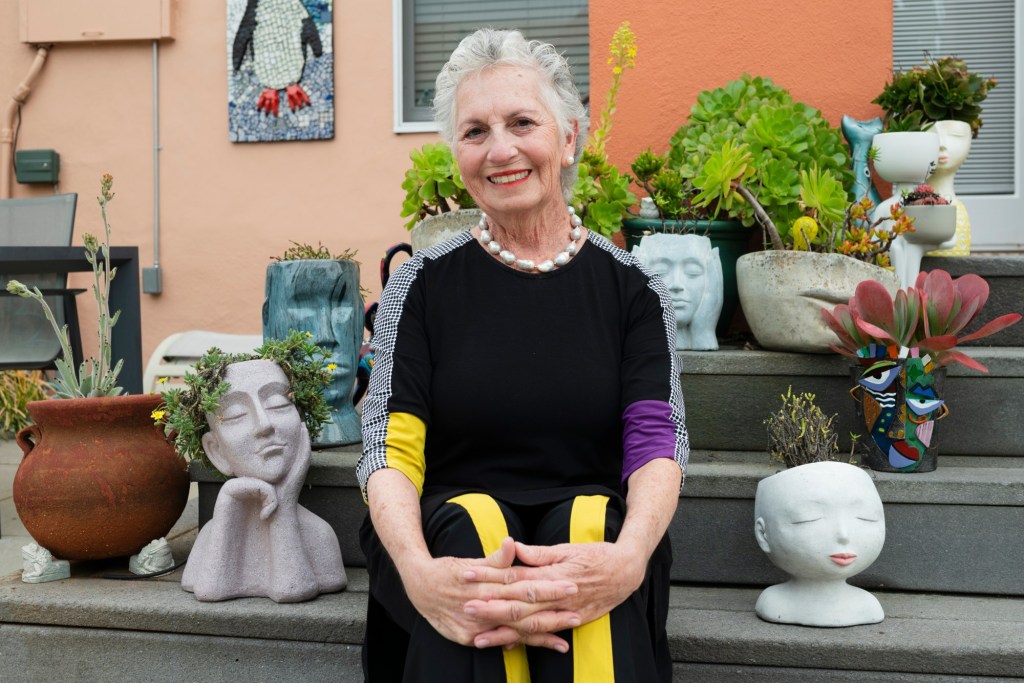
On a typical day you’ll find Sonia Ancoli-Israel walking with a group of female friends, playing mahjong, reading a book or attending a Pilates class. She has lived in the same San Diego house for 43 years and only got to know many of her neighbors after retiring.
Her life today is very different from the decades she spent reading polysomnograms or standing before research audiences explaining her groundbreaking discoveries about sleep disorders. But for someone who devoted 45 years to studying circadian rhythms, she’s discovered that retirement has its own natural rhythm — one that includes morning walks, travel, photography, time with her four grandchildren, all of whom live nearby, and her continued engagement in the San Diego Jewish community.
And now the professor emeritus of psychiatry at the UC San Diego School of Medicine in La Jolla is being honored as the 2026 Scientist of the Year by the San Diego chapter of the ARCS (Achievement Rewards for College Scientists) Foundation.
The ceremony will be held from 4 to 8 p.m. Sunday, May 17, at La Jolla’s Conrad Prebys Performing Arts Center. For more information, visit san-diego.arcsfoundation.org/2026-SOY-celebration.
Ancoli-Israel’s lengthy list of other honors includes the Sleep Research Society’s Distinguished Scientist Award and the National Sleep Foundation’s Life Time Achievement Award.
When she retired in 2012 at age 60, it wasn’t because she had planned to. Her husband, Andy, a well-known internal-medicine physician, was diagnosed with posterior cortical atrophy, a rare form of early-onset Alzheimer’s disease. The irony wasn’t lost on her. After decades studying sleep in Alzheimer’s patients and the toll it takes on caregivers, she was about to live it.
“I wanted to make the most of the time we had left together,” she said. “Andy was my heart and my soul — the most supportive husband I could have asked for. He not only encouraged me to believe in my own dreams, but he also believed in them himself. I’ve no regrets.”
They had a few good years of travel before she became his full-time caregiver. Andy died in October 2020 just before his 69th birthday.
Ancoli-Israel’s research helped establish that sleep apnea and periodic limb movements are very common in older adults. She pioneered the use of light therapy in nursing homes and was among the first to study sleep and circadian rhythms in women with breast cancer.
Ancoli-Israel has visited more than 100 countries, and her blog, Journeys with Sonia, includes photos along with details about her trips to Vietnam, Cambodia, Mongolia, Japan and more. She likes to “go off the beaten track”— experiencing animals in their natural habitats, such as blue-footed boobies in the Galapagos or sun bears in the wilds of Borneo, or learning about a different culture when she attended the Tapati festival sponsored by the Rapa Nui on Easter Island.
Ancoli-Israel was born outside Tel Aviv, Israel, to Holocaust survivors, and her Jewish heritage has always been central to her identity. In the mid-1990s, she participated in a two-year leadership course on Judaism that proved transformative.
“We studied the Bible, the New Testament, the Koran and so much more,” she recalled.
That deep dive into religious texts inspired one of her favorite papers — a scholarly exploration of what Hebrew tradition says about sleep.
“Turns out many things we think we discovered were already referenced thousands of years ago,” she said. “There really is nothing new under the sun.”
At UC San Diego, she is a co-investigator on grants, writes papers, gives talks and until recently served on the executive board of the UCSD Center for Circadian Biology. She still gets invited to speak internationally.
Her advice for seniors struggling with sleep? “Get bright-light exposure during the morning — that’s why I walk every morning. Keep a regular sleep schedule. Go to bed when you’re tired. And don’t just lie in bed awake. If you can’t sleep and find yourself getting tense and anxious, get up and do something relaxing until you feel sleepy again.”
She also emphasized that many sleep problems in older adults are treatable. “Too many people accept poor sleep as just part of aging. It shouldn’t be.”
Another tip: “Get rid of your clock. Timepieces don’t belong in the bedroom. They just wake you up more and make you more anxious about not sleeping. If you need an alarm, stick it under the bed.” ♦