
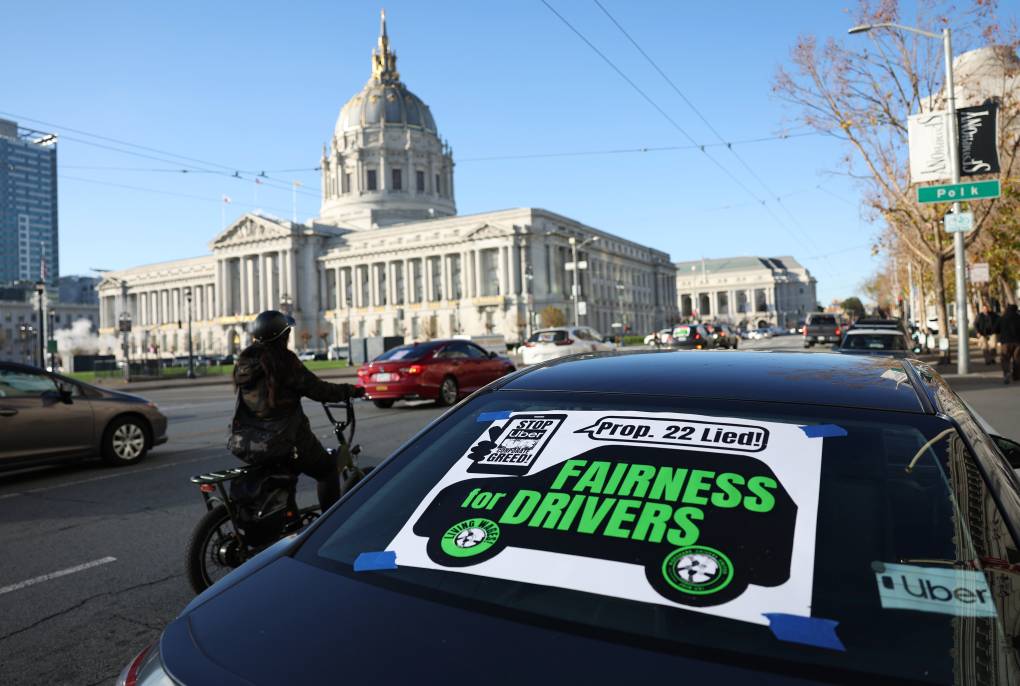
“Together we can win better pay, safer working conditions and real protection for gig workers across California,” said long-time driver Hector Castellanos, a 56-year-old Antioch resident who has organized fellow gig drivers for years.
Castellanos said he was unable to work for months after a 2017 accident that required him to undergo shoulder surgery. His daughter dropped out of college to help pay the bills, he added.
“I know my story is not unique. So many drivers for Uber and Lyft have been left struggling after getting hurt on the job,” he said.
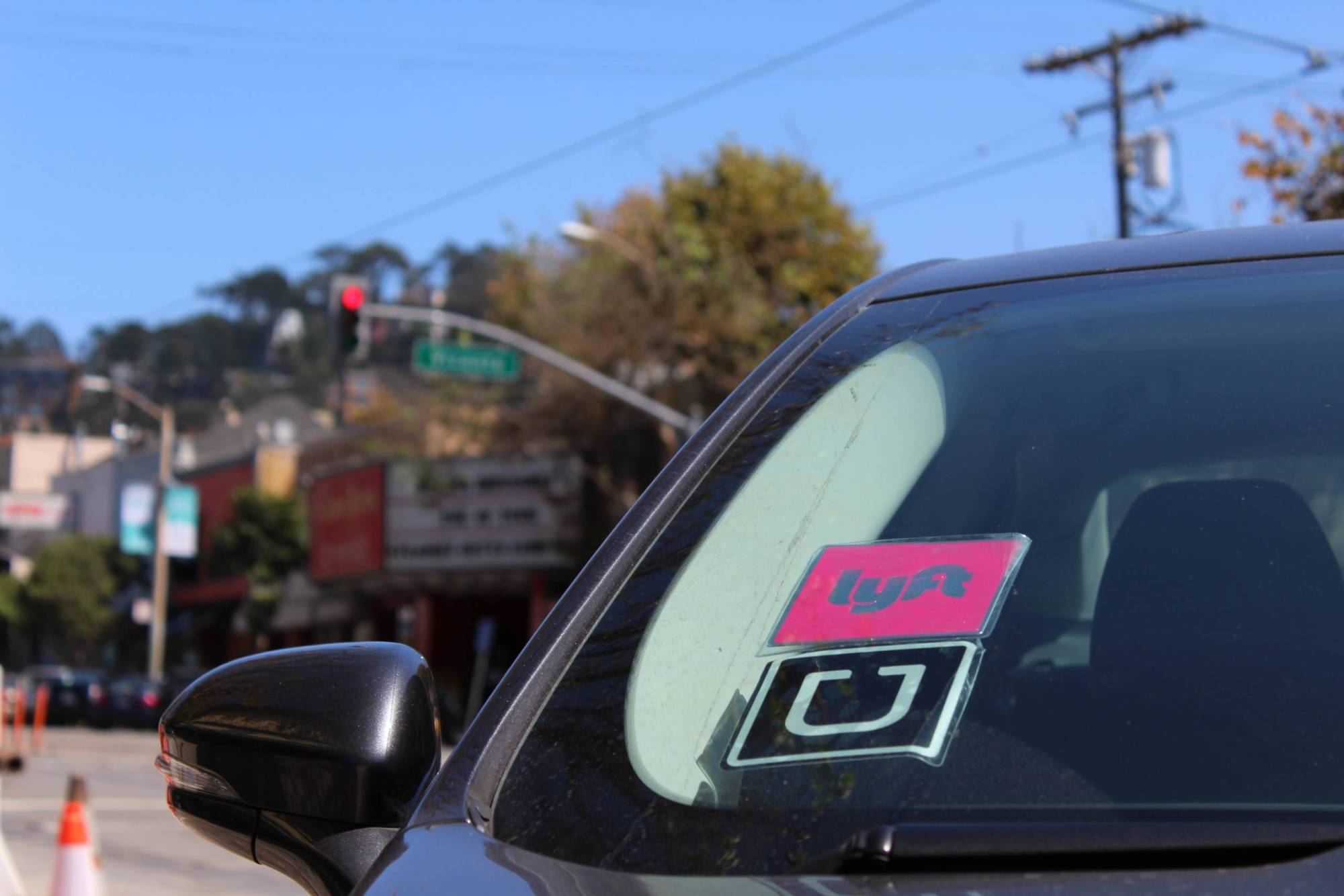 Proposition 22 allows gig companies such as Uber, Lyft and the like to classify their drivers as independent contractors rather than employees. (Ericka Cruz Guevarra/KQED)
Last year, California became the second state in the nation to grant an estimated 800,000 rideshare drivers a legal path to bargain collectively through AB 1340, which was sponsored by the Service Employees International Union.
Uber, Lyft and other app-based companies have fought to keep drivers classified as independent contractors, who are excluded from federal law granting employees the right to unionize and earn minimum wage, overtime pay and other protections.
The rideshare companies, which initially opposed the state measure, agreed to support it after a deal they described as “historic” with the governor, legislative leaders and SEIU California, which reduced the companies’ insurance requirements. The law, which does not cover delivery drivers, went into effect this year.
“Today’s petition filing is exactly the democratic process the law was designed to enable — drivers exercising their right to organize if they choose,” said Zahid Arab, an Uber spokesperson, in a statement. “We remain committed to working constructively within this framework, which protects the independence and flexibility drivers have consistently said they value most.”