
Good news from Iran is hard to come by, a situation that has prevailed since the Islamic Revolution of 1979. But 2026 has marked a new nadir for one of the world’s oldest civilizations, with the government’s massacre of anti-regime protestors in January and widespread destruction from the United States’ and Israel’s intermittent war.
For Iranian artists long exiled from their homeland, the conflict has heightened the difficulties and dangers of keeping in touch with family and colleagues in Iran.
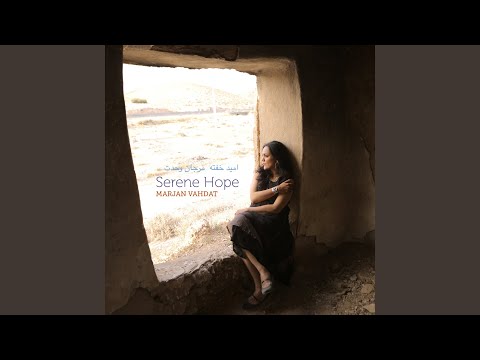
“We have been cut off,” said Sacramento-based vocalist Marjan Vahdat, who performs at The Freight in Berkeley on May 24 in a concert co-presented by Pleasant Hill-based Diaspora Arts Connection.
“People can buy internet access but it’s very expensive. No matter what happens the government isolates people. The executions of protestors don’t stop, and they use them as a tool for spreading fear.”
Vahdat is no stranger to the government’s tactics. She and her sister, Richmond-based vocalist Mahsa Vahdat, were forced into exile when they were charged with performing outside unveiled, after a rooftop video of them went viral on YouTube. As female performing artists they were essentially banned from pursuing their calling at home.
“Since the revolution my family was in trouble,” Vahdat said. “We couldn’t go to the university. After high school I had to go to Germany to study musicology. After facing my sentence I had to move again. I was not able to perform in Iran but I wanted to keep the base in Iran. I left about eight years ago.”
A regular collaborator with Kronos Quartet, Vahdat presents a different side of her music in collaboration with Orange County-based Sahba Motallebi, a Grammy Award-winning master of the six-string tar, an essential instrument in classical Persian music. Motallebi doesn’t usually perform as an accompanist for vocalists, and the Freight performance marks a reunion for a relationship that started when they were teens in Tehran.
“We used to play in Baháʼí community events when we were so young,” Vahdat said. “When I found she lives in Orange County we said let’s go to the stage together.”
Focusing on Vahdat’s repertoire of classical settings for verse by great Persian poets both ancient (Hafez, Rumi) and contemporary (Forough Farrokhzad), as well as songs she’s gathered from Iran’s various ethnic groups, the project includes percussionist Nariman Assadi on tombak and daf.
Rather than performing as defiance against repression, Vahdat sees singing as an act of strength, resilience and self-protection. “This is my safe zone, a sanctuary where I feel the best,” she said. “It’s ultimate freedom. As someone who had to leave Iran and live in exile, I find my home in my music and voice and teaching.”
If Vahdat’s music is a bridge that connects classical practice with contemporary urgency, vocalist Mamak Khadem brings Persian classical vocals into trance music settings in Axiom of Choice with guitarist Loga Ramin Torkian. A creative force on the world music scene in the 1990s, the Los Angeles ensemble is playing two reunion concerts, regrouping for the first time in two decades May 16 at Marines’ Memorial Theatre in San Francisco.
Axiom also performs in L.A., and while the concerts were planned before the outbreak of war, Khadem sees her music as a response to the divisions that have beset the Iranian diaspora, with some seeing the conflict as a potential opportunity for overthrowing the regime. She sees the war as an unmitigated disaster.
“I’m totally against the Islamic Republic, but right now a lot of people are pro-war and say that people against the war are backing the Islamic Republic,” she said. “That’s ridiculous.”
In the Bay Area, some in the Iranian community have been gathering weekly at Central Stage in Richmond for dialogue and support and sharing information gleaned from family and friends in Iran. A manifestation of that spirit takes place May 15 at Ashkenaz in Berkeley, where oud player and composer Sirvan Manhoobi leads “Sirvan Manhoobi/Chant of Compassion: A Benefit Concert for Iran.”
A fundraiser for the Keep Children in School Foundation’s emergency relief fund, which provides food, clothing and other basic needs to more than 6,000 families in Iran, it’s a talent-rich gathering of Persian musicians, including percussionist Nariman Assadi.
Like Manhoobi, several of the players have worked extensively in productions by Diaspora Arts Connection, which focuses on Iranian performers but also includes artists from across the wider region.
In the face of differences in musical approach and politics, music and poetry help bring the diasporic world together.
“What makes a difference in how I listen, it’s not the type of music someone does,” Mamak said. “It’s all the elements that make a good project, and beautiful voices like Marjan and her sister.”
Contact Andrew Gilbert at jazzscribe@aol.com.
IRANIAN MUSICIANS ON STAGE
Mehrekani/Chant of compassion: 8 p.m. May 15 at Ashkenaz, Berkeley; $25- $100; www.ashkenaz.com.
Axion of Choice: 7:30 p.m. May 16 at Marines’ Memorial Theatre in San Francisco; $56-$127; www.diasporaartsconnection.org
Marjan Vahdat and Sahba Motallebi: 7 p.m. May 24 at The Freight, Berkeley; $39-$64; www.thefreight.org