
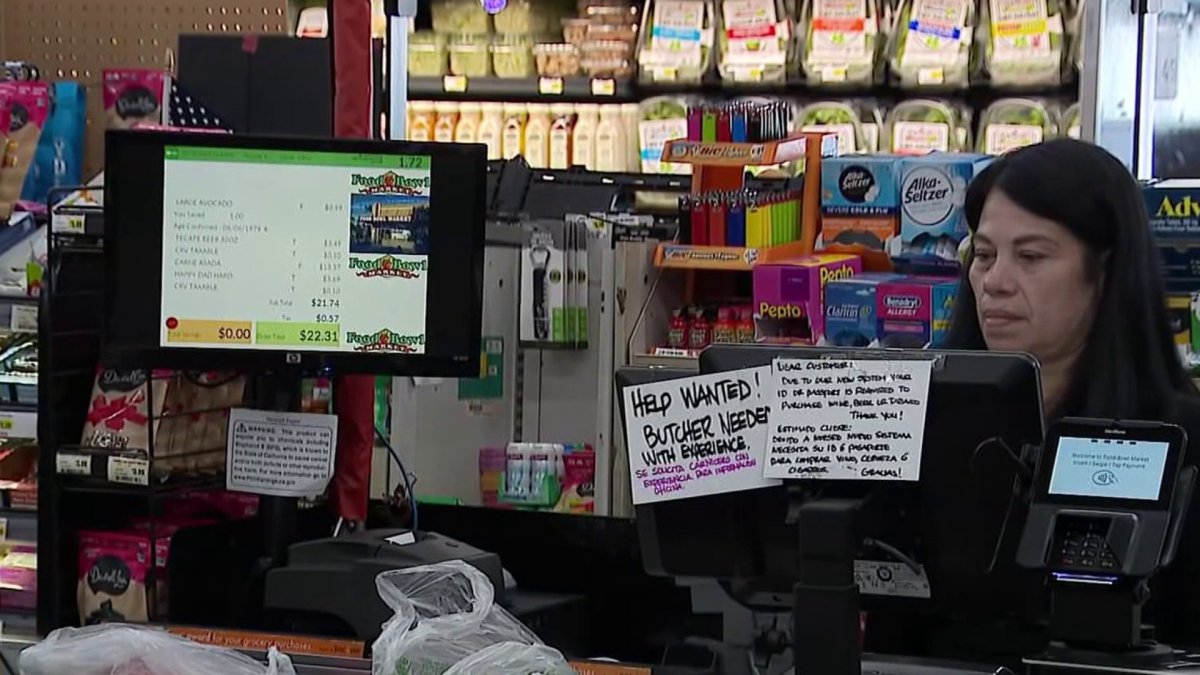
County leaders Thursday reminded CalFresh recipients that November benefits would not arrive Saturday and asked San Diegans to step up and help their neighbors.
Due to the ongoing federal government shutdown, the nearly 400,000 San Diegans who receive CalFresh benefits will see a delay in payouts. More than 395,000 people in nearly 240,000 households receive CalFresh benefits in San Diego County, based on income. The nearly month-long shutdown means a delay in November benefits for about 42 million Americans, including 5.5 million in California. More than 63% of California’s SNAP participants are children or elderly.
“No one should find out at the grocery store that their benefits didn’t reload,” said San Diego County Board of Supervisors Chair Terra Lawson-Remer. “Republicans in Congress’ failure to fund the government will mean thousands of San Diego families will have to start thinking about where their next meals will come from.
“We’re coordinating with local partners to ensure we are meeting these food insecurity needs — and we’re asking our community to step up for one another.”
CalFresh is the California version of the federal food assistance program also known as the Supplemental Nutrition Assistance Program, commonly referred to as EBT or food stamps. The program is entirely federally funded, but is managed by states and administered by counties.
The length of the delay for November benefits is unknown at this point and depends on the resolution of the shutdown.
“The reality is that mothers, children, veterans and seniors will bear the greatest impact of SNAP delays,” said Board Vice Chair Monica Montgomery Steppe. “Together with our federal and community partners, we remain committed to clear communication and decisive action to support residents through this period of uncertainty.”
Californians can still use CalFresh benefits left over from previous months. CalFresh beneficiaries can check their balance by calling the number on the back of the EBT card.
Local food resources and information are available through the 211 San Diego web page or by calling 211 San Diego. Additionally, a list of food resources such as food banks and pantries can be accessed at Feeding San Diego’s website.
“Our team is available 24 hours a day, 7 days a week, in more than 200 languages, ready to connect people to local food banks, pantries, and meal programs,” said Bill York, CEO of 211. “Anyone in need can simply call 211 to speak with a trained specialist — or visit 211SanDiego.org.”
Government leaders had until last Thursday to hash out a deal to end the shutdown without impacting federally funded programs such as SNAP/CalFresh. They did not meet that deadline.
Democrats and Republicans blame each other for the debacle, with Democrats refusing to vote on a budget bill without an extension of subsidies under the Affordable Care Act to keep health care premiums down, and Republicans refusing to budge on the matter.
“This is the first time in American history that a president has cut off SNAP during a shutdown, including Trump in his first term,” said Rep. Juan Vargas, D-San Diego. “Let me be clear, Trump has the funds and the legal authority to keep SNAP going next month. He is choosing not to. This is a moral failure, and we are urging the president to reverse course on this disgusting decision.”
According to the Center on Budget and Policy Priorities, SNAP has a contingency fund of about $6 billion, more than $5 billion of which should be available for use toward SNAP benefits, covering a large portion of the roughly $8 billion due in November.
The USDA head can also move funds among different nutrition programs, which it did earlier this month, transferring $300 million in tariff revenue to the Special Supplemental Nutrition Program for Women, Infants and Children (also known as WIC).
“As a member of the House Appropriations Committee, I know how these programs are funded and how USDA’s backup funds are structured,” said Rep. Mike Levin, D-San Clemente. “Congress set aside about $6 billion in emergency reserves for exactly this kind of crisis — to make sure families can still buy food during a shutdown.
“That money is sitting at USDA right now. The department has the legal authority to use it. And a shutdown is clearly an emergency. Refusing to use that money when tens of millions of people are counting on it is indefensible.”
As a result of the shutdown, local nonprofits and food banks expect to shoulder much of the burden. The Jacobs & Cushman San Diego Food Bank said it expects additional costs of $500,000.
“The CalFresh benefit delay is a crisis for nearly 400,000 San Diegans who rely on this vital support to feed their families,” said Casey Castillo, CEO of the Jacobs & Cushman San Diego Food Bank. “We’re already seeing a surge in demand across our network, and we anticipate a shortfall of up to 16 million meals in November alone.
“The Food Bank is mobilizing emergency resources to meet this unprecedented need, but we can’t do it alone. We’re calling on our community to step up — whether it’s volunteering, donating, or hosting a virtual food drive. Together, we can ensure no one in San Diego County goes hungry.”
Gov. Gavin Newsom last week said he would deploy the California National Guard to the state’s food banks to assist.
“We are already seeing the impact of the shutdown. Food distributions are up dramatically — over 75,000 pounds above our normal levels in just 11 days,” says Robert Kamensky, CEO of Feeding San Diego. “That number will climb as nearly 400,000 San Diegans lose access to their CalFresh benefits on November 1. This is a crisis of access; supply is available, and our network is mobilized to meet the need.”
Anyone can volunteer (ages 16+ may volunteer independently; ages 11-15 may volunteer with an adult) by visiting feedingsandiego.org/get-involved/volunteer or sandiegofoodbank.org/volunteer. People must register in advance and wear closed-toed shoes.
People can visit SanDiegoFoodBank.org for assistance and resources, or to make to a donation.
Additionally, Jewish Family Service has resources for federal employees, available at jfssd.org/government-shutdown/