
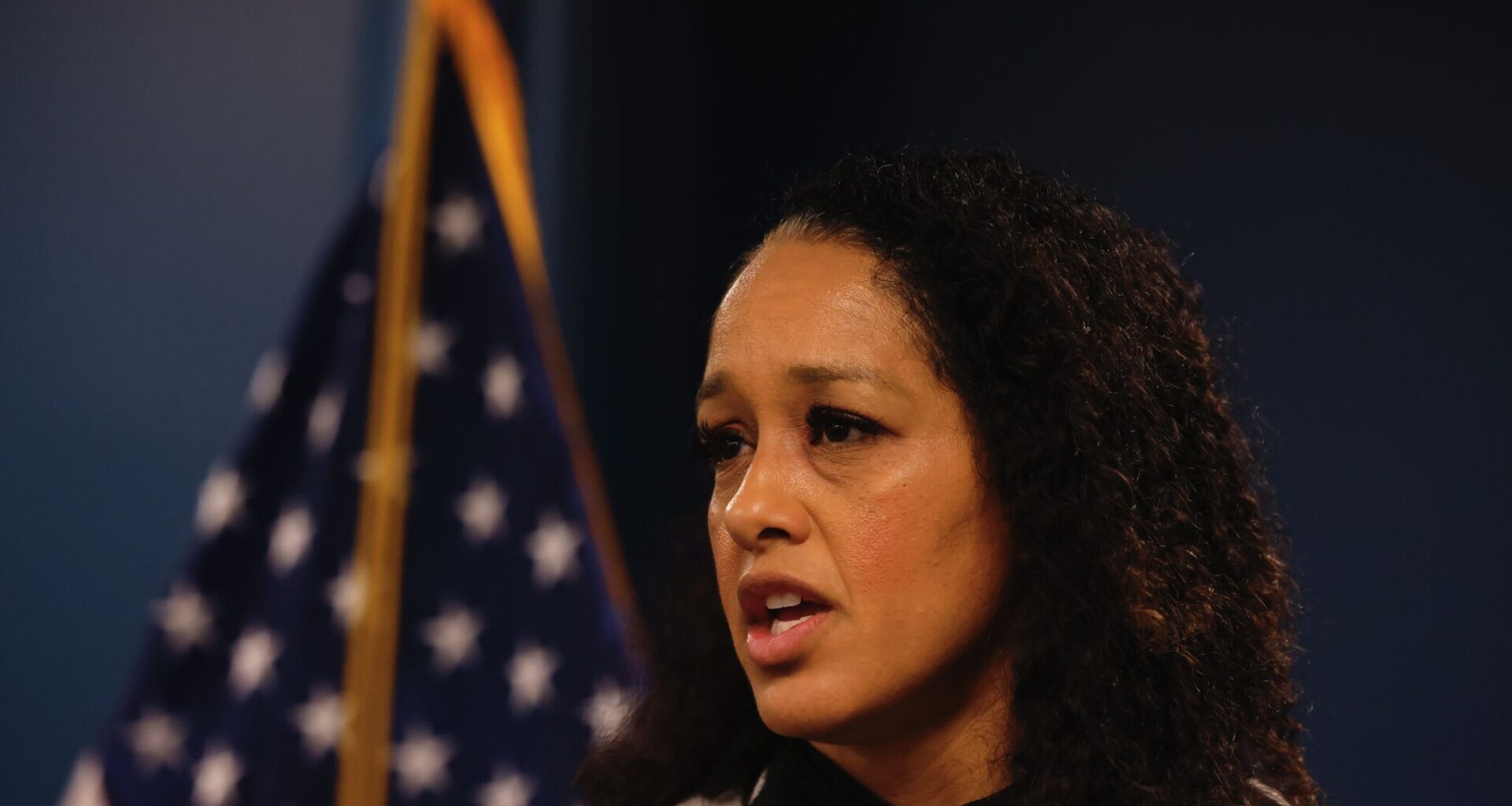
San Francisco District Attorney Brooke Jenkins, said on Thursday the expansion of Drug Court has allowed “violent and dangerous offenders into the court, scaling up in a manner that I believe is destructive to the program.”
Lea Suzuki/S.F. Chronicle
Staffing shortages, a growing case load and high drop out rate have plagued San Francisco’s Drug Court in recent years. City officials debated the program’s effectiveness and future at a hearing at City Hall Thursday after a Chronicle investigation earlier this year raised serious questions about the program’s effectiveness and scope. It found that some defendants in the program had been charged with serious, sometimes violent, crimes.
Defense attorneys and city officials involved in Drug Court answered sharp questions from lawmakers during a hearing Thursday at City Hall.
The Drug Court was established in 1995 to create an alternative to criminal prosecution and jail time for people convicted of low-level crimes who are struggling with addiction, but in 2018, a state law expanded the program, allowing defendants diagnosed with mental health disorders to be diverted into the program out of traditional criminal proceedings. It also let defense attorneys ask judges to allow their clients to be diverted into Drug Court even if a prosecutor objected.
Article continues below this ad
The change has led to a significant expansion of the program’s scope. San Francisco District Attorney Brooke Jenkins, said on Thursday the expansion has allowed “violent and dangerous offenders into the court, scaling up in a manner that I believe is destructive to the program.” But proponents, including the San Francisco’s Public Defender’s Office, say the program, though imperfect, is working well.
Today, there are 420 people enrolled in treatment programs through the court, according to the Department of Public Health, which administers the treatment programs. But the department has staffing to manage just 260 people, Jose Luis Guzman, the director of the DPH’s Drug Court program, said at Thursday’s hearing.
San Francisco Chronicle Logo
Make us a Preferred Source to get more of our news when you search.
Add Preferred Source
Some defendants who had been accepted into the court have waited up to four months in jail before treatment spots open up, according to the Chronicle’s reporting. There are bottle necks particularly for defendants who are monolingual Spanish speakers or who struggle with addiction and mental illness that both require specialized treatment, Guzman said.
Jenkins told lawmakers that the number of defendants entering Drug Court because of mental health conditions has risen dramatically over the last four years, placing significant stress on the system. As the number of defendants rises, the public health department staffing levels have stayed flat, Guzman said.
Article continues below this ad
The influx of defendants through the mental health diversion criteria amounts to a “pattern of abuse” that “has watered down the effectiveness of the court,” Jenkins said.
The Chronicle found that fewer than half of all defendants accepted into Drug Court successfully completed the program. A significant number of potential participants “self discharged,” Guzman conceded — either deciding they would rather face prosecution in a traditional criminal court or “just are not able to complete the program,” he said.
Supervisor Matt Dorsey, the chair of the Public Safety Committee who is in recovery for drug addiction himself, said that though Drug Court can be a transformative tool for recovery, “multiple agencies have acknowledged limitations in our ability to rigorously track long-term recidivism.”
“We can’t reliably measure outcomes. Then it becomes very difficult to evaluate whether the program is succeeding, where it is failing and what reforms may be necessary,” he added.
Representatives from San Francisco’s Public Defender’s Office steadfastly defended the program Thursday, arguing it provides a valuable alternative to jail time and an important avenue for defendants struggling with addiction.
Article continues below this ad
Deputy Public Defender Erin Morgan, who is currently staffing the court, said “drug court is working effectively and does in fact support our community and safety in the community.”
Anita Nabha, an attorney with the Public Defender’s office who oversees the Drug Court, said rearrest rates for people who successfully complete treatment programs through the court are much lower than for those who go through the normal court system.
“We have relied on the carceral system to solve these problems for far too long,” Nabha said. “These are individuals who are dealing with trauma. They are dealing with co-occurring mental health issues, PTSD, depression, anxiety. They are dealing with housing instability. They are dealing with lack of access to healthcare. Drug court provides not just treatment, it provides a community.”
Nahba and Morgan both said Drug Court should be expanded to meet the needs of San Franciscans, but Nahba acknowledged the program isn’t perfect and that more accessible treatment needs to be available.
Article continues below this ad
“We need to do better,” Nahba said.